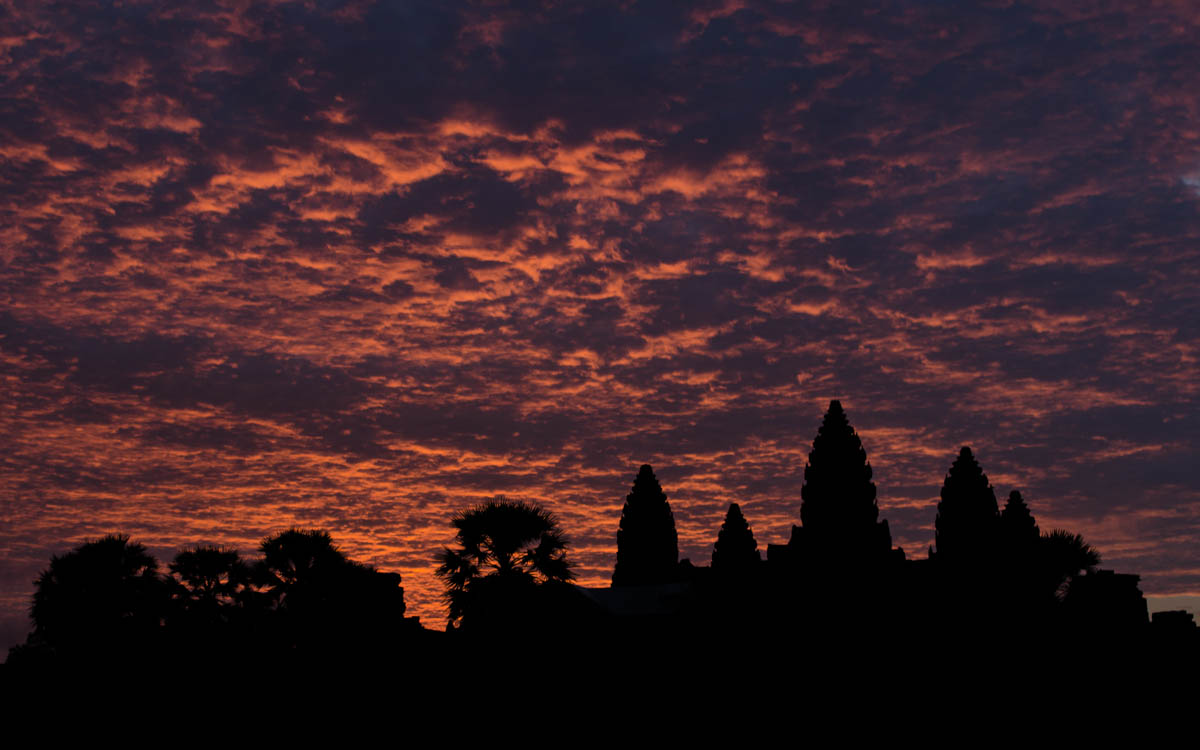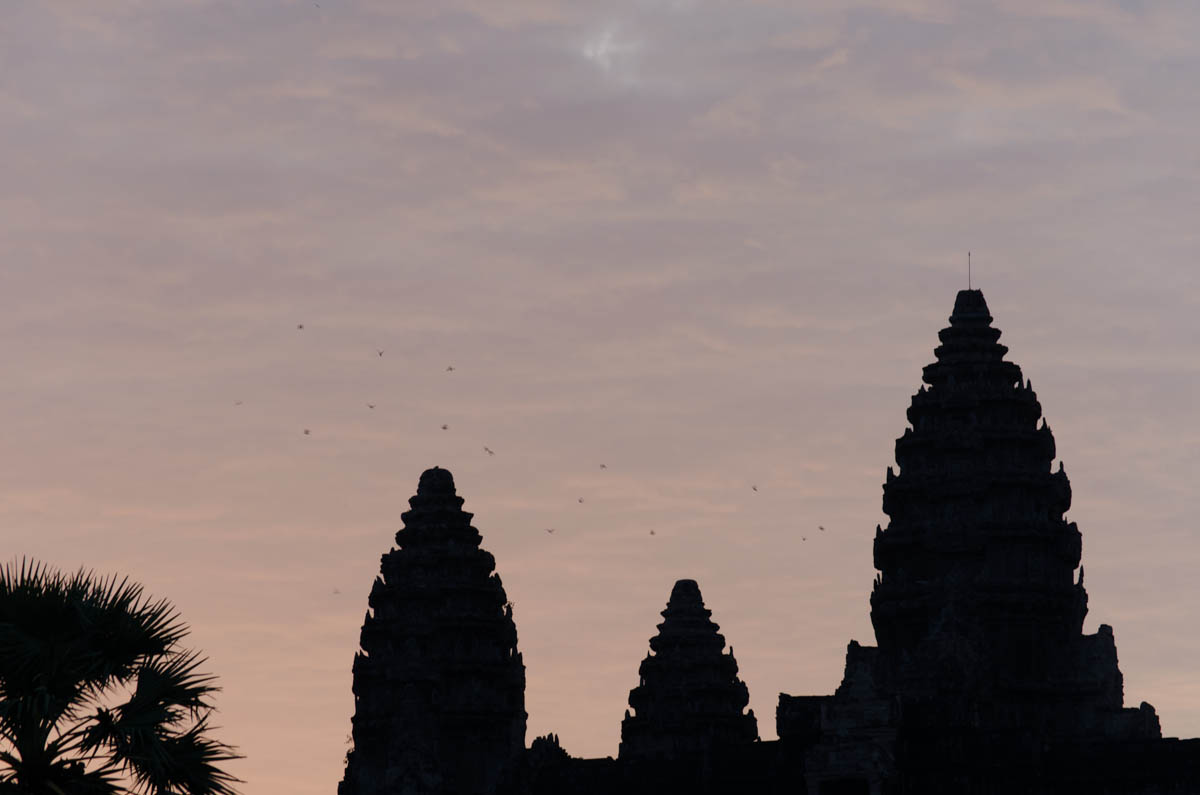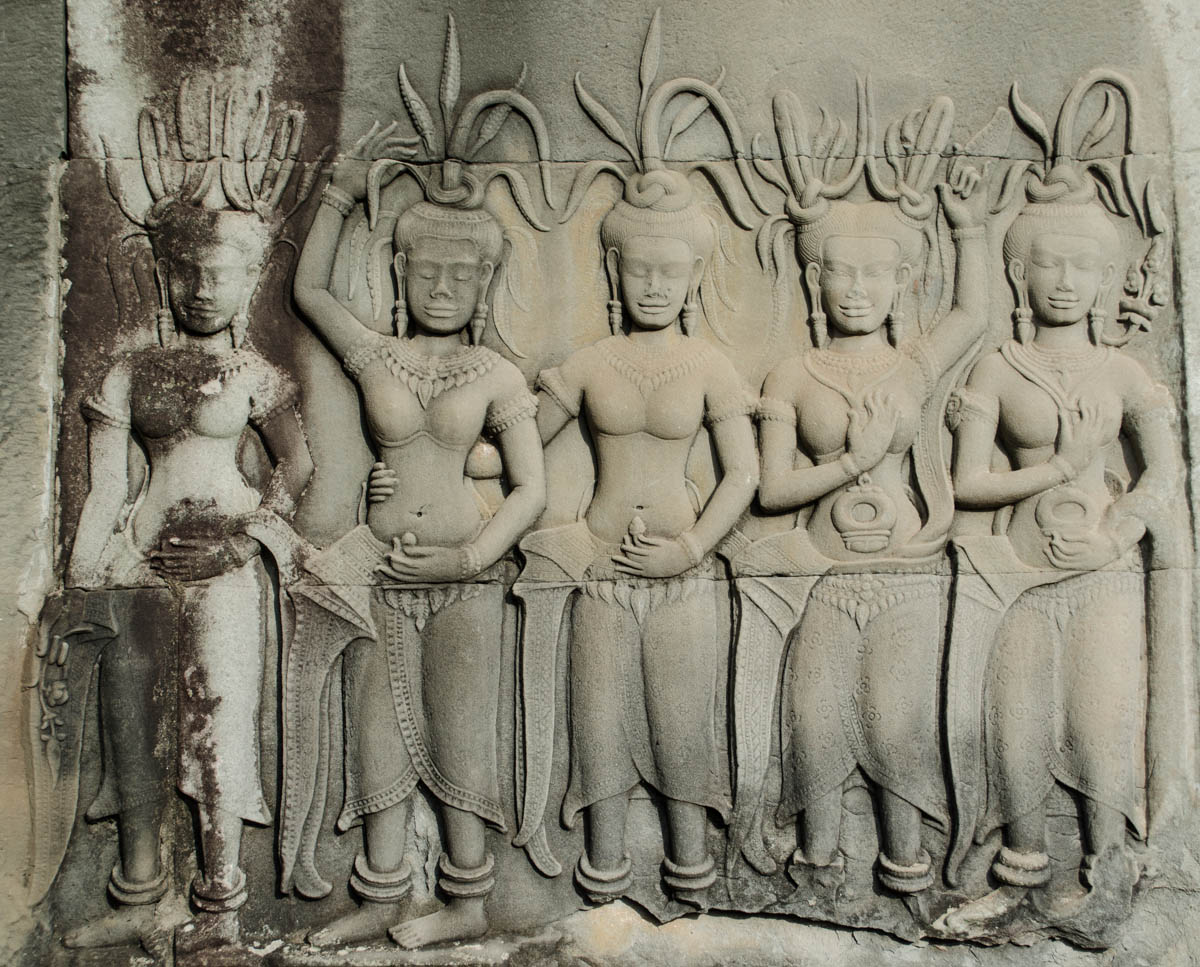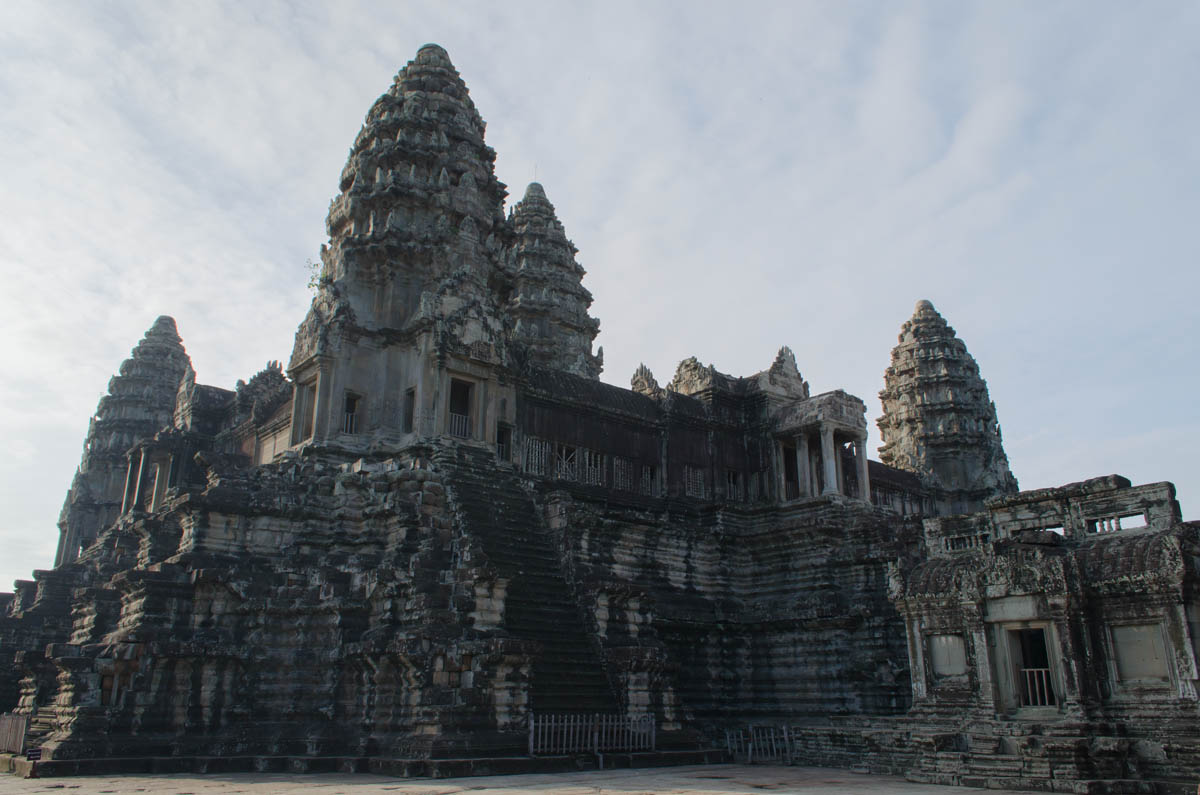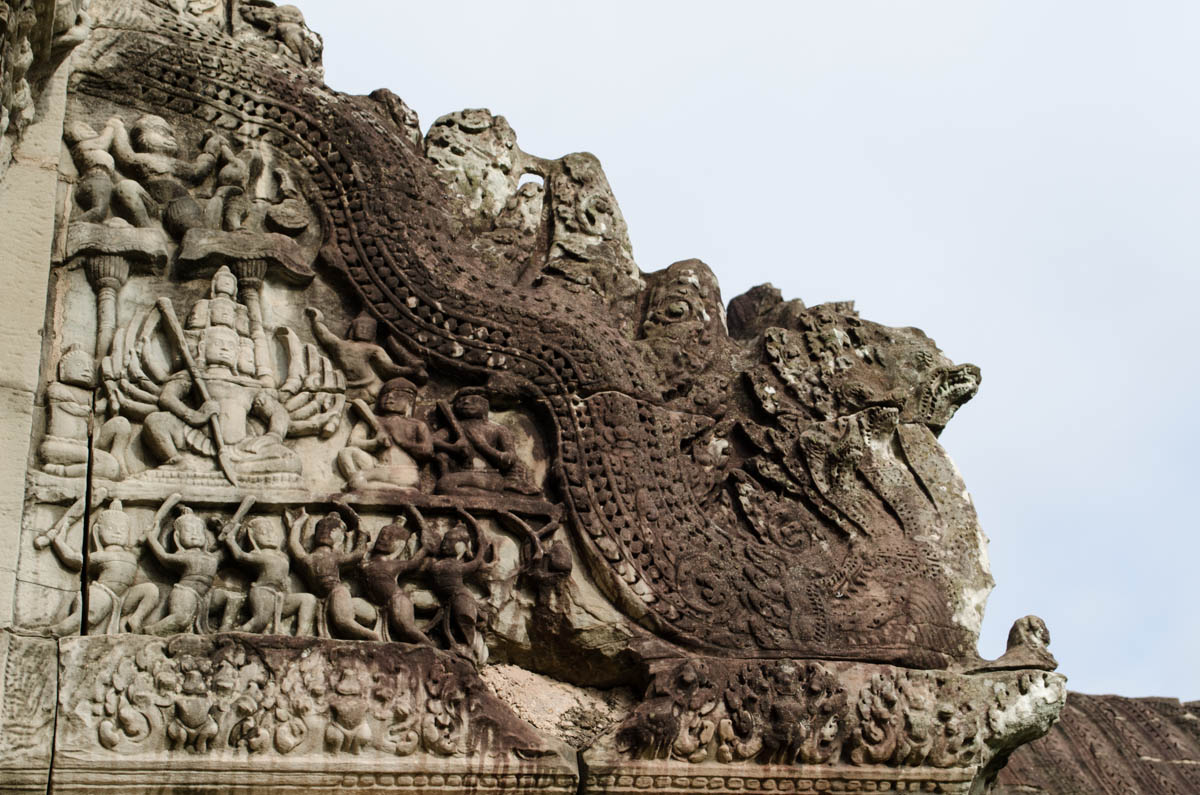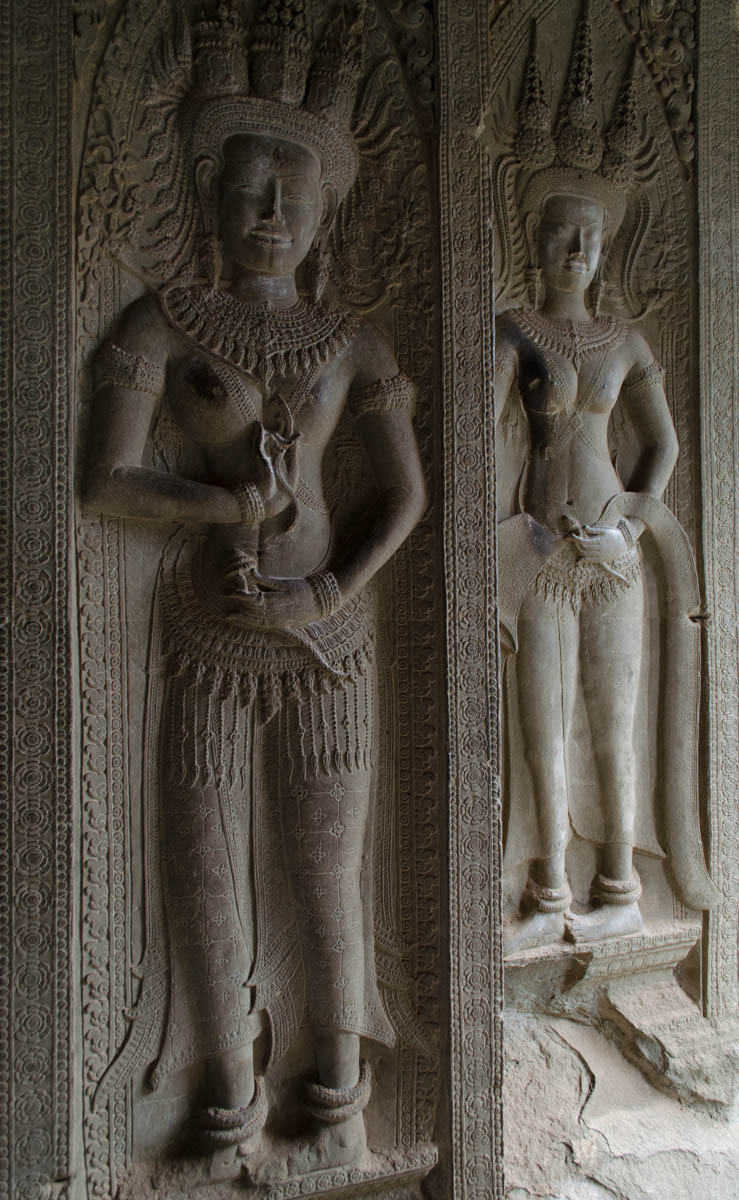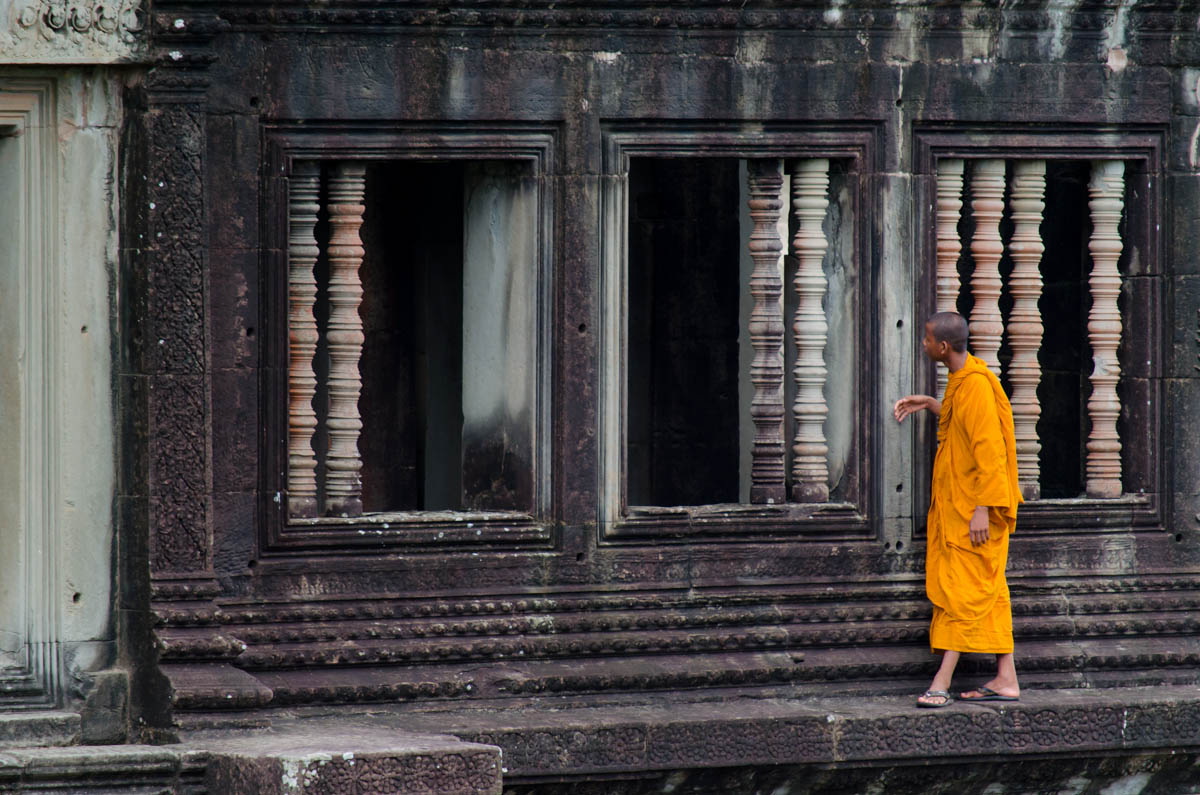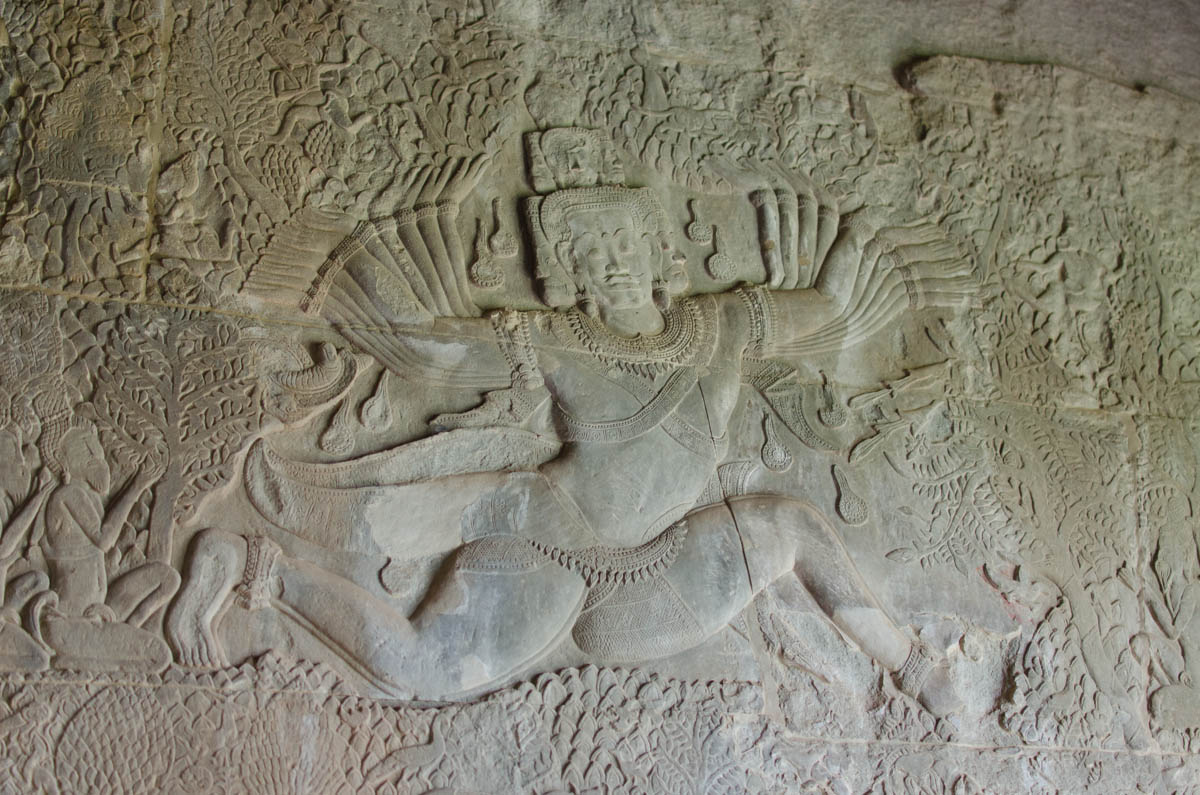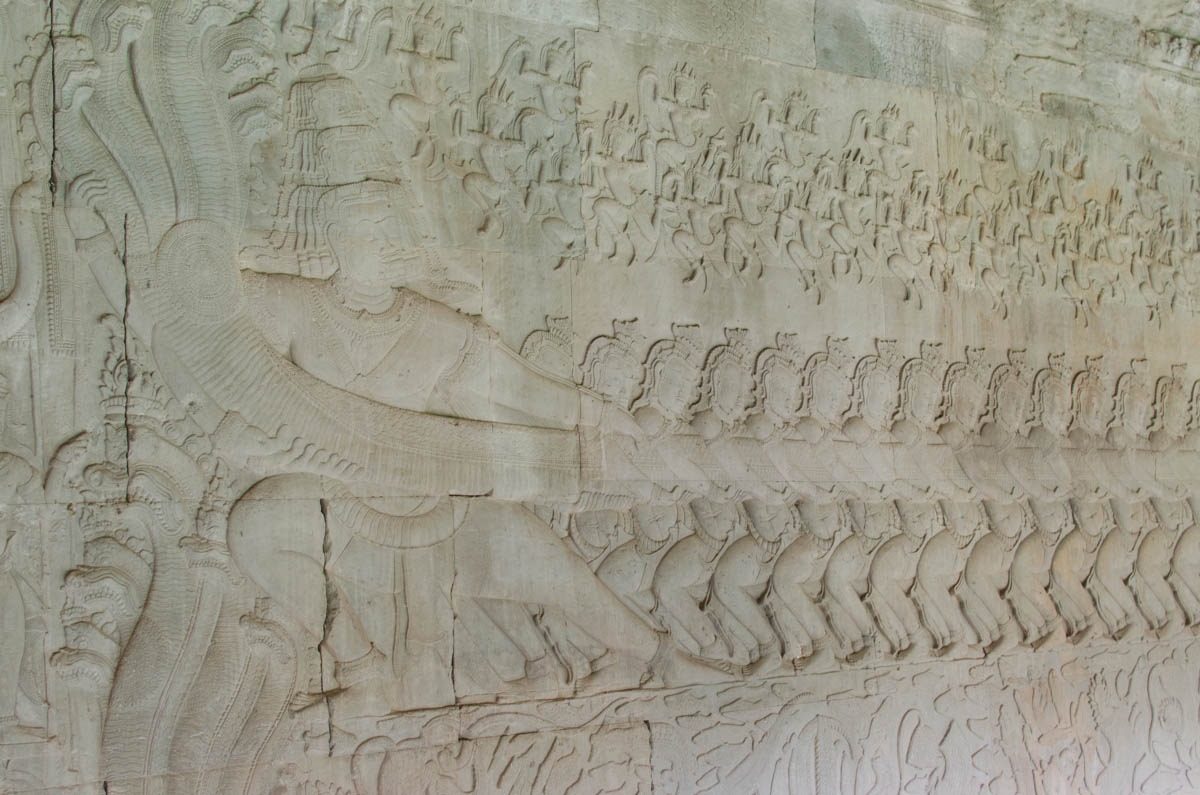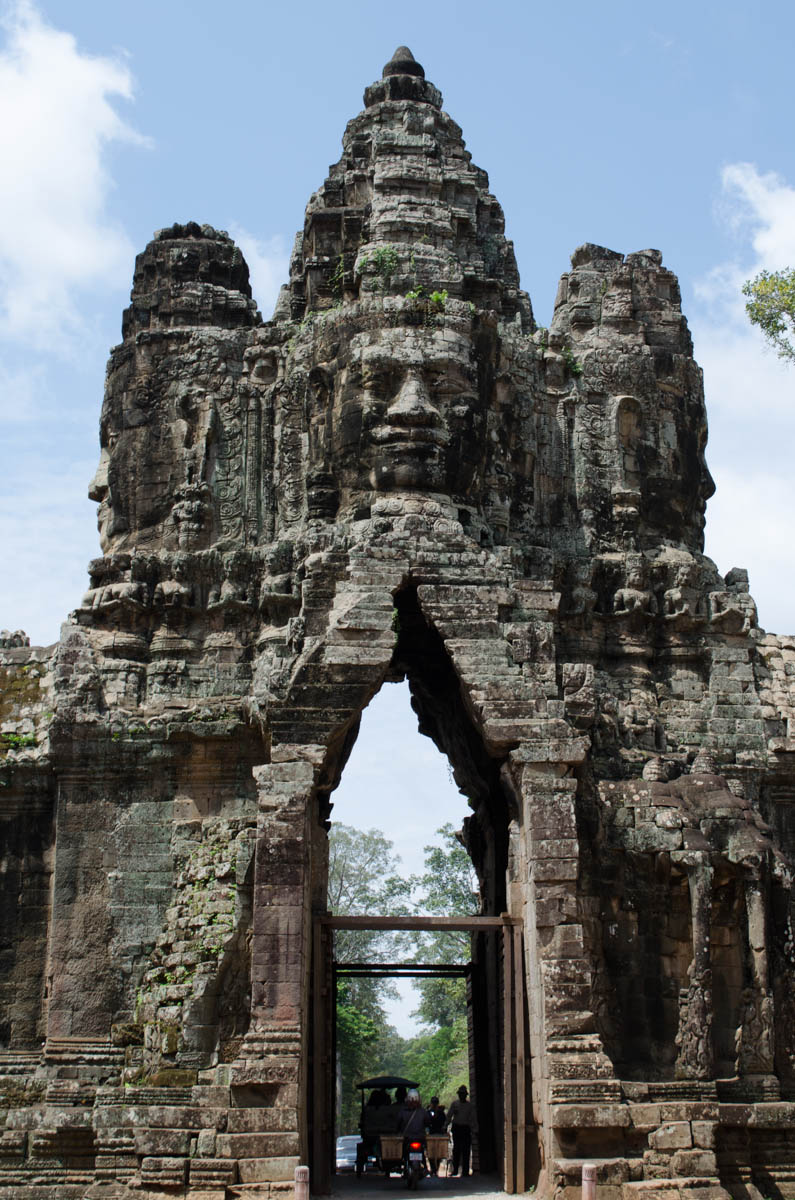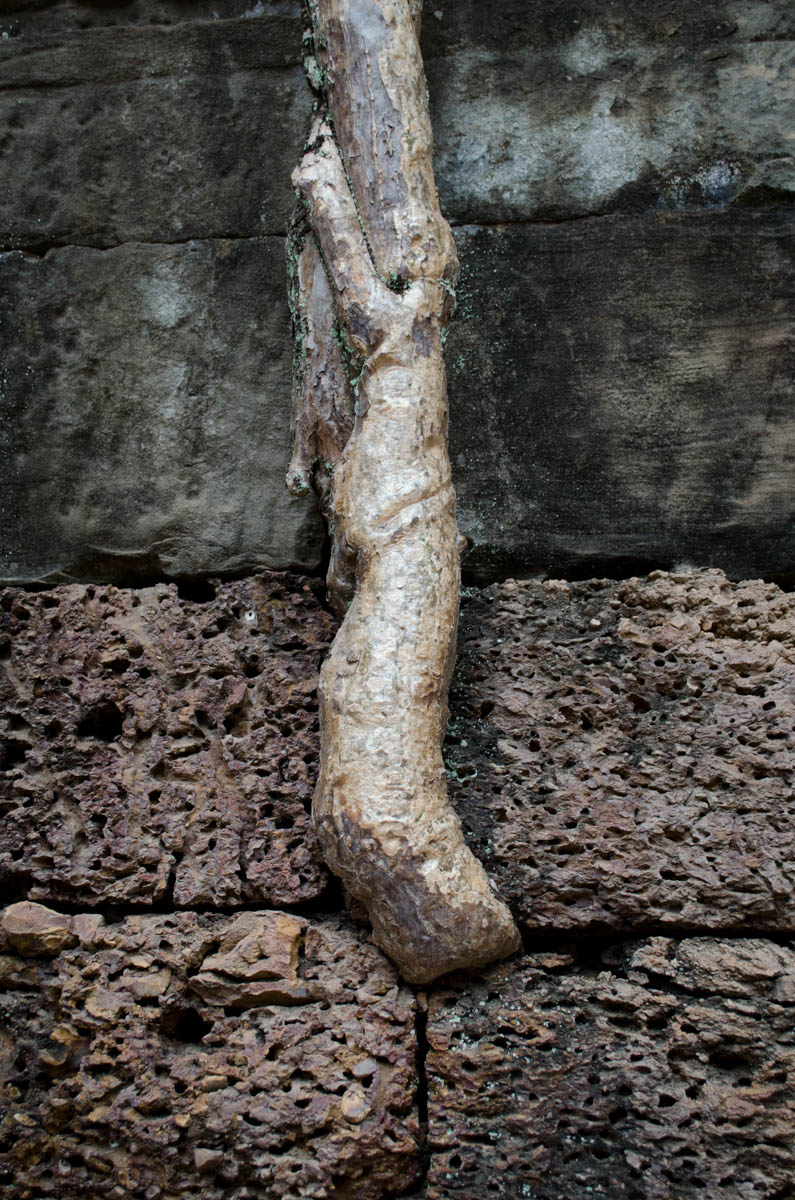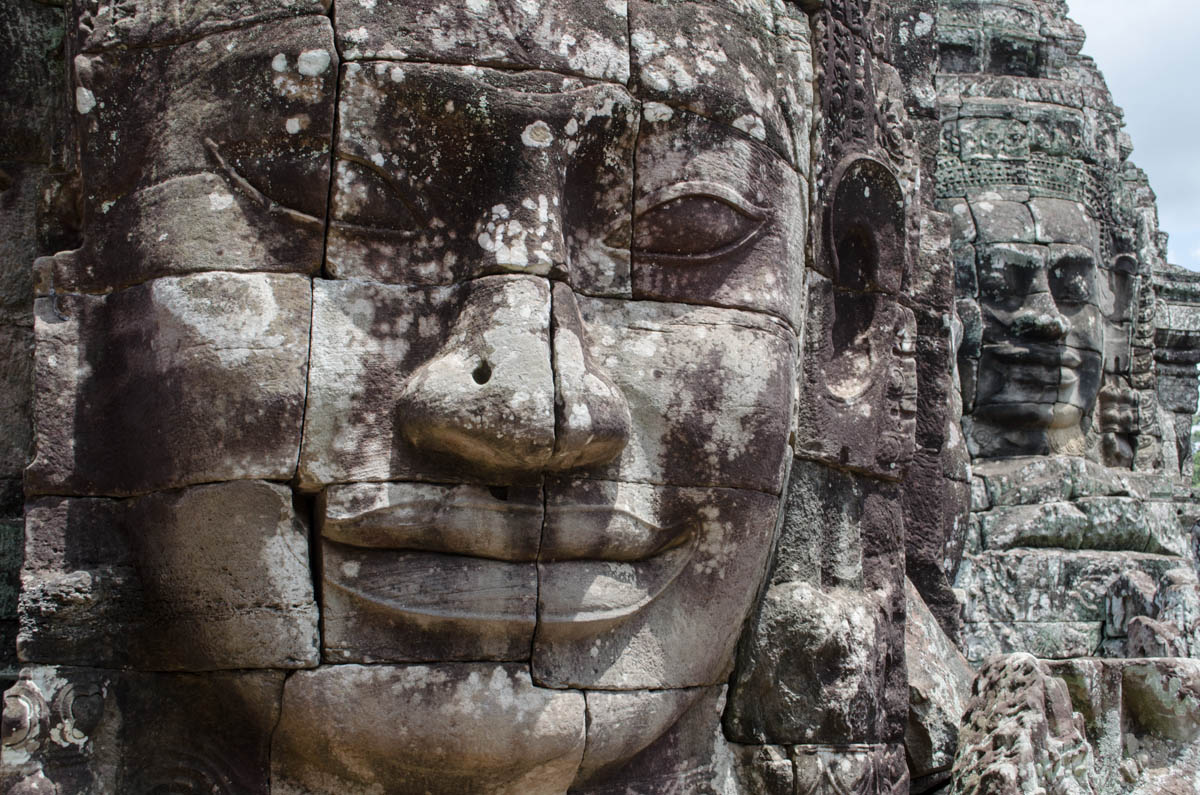
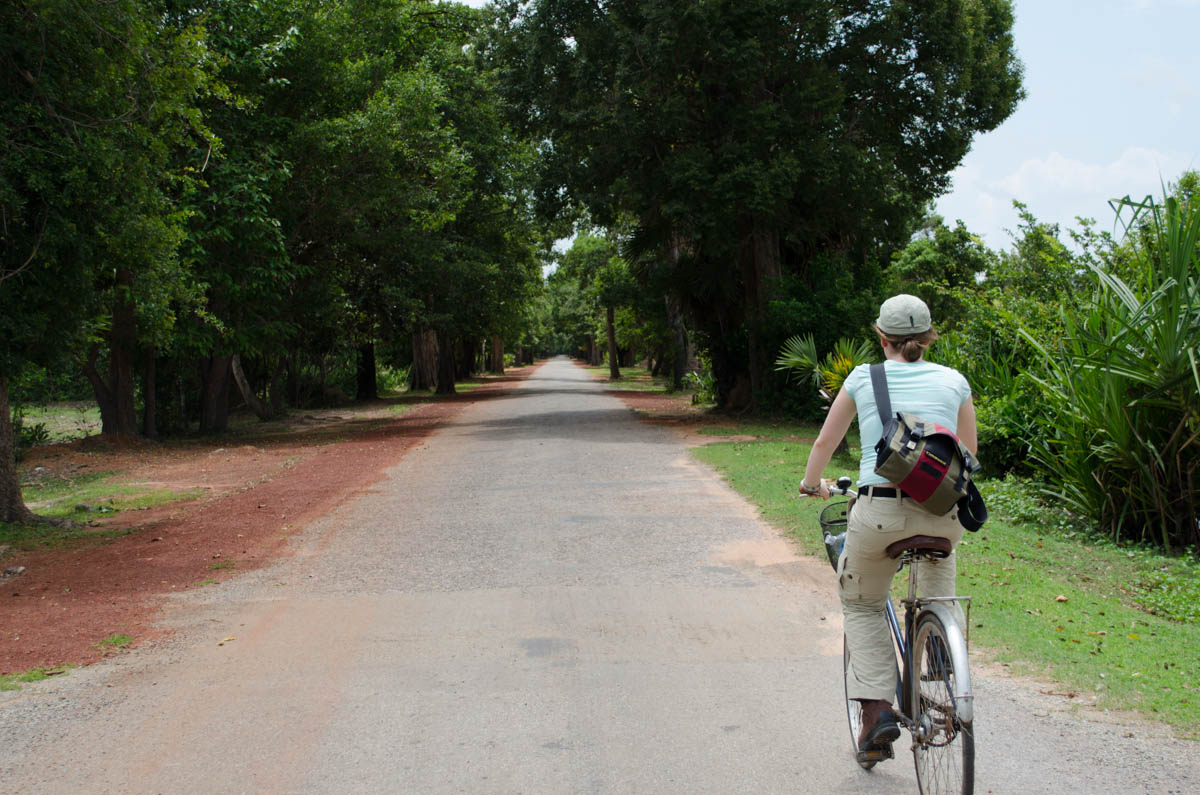
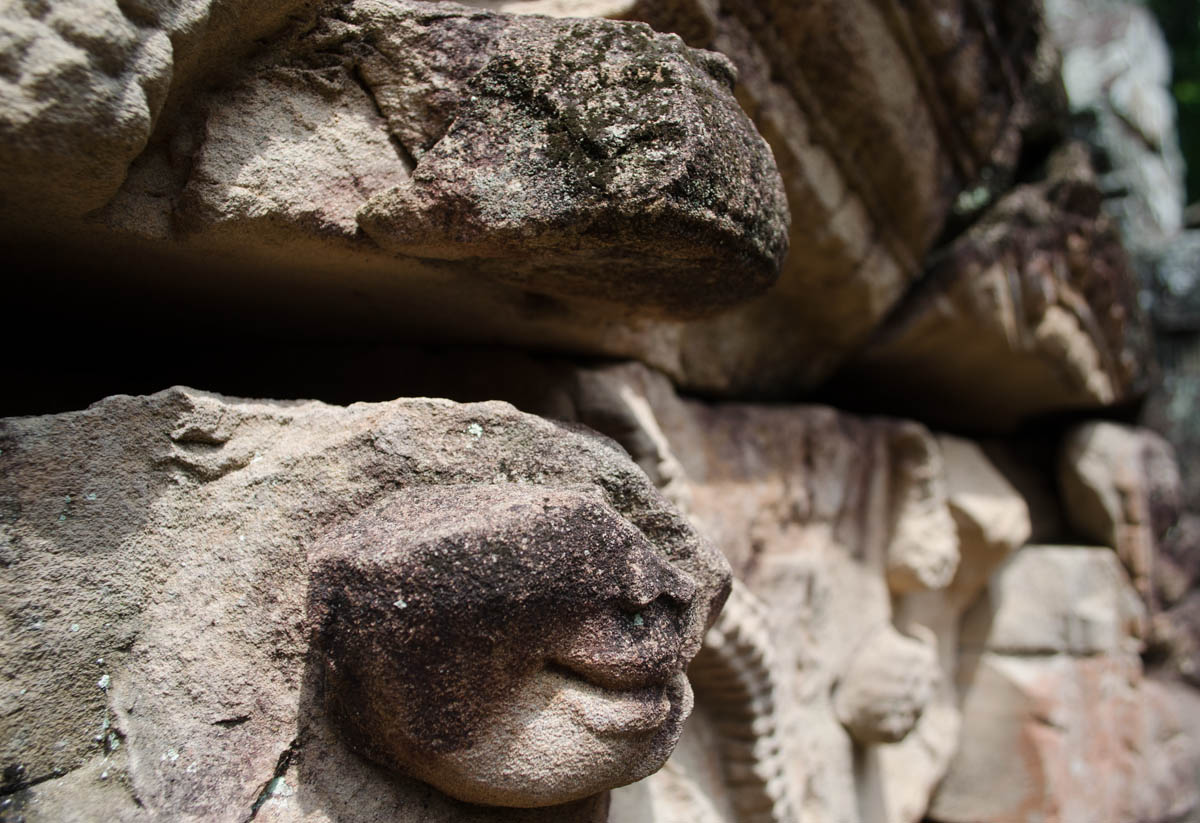
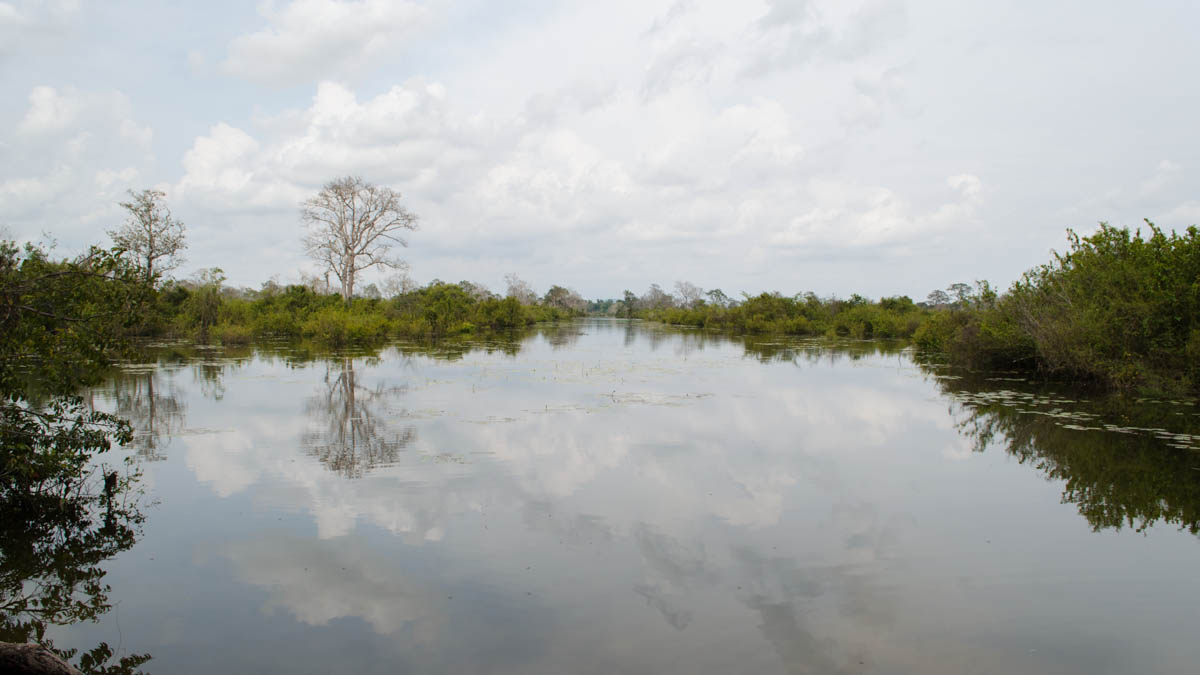
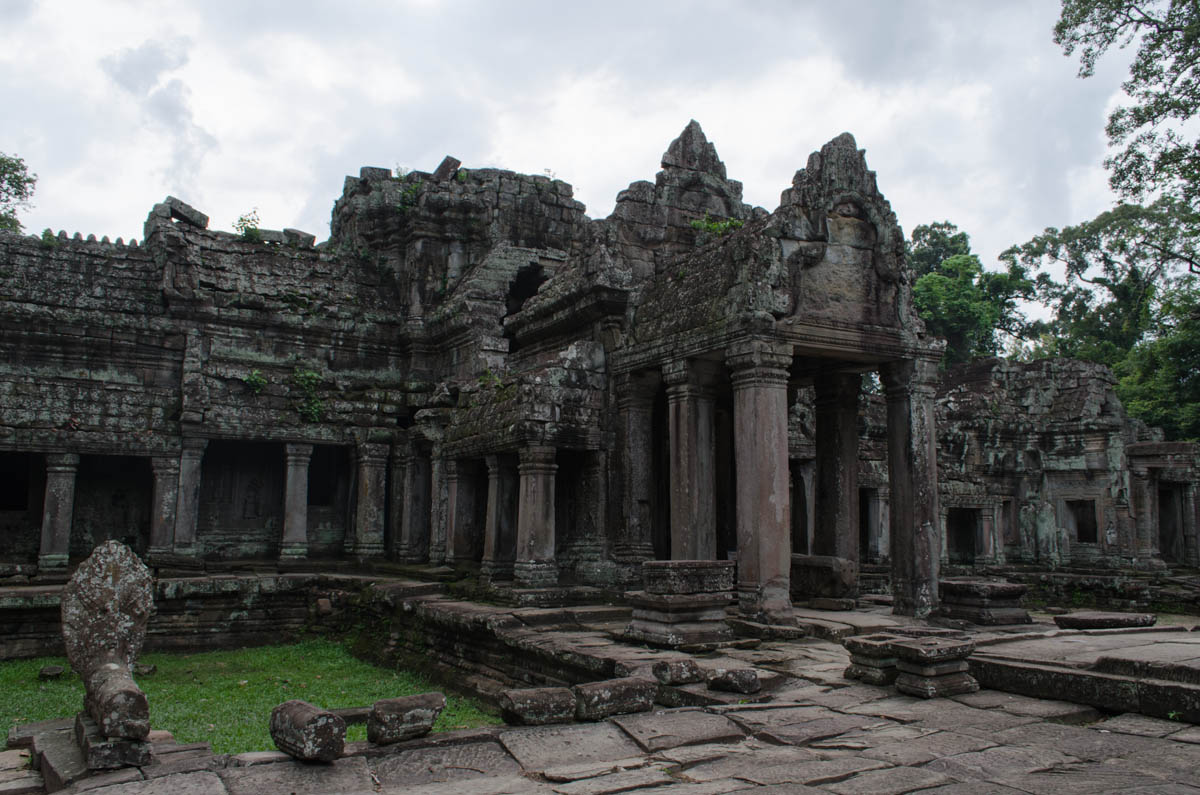
Angkor Wat is probably the most famous ancient monument of Southeast Asia and, therefore, was one of the top things on our “to-do-list” for this round-the-world trip. Once arrived in Siem Reap, the modern city standing next to the ruins, I realised that there is much more to see than the famous main temple: the whole area of the historical city (built by the Khmer empire between the 8th and the 13th century AD), with its moats and uncountable temples, is worth several days of intense visiting. While exploring the ruins, I learned a lot about Southeast Asia’s past (a topic never mentioned in our Eurocentric education), as well as Hindu and Buddhist faith and mythology. The first day, we decided to have a look around the minor temples by bicycle.
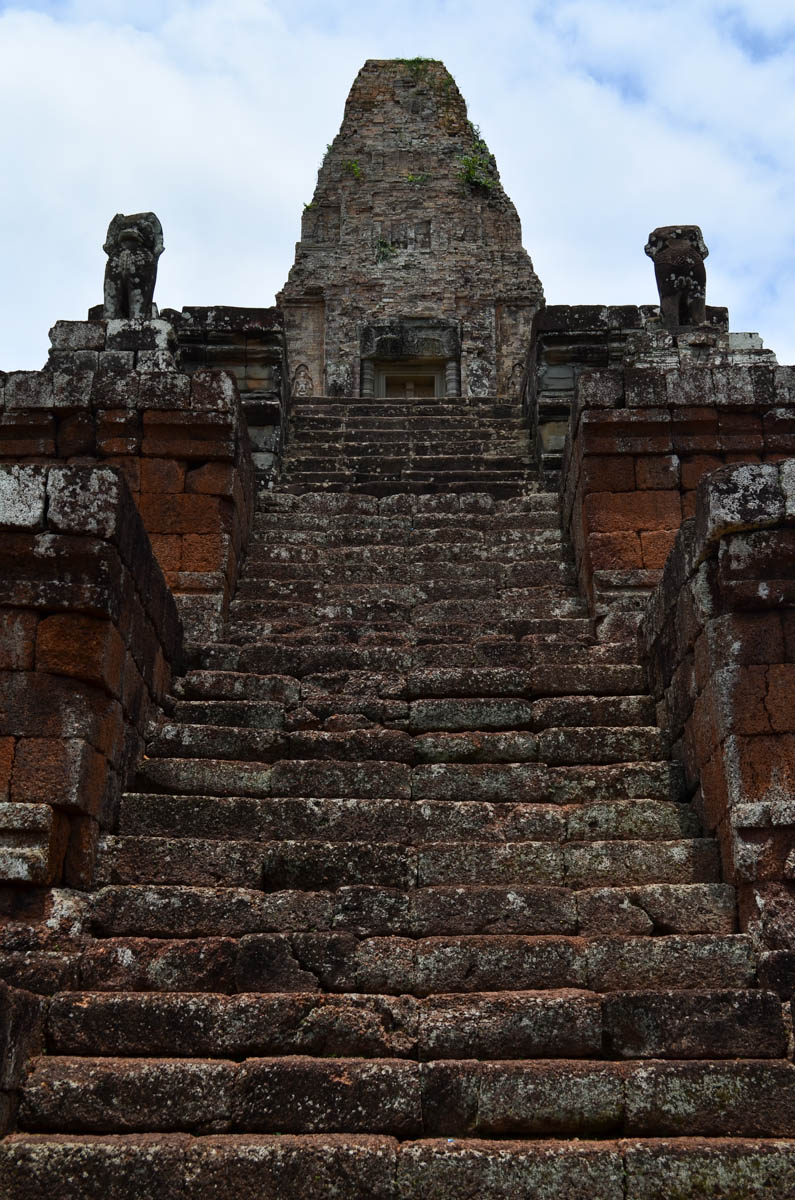
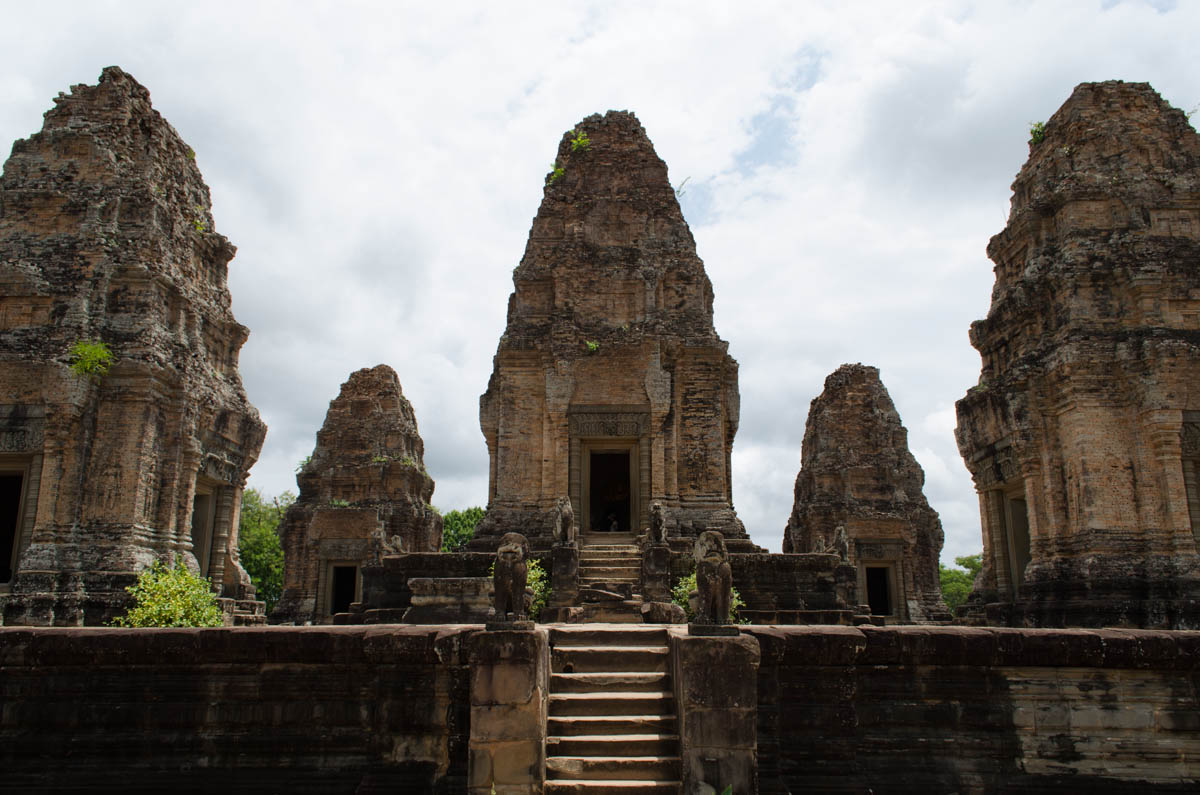
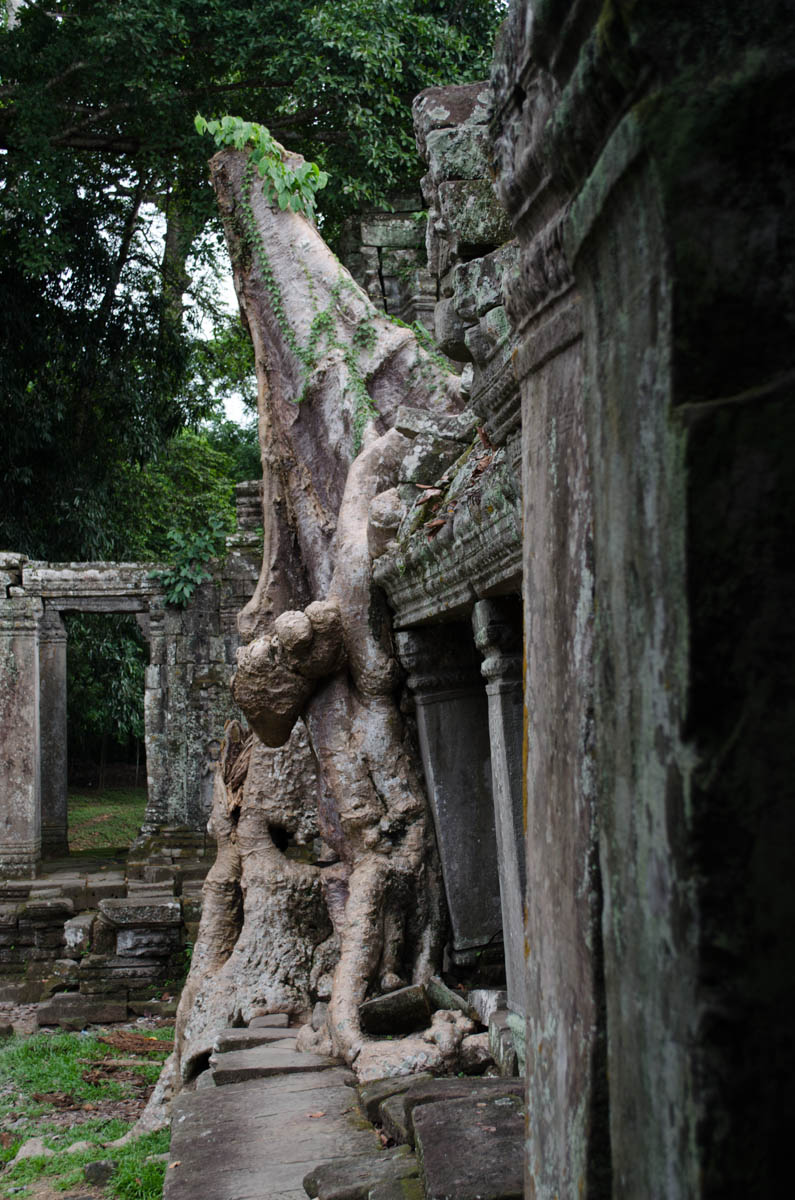
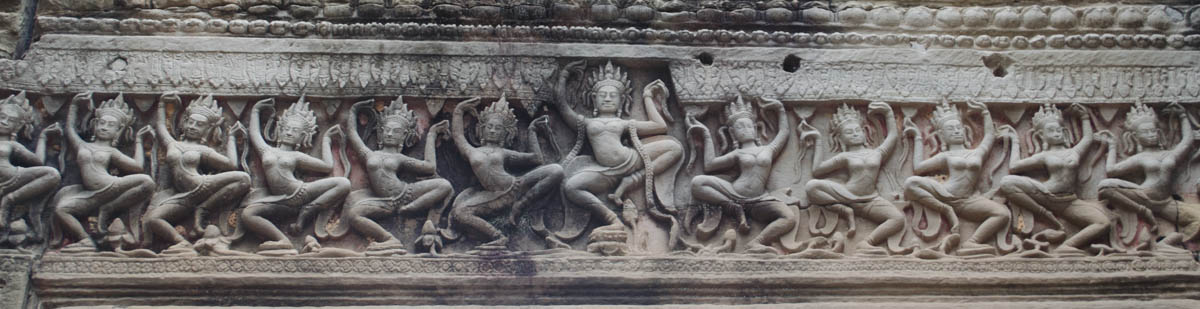
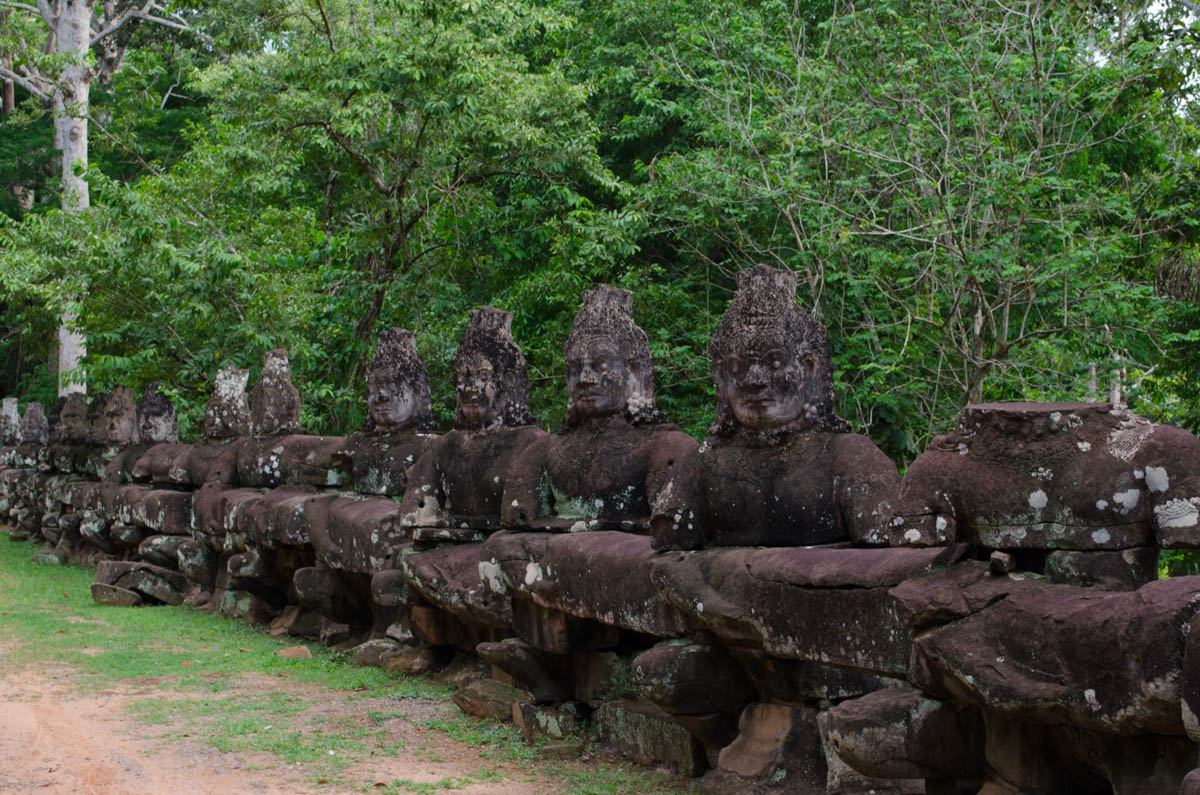
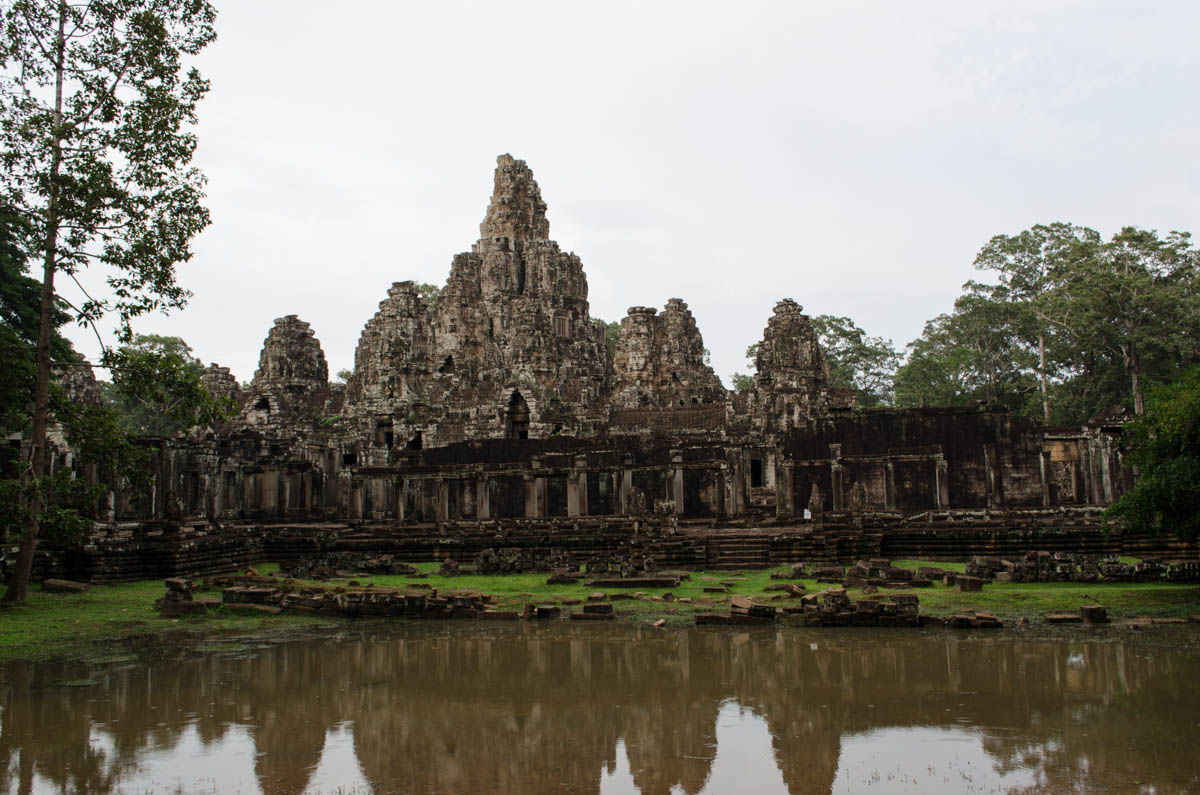
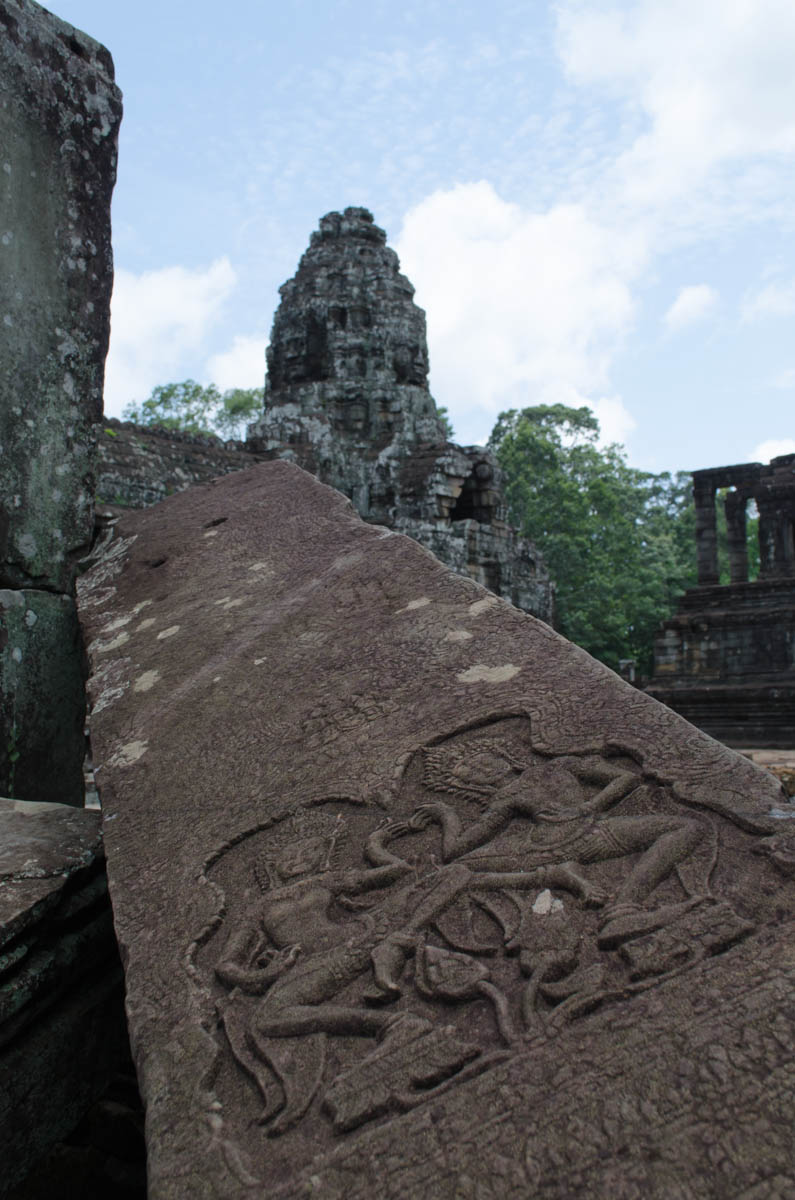
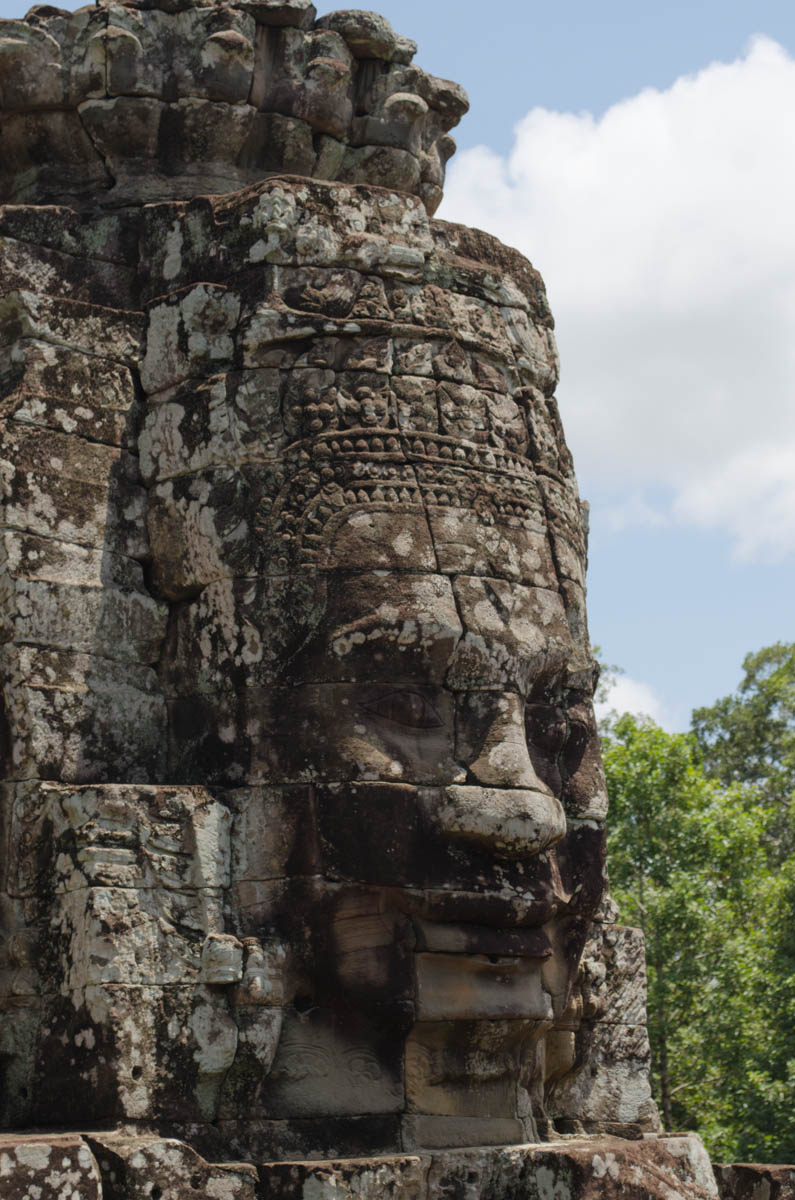
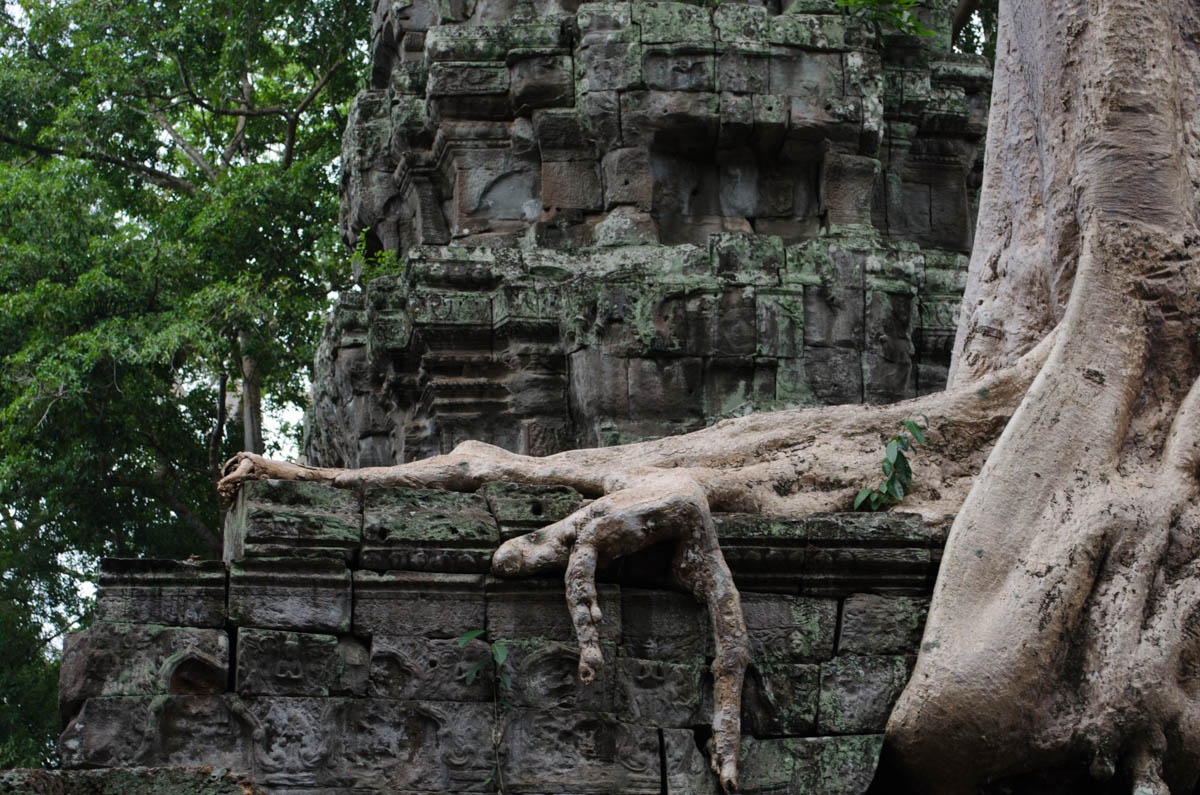
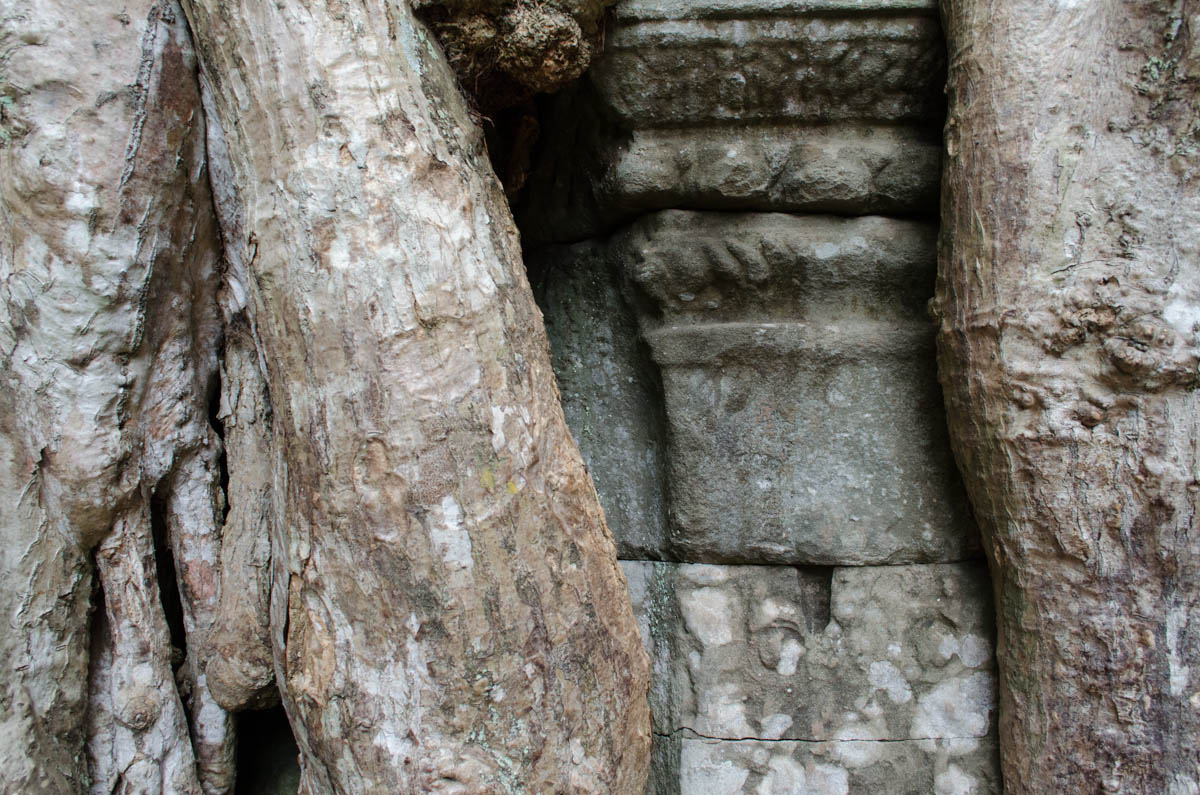
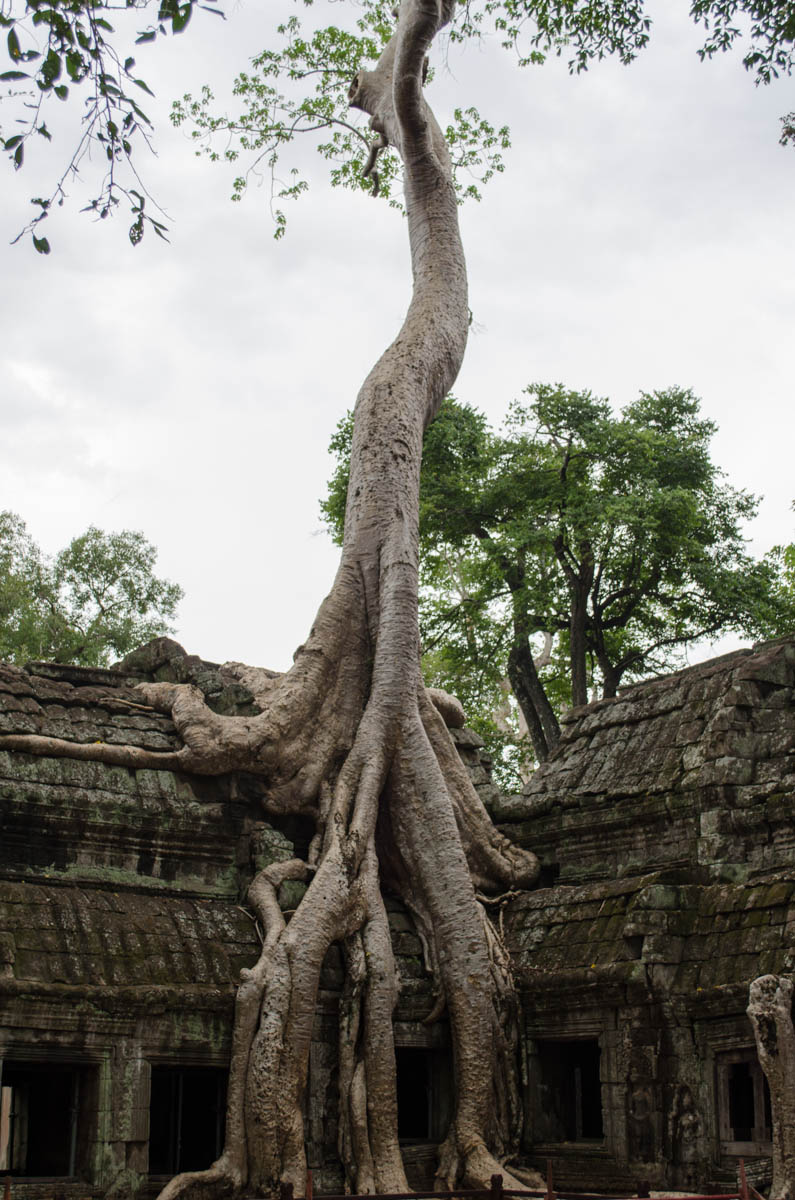
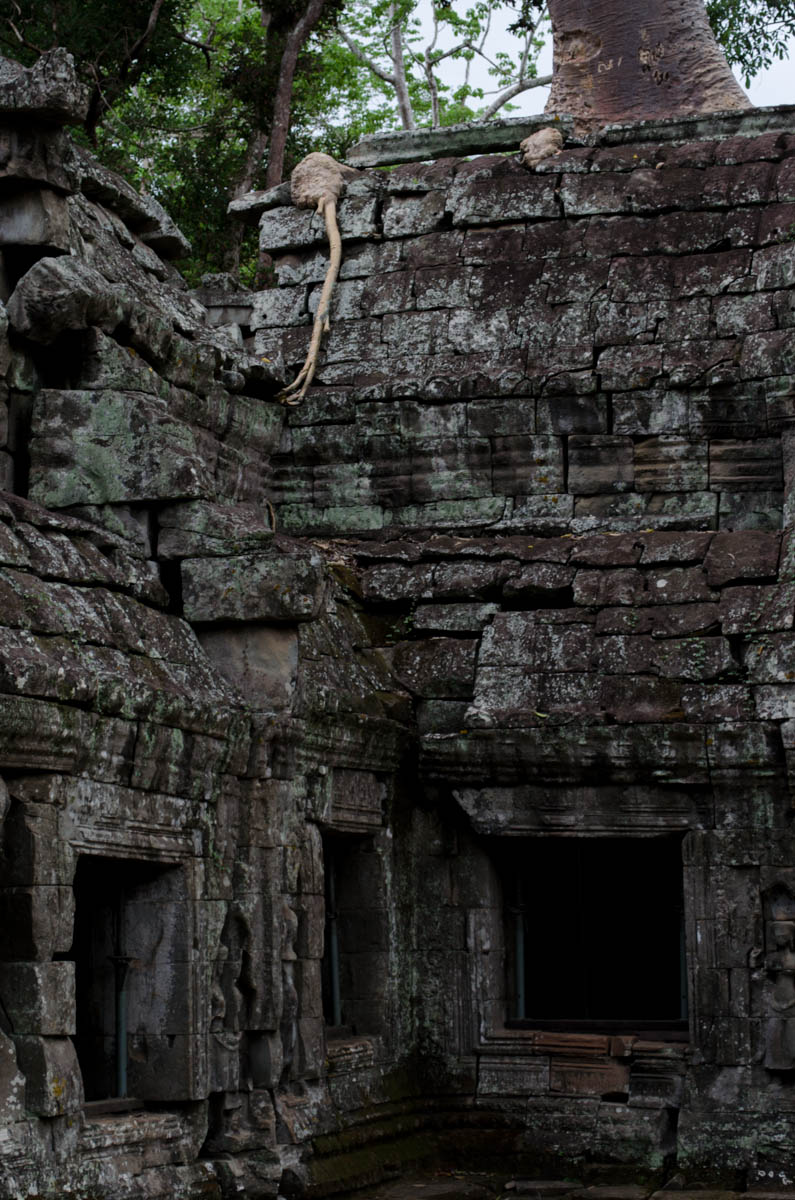
As we had to get up very early to see the sunrise and our bottoms were a bit sore from the bicycle-adventure, we chose to hire a Tuk-Tuk for the second day of our visit. Less fun but more comfortable — especially when the rain started pouring. This time, we visited the most famous temples: Angkor Wat, Bayon and Ta Prohm. Each temple diffused a different atmosphere. Though majestic and sublime with its architecture and carvings, Angkor Wat did not strike me as much as I had expected. Is it due to all the pictures one sees before visiting? Or because of the overpopulation of tourists who invade the place every day? I preferred the creepy and yet aesthetic Bayon with its claustrophobic labyrinth of aisles and its uncountable faces. Finally, Ta Prohm enchanted me with its mysterious old trees which conjure an air of adventurous discovery. All in all, I felt that this mixture of different temples make Angkor so special and, without any doubt, worth visiting.