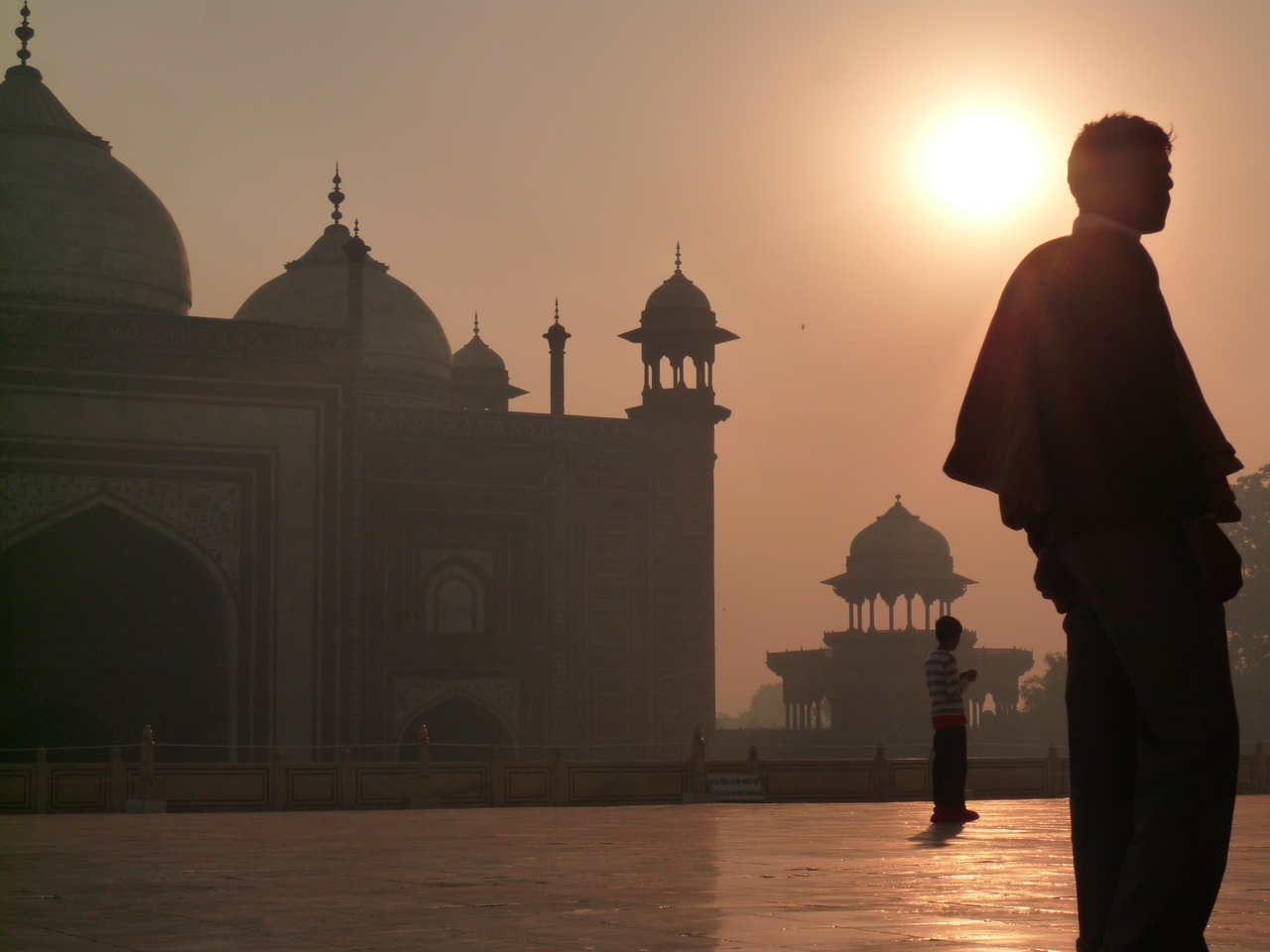
Everyone told me ‘You have to go to the Taj Mahal – it is the most beautiful building on Earth… It is perfection. You won’t believe it. You have to go.’ But I was like, you know, okay, I’ll give it a look while I’m in India.
And then I saw it… Like you saw it! And I couldn’t believe how beautiful it is. I still cannot believe it. It is perfection.
(Saskia, traveler)
I had seen pictures of the Taj Mahal too. I knew what it looked like. I knew it was a major monument of India. But nothing, no, nothing in this world could have prepared me to what I felt in front of it. No description, no picture, no poem or prose, no story can replace the direct, brutal and intense experience of seeing the Taj Mahal with your own eyes.
That was the third time my mind was blown away in India. When I saw the Taj Mahal. Every time I saw it, actually. Every time I found a new spot, a new point of view, a new angle, a new detail, outside, from a field, on the other side of the Yamuna river, from a rooftop restaurant, from the Agra Fort, or, even more, inside the Taj grounds, a few dozens of meters away or close enough to touch its milky-white marble walls.
And the monument in the first picture is not the Taj Mahal, no – actually it is just here to decorate and give balance to the Taj Mahal complex, even though it would be a major monument if it were standing alone in another city – but do not worry, you will have plenty of it in the following, to saturation. Even though no photograph will ever give you the same, powerful and timeless feeling that grasps anyone who sees it for real. No one will take your breath away every single time you look at it, as it does in reality. No one will make you fall on your knees, overwhelmed by the intensity of the emotions pulsing from the tomb.
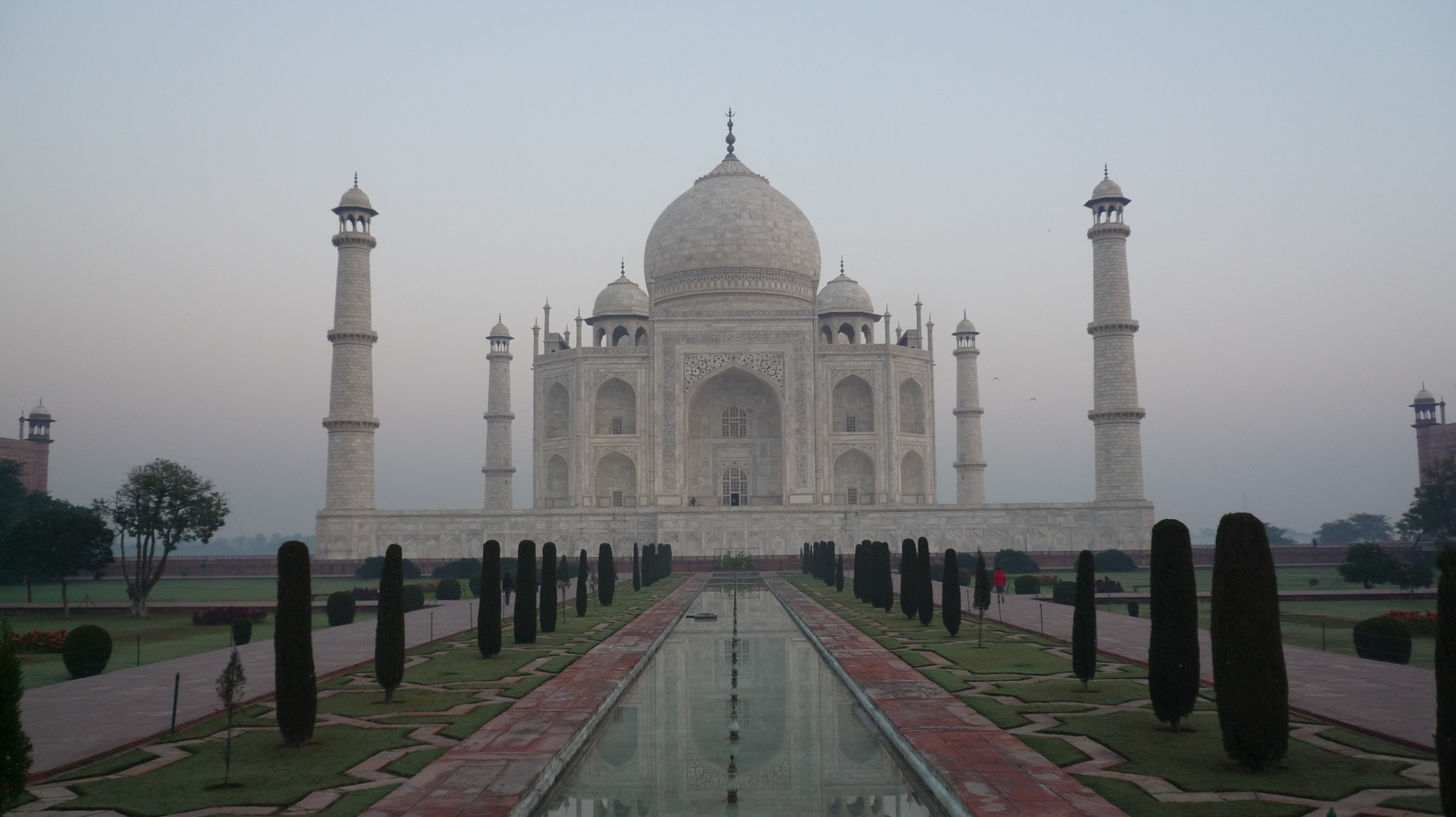
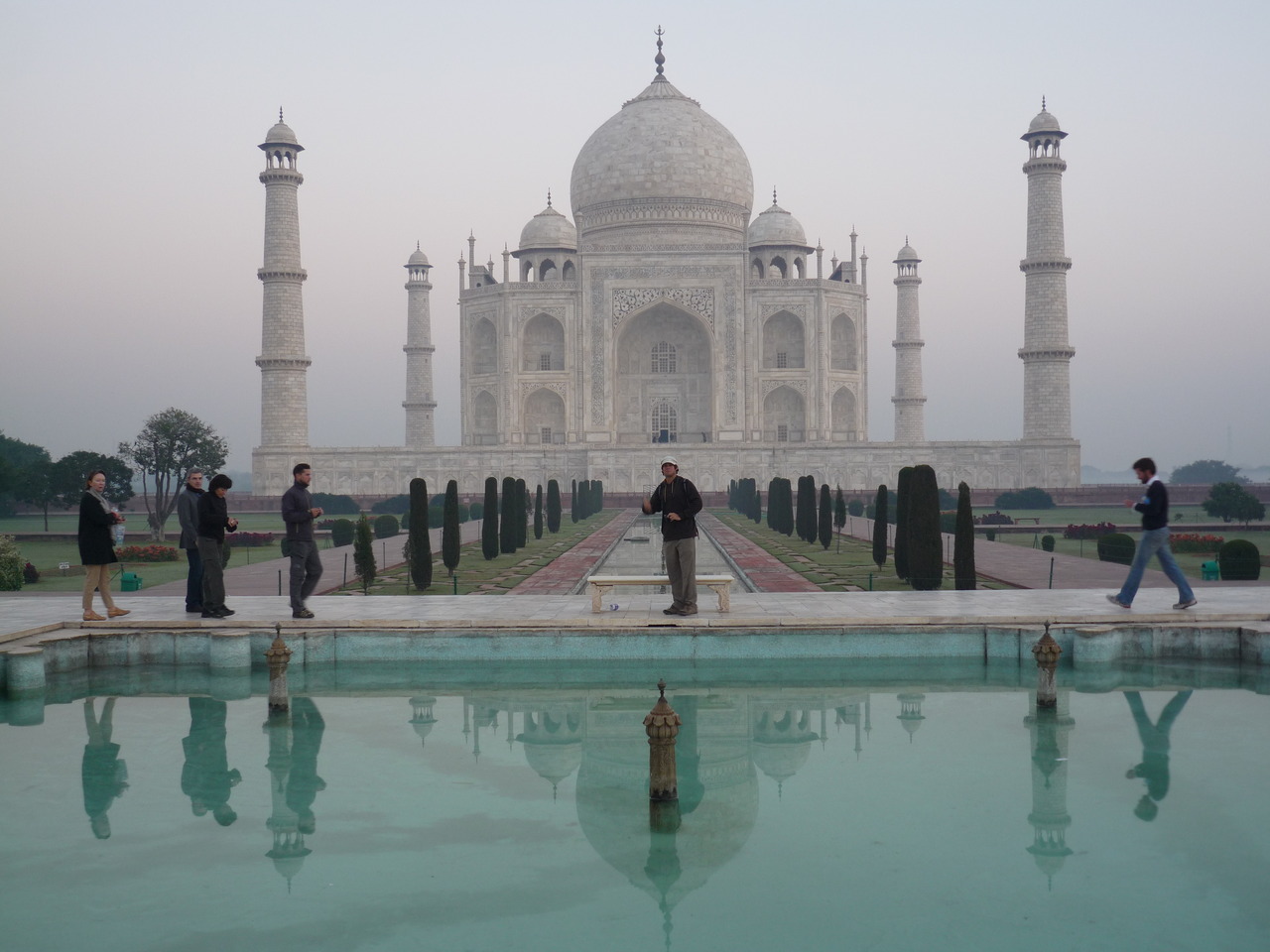
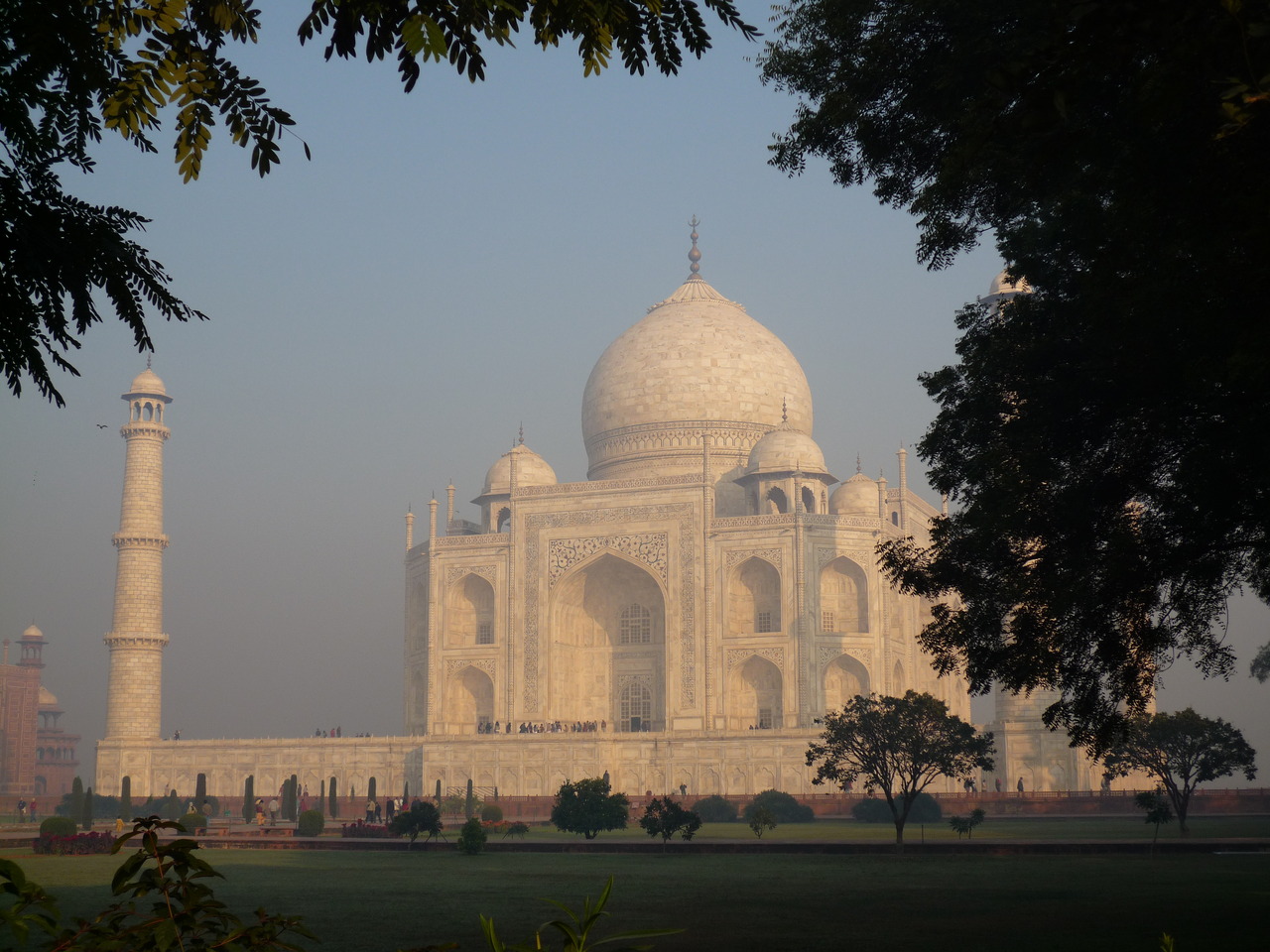
Alright, I guess it is a bit like the Great Pyramids, you still need some classic views of the monument. This is the best postcard-like shot I have from the Taj Mahal, seen from the front (southern side).
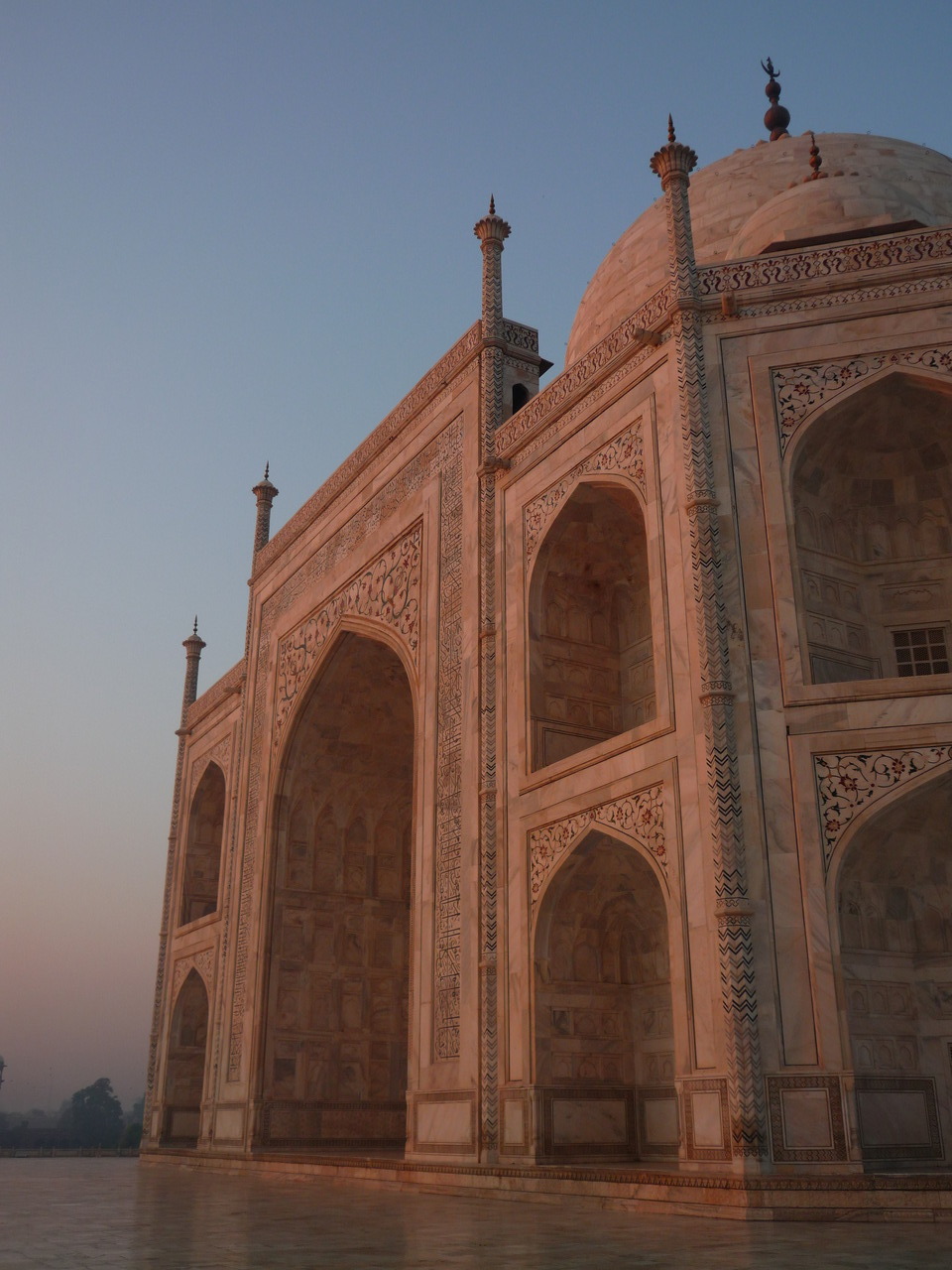
And this one is the best I have from the rear side.
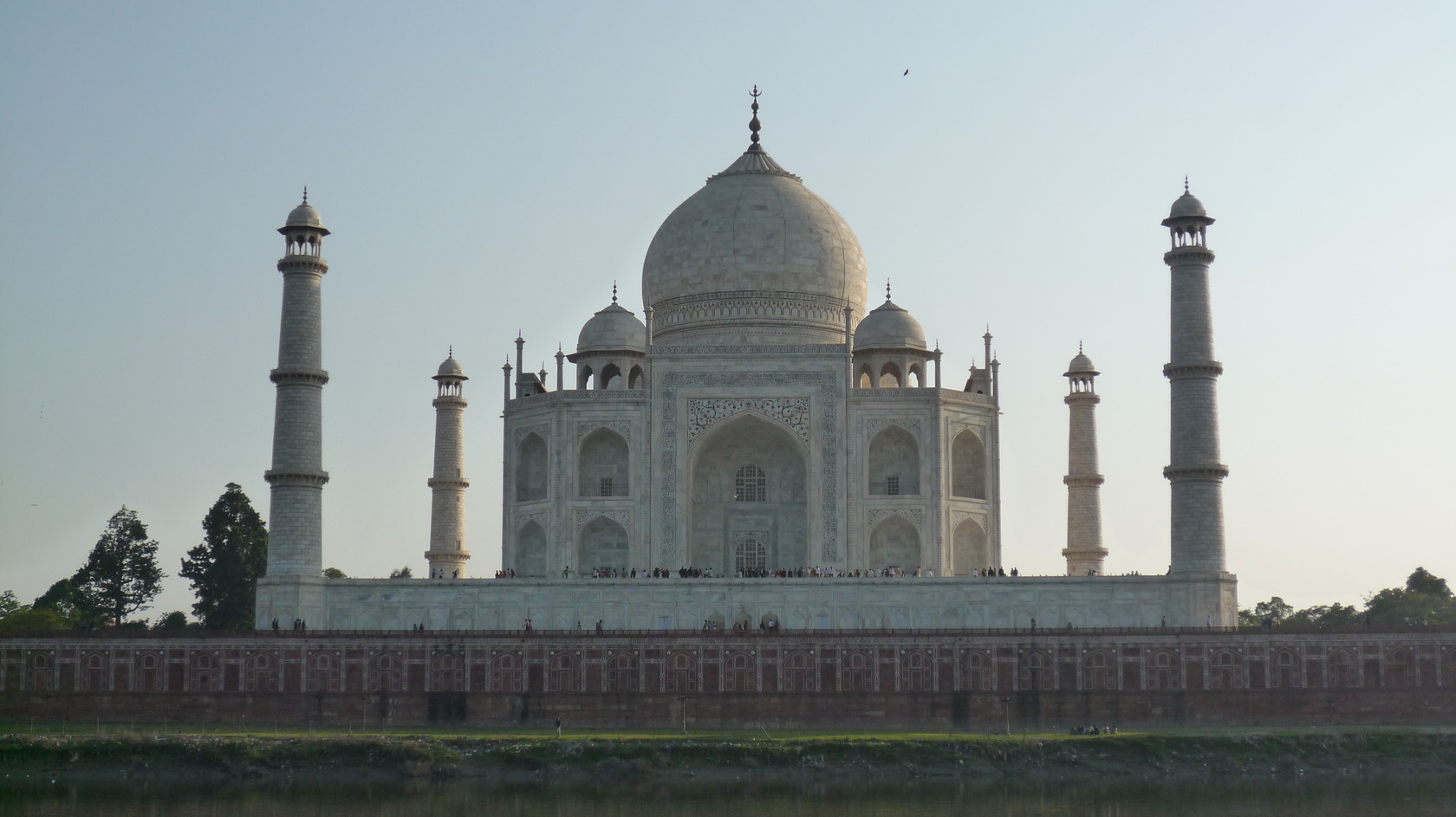
As you might possibly have noticed, they are a bit similar. Quite similar actually. Or, let us say, totally. Of course, it is no accident. The Taj Mahal is perfect. And, as we humans seem to consider that perfection comes with symmetry, the Taj Mahal is entirely, perfectly symmetric, from its four sides. Totally. To one exception though: the tomb of Shah Jahan, inside, which is offset from the central axis. But let us first get back on the road.
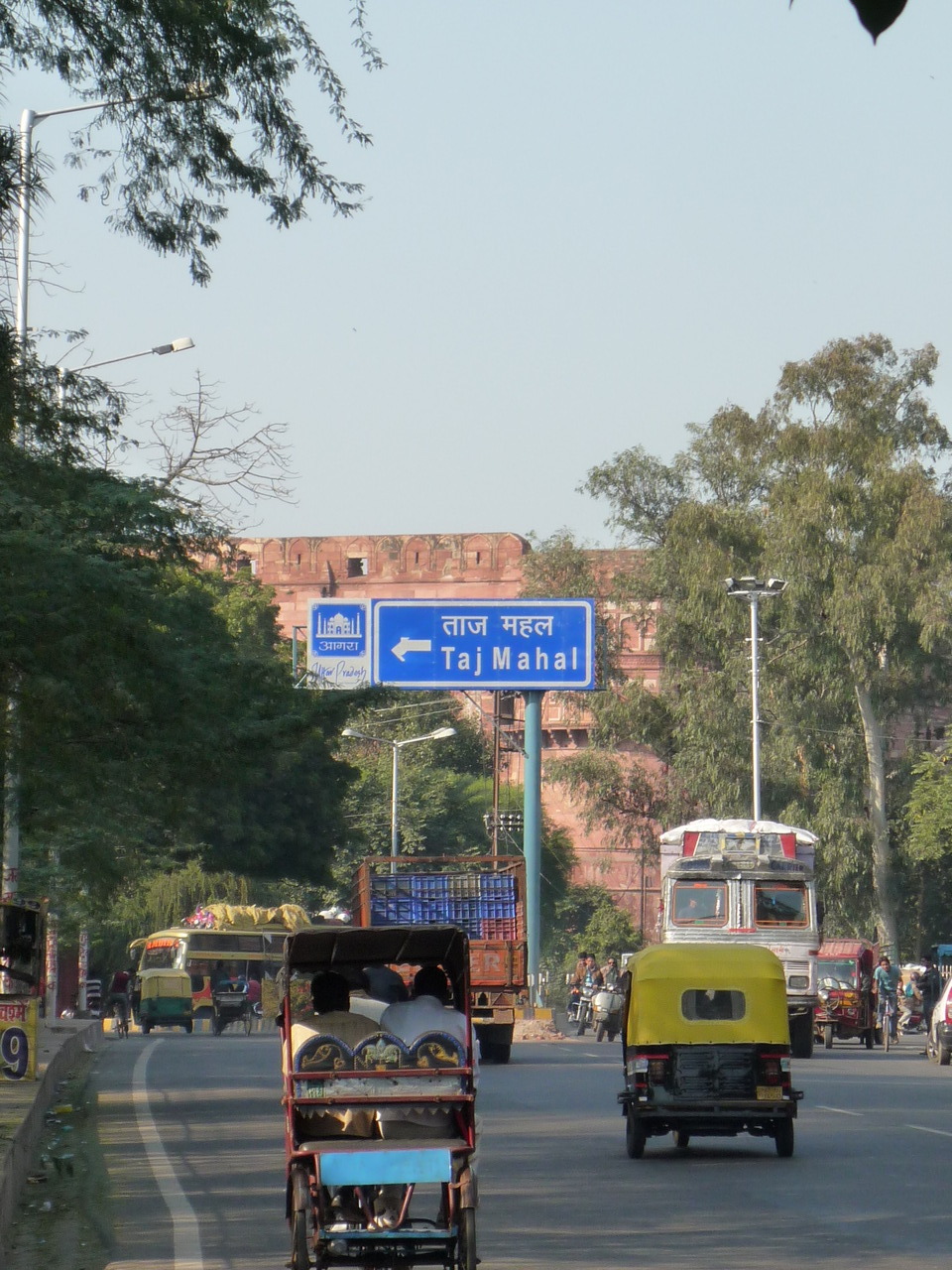
I got down God only knows where in Agra, with half-closed eyes, both because of the sun and of the harsh night I had had, again, in the bus. I quickly bargained a rickshaw to Taj Ganj, the backpacker district immediately south of the Taj Mahal. Note to self: do not forget the following trick.
“You’re my first customer! If you don’t come with me, it means bad luck for the whole day!”
“I’m your first customer, so you should be nice to me. Make me a better price.”
Damn, I am still surprised it worked so quickly.
Of course, he dropped me at a hostel he knew, probably held by a friend or relative, instead of the place I had asked him. Whatever, I got a cheap room (as usual, dirty, exiguous, almost scary) – actually I changed the day after, when I found another nearby hostel had a way better room for the same price. Anyway. For my first day in Agra, I decided to take a walk to Mehtab Bagh, the garden facing the rear side of the Taj Mahal, on the other side of the Ya— oh, goddammit, let me just put a satellite view.
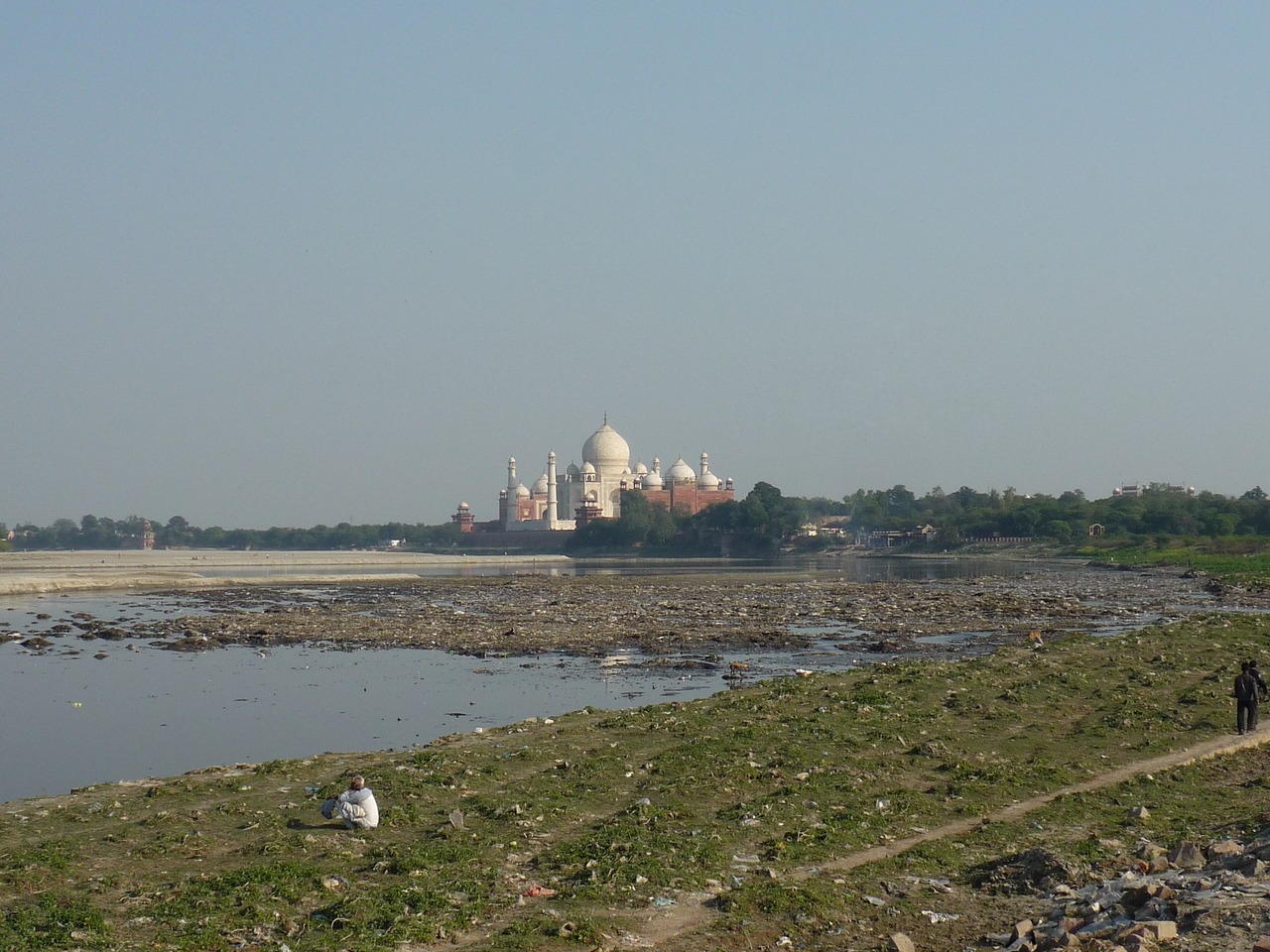
I only walked a few kilometers to the northwest before jumping a wall to get in a untilled land that seemed to have an interesting view on the Taj Mahal. I passed a few Indians while I made my way in the abandoned field for a few hundred meters, until I stumbled upon the Yamuna river. And indeed, it was an interesting view. The Lonely Planet made no reference to the slum built by the river, nor to the tons of garbage floating between it and the Taj. The contrast between the greatness of the monument, in the background, and the poverty of the people living not that far from it, struck me and let me gaping. It was only adding to the sadness emanating from the tomb.
I jumped the wall back on the main road, and finally decided to get in a rickshaw to Mehtab Bagh. I got inside the garden, found the way to the North bank, right in front of the Taj, passed two lines of barbed wires and walked in the wasteland, almost alone, between buffaloes and birds, far from the tourists, far from the bustle and the noise. Far from everything, from everyone. In front of the most beautiful monument in the world.
I took my shots and sat down on the mud. I have no idea how long I stayed there, my eyes admiring every detail I could catch of the Taj, and my soul being, somehow, soothed by the silence of the eternity and the immensity of the pain of Shah Jahan, which made mines ridiculous in comparison. I got carried away.
A few peasants and poor children passed by me, sometimes trying to talk to me or to sell me fishes. Two photographers came to my spot, apparently the perfect one as I was sitting in the axis of symmetry of the Taj; a group of young Indians joined us, started to talk with them. And, finally, a soldier came yelling at us. The photographers quickly ran the other way, but the teenagers and I stayed there. I engraved that last moment of peace in my memory, before he caught us and took us back outside the military-controlled area; after a bit of chat, I got away without any problem, but I have no idea what happened to the others.
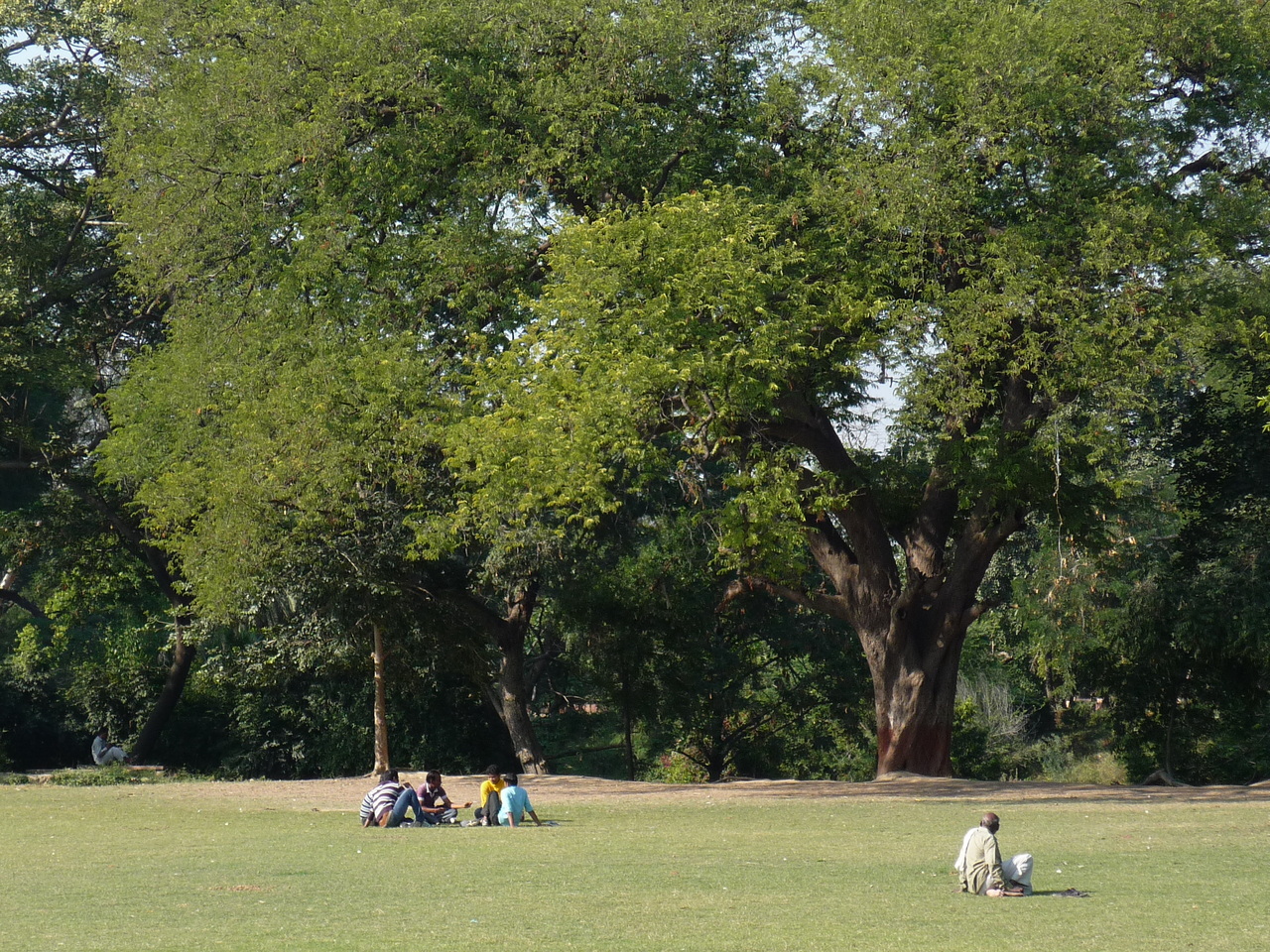
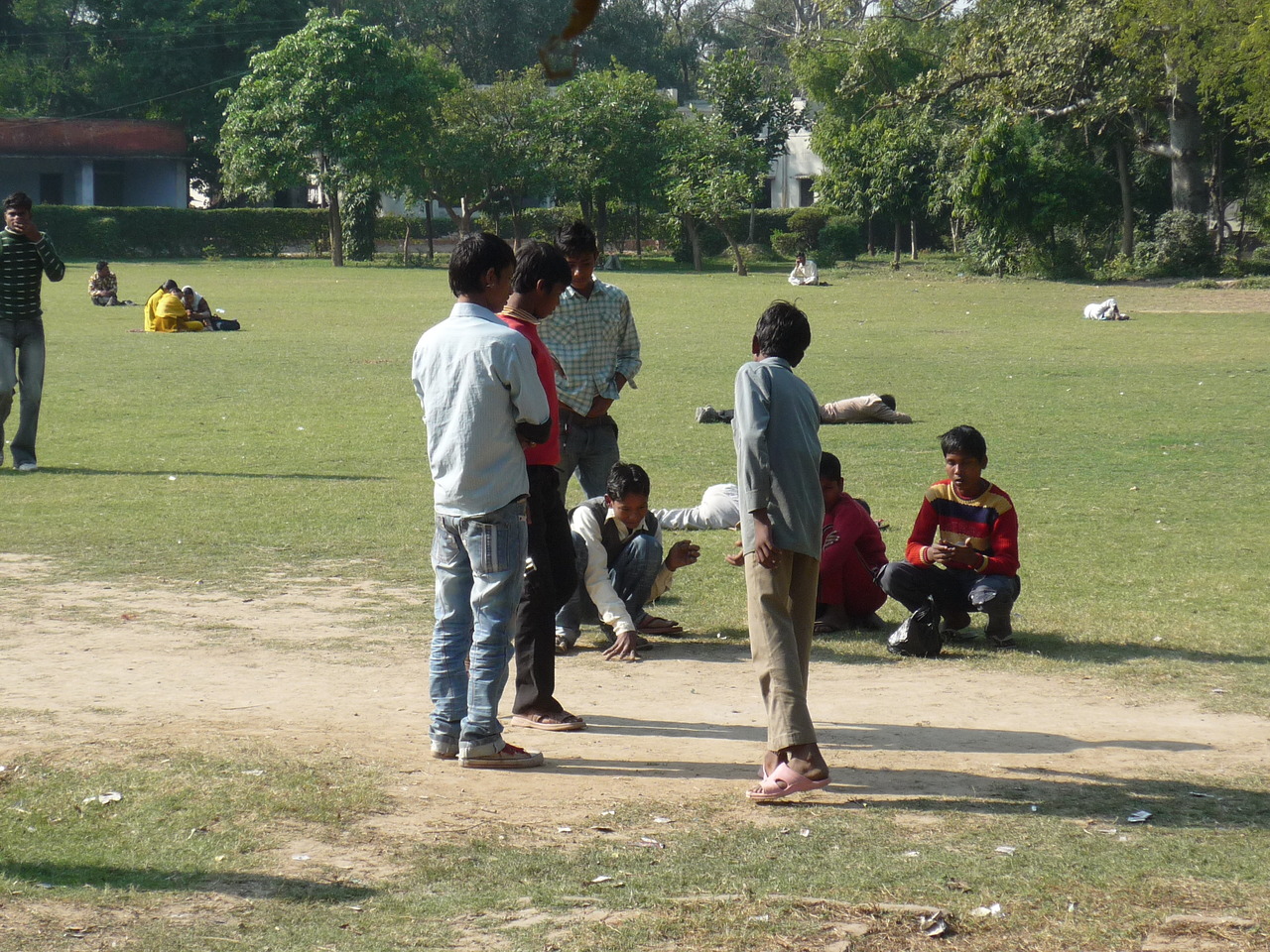
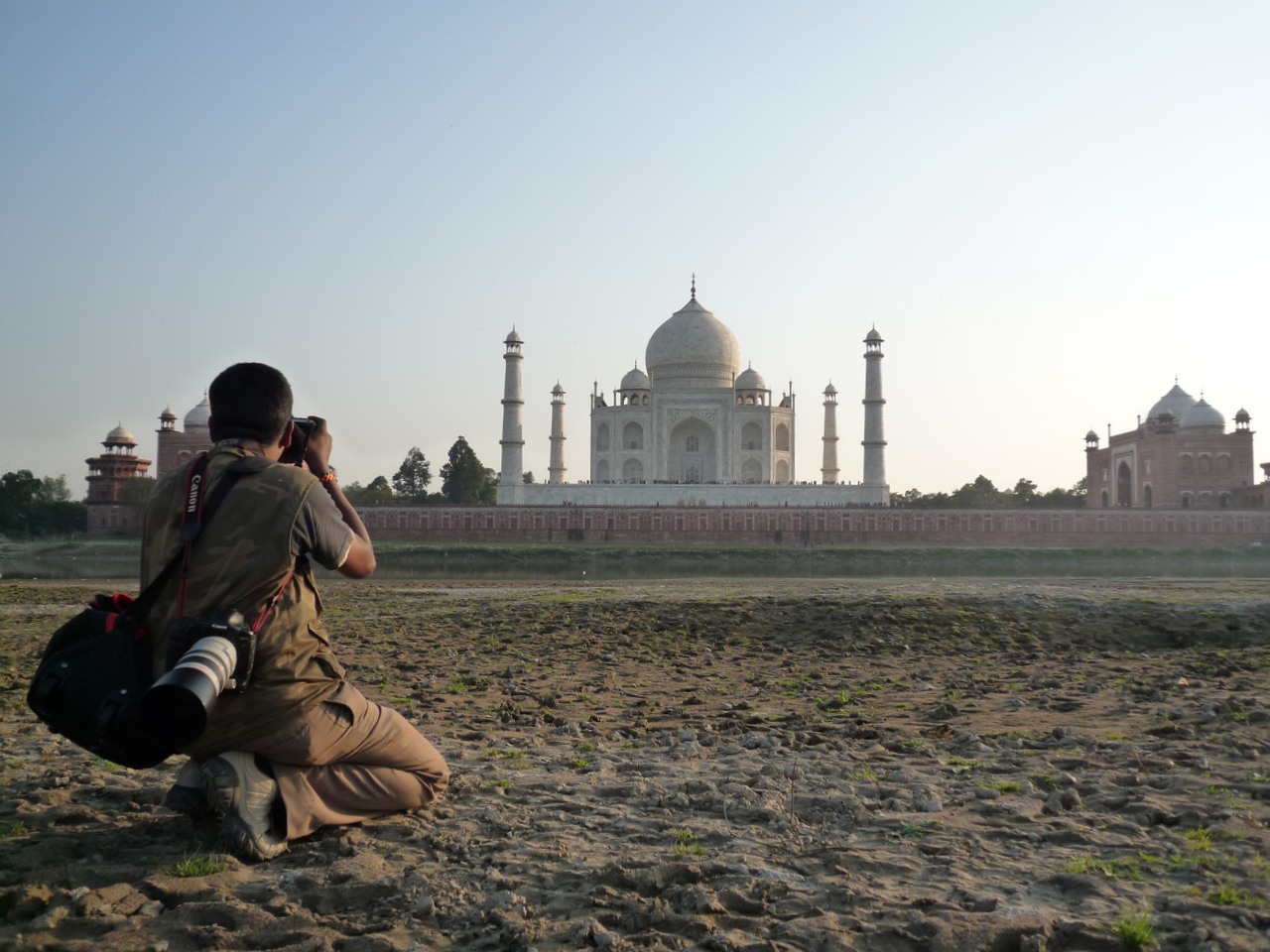
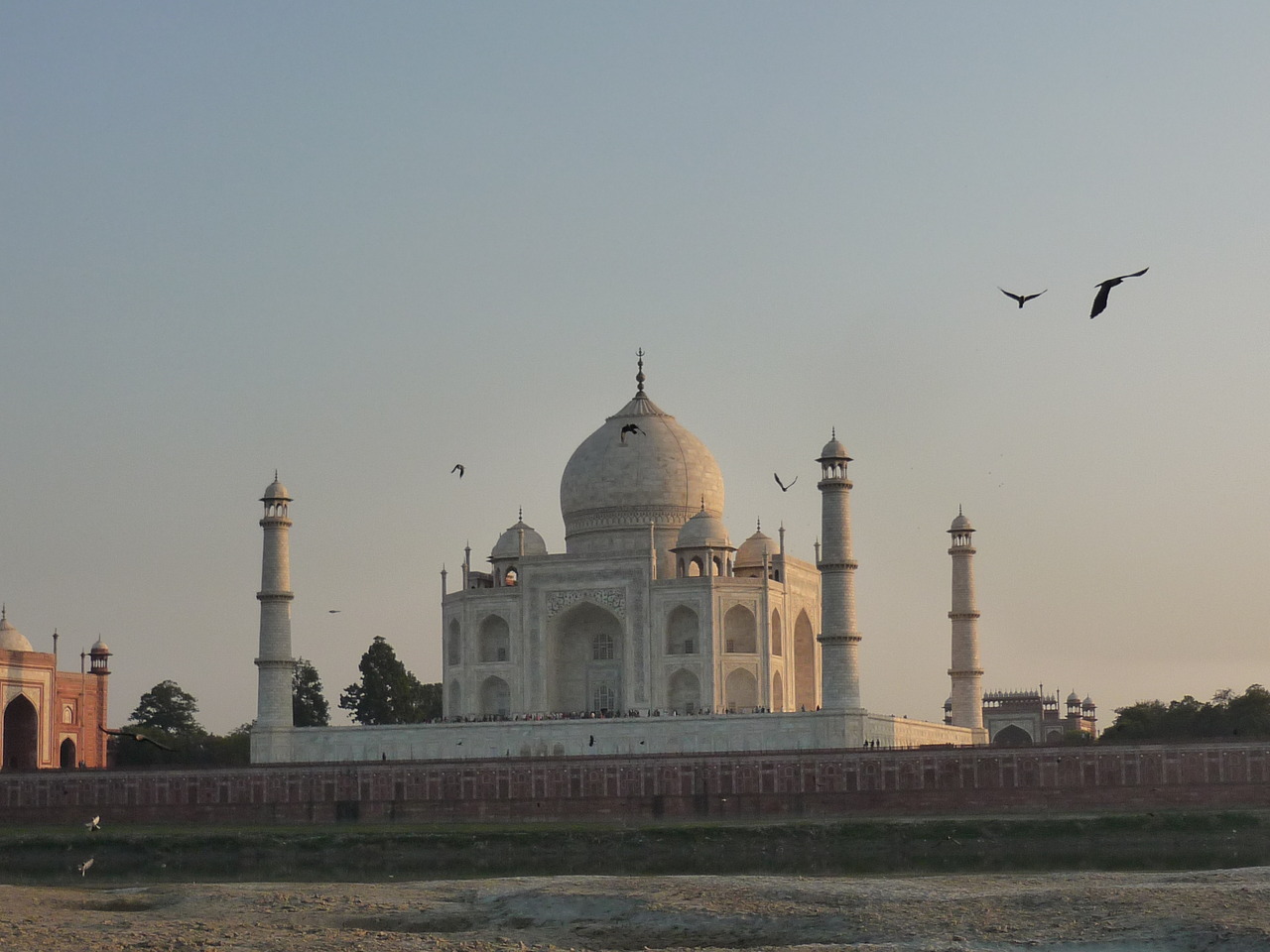
That was where I met Adam (Victoria, British Columbia, Canada), a backpacker at half of the fourteen months of his round-the-world trip. He was at the military outpost, the last line before the illegal zone, waiting for the sun to set on the walls of the monuments. As we both were planning on getting up before dawn the next morning to be (almost) the first ones to enter in the Taj Mahal, we decided to go together.
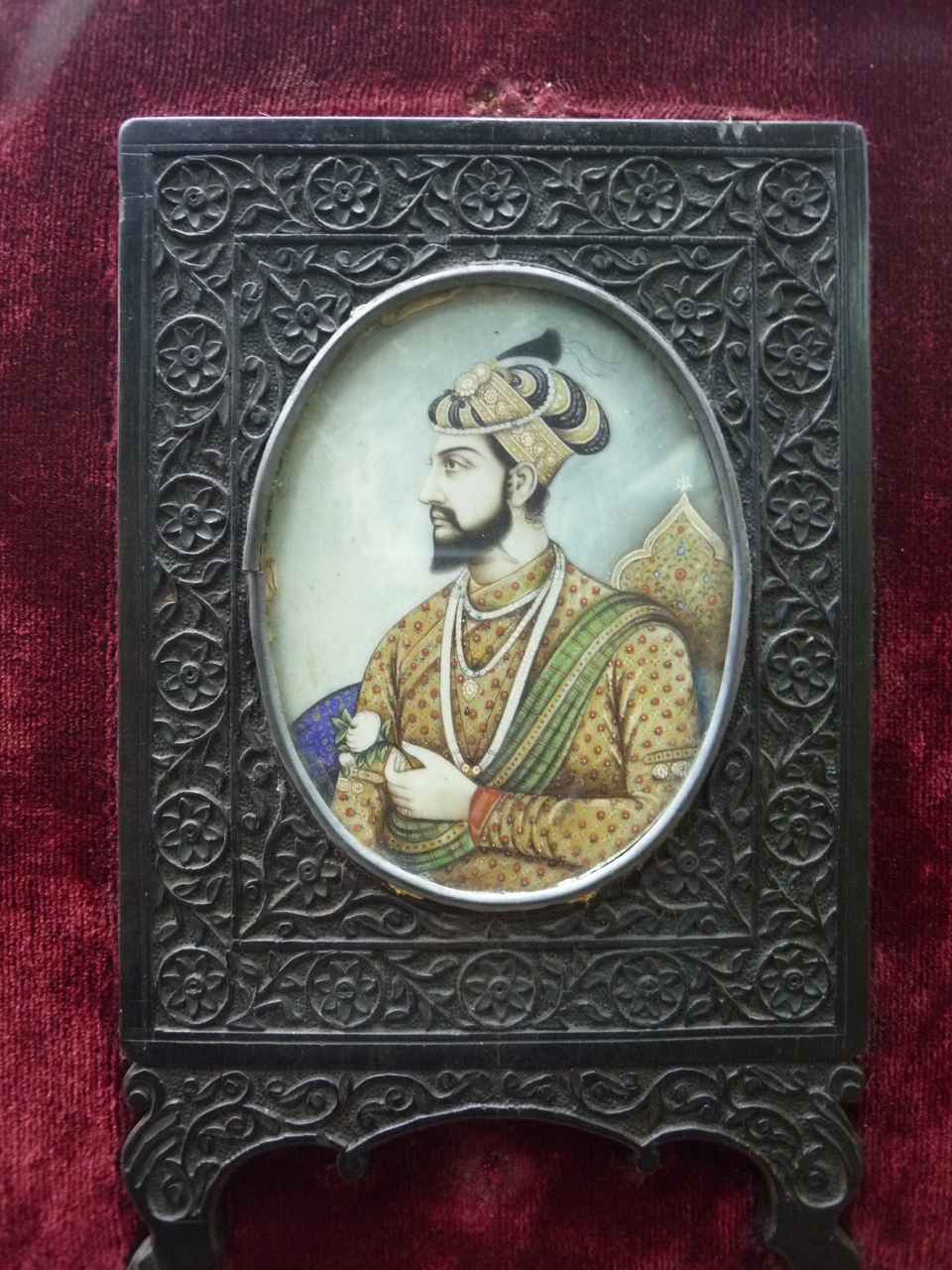
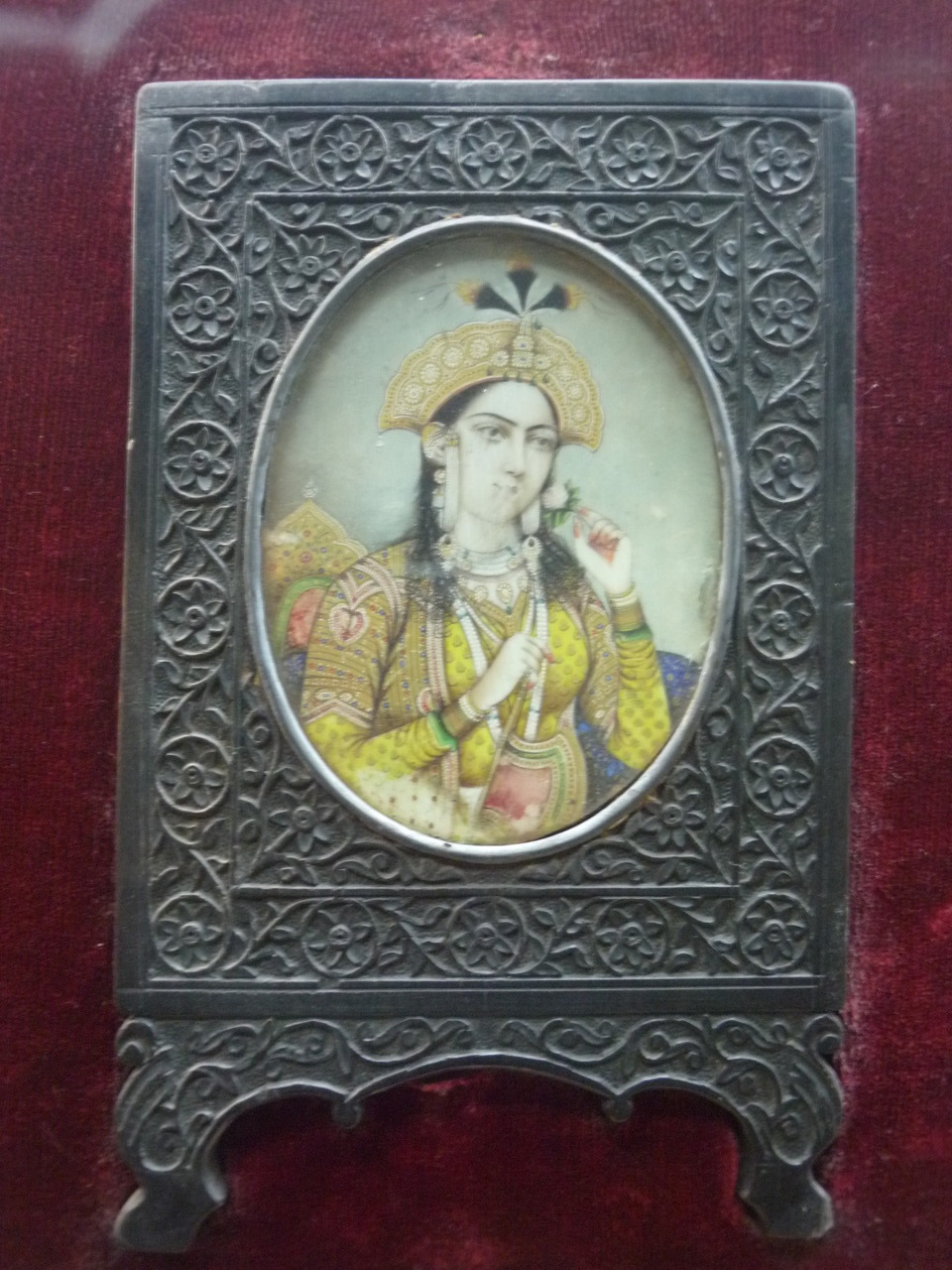
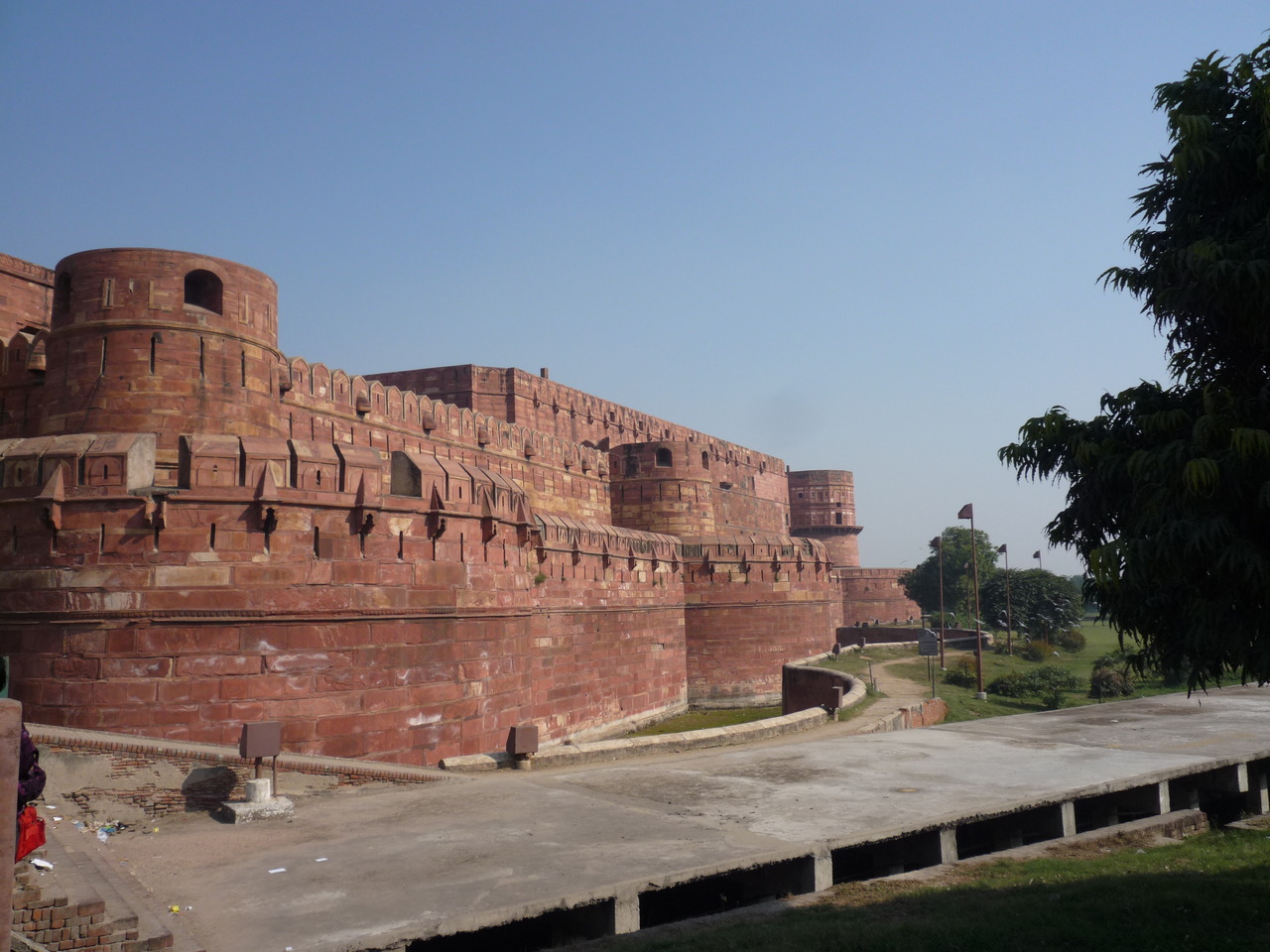
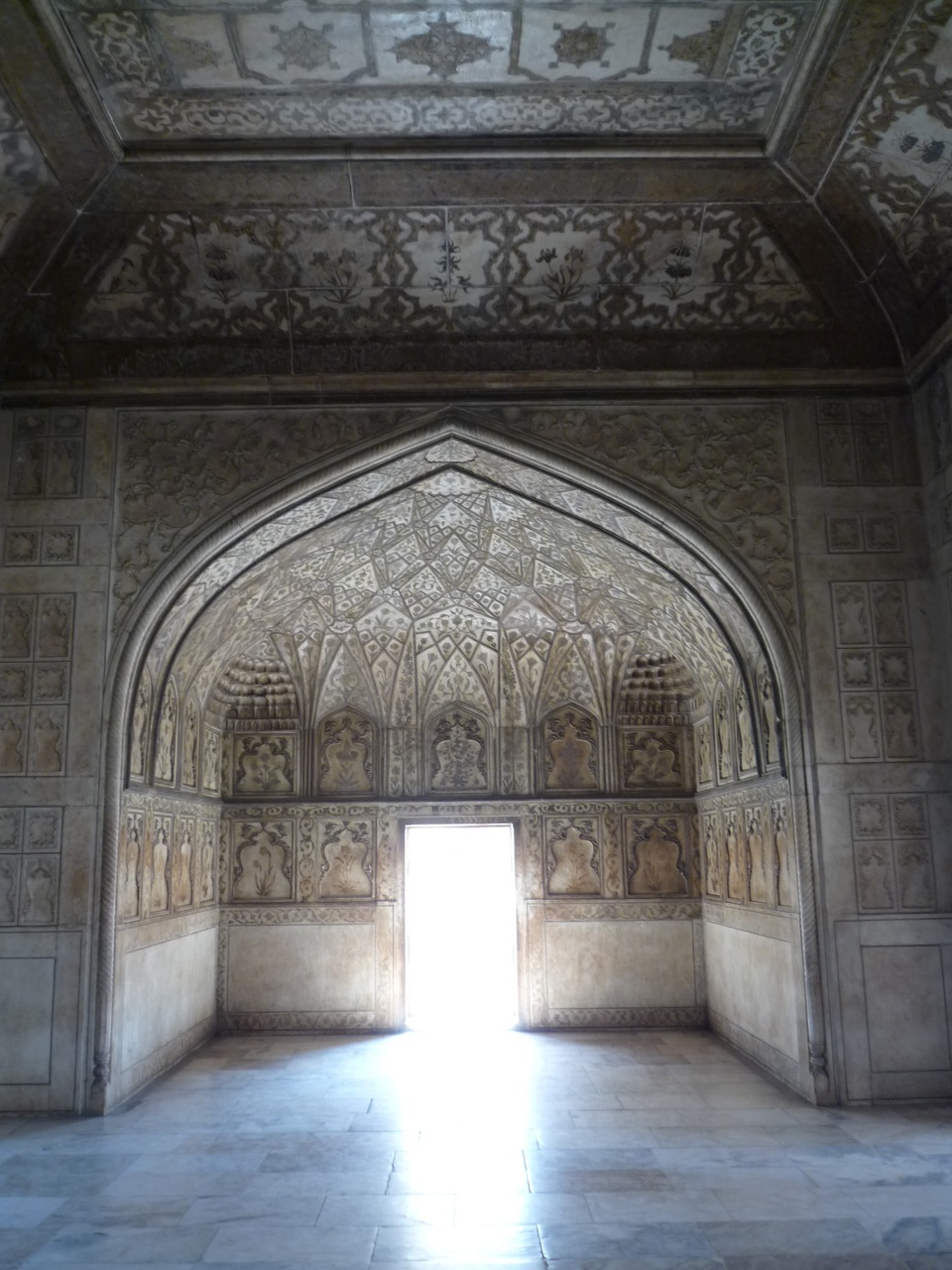
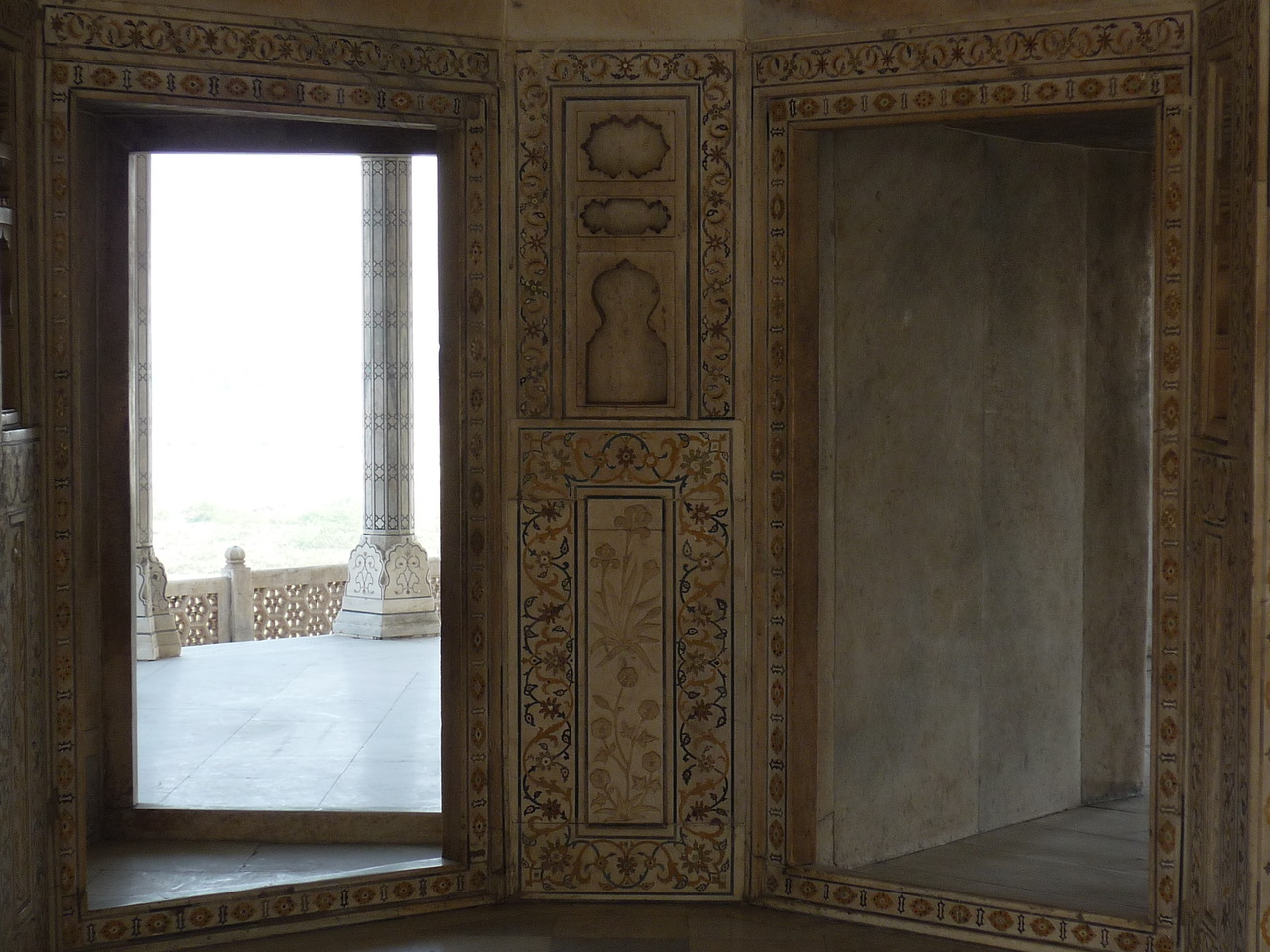
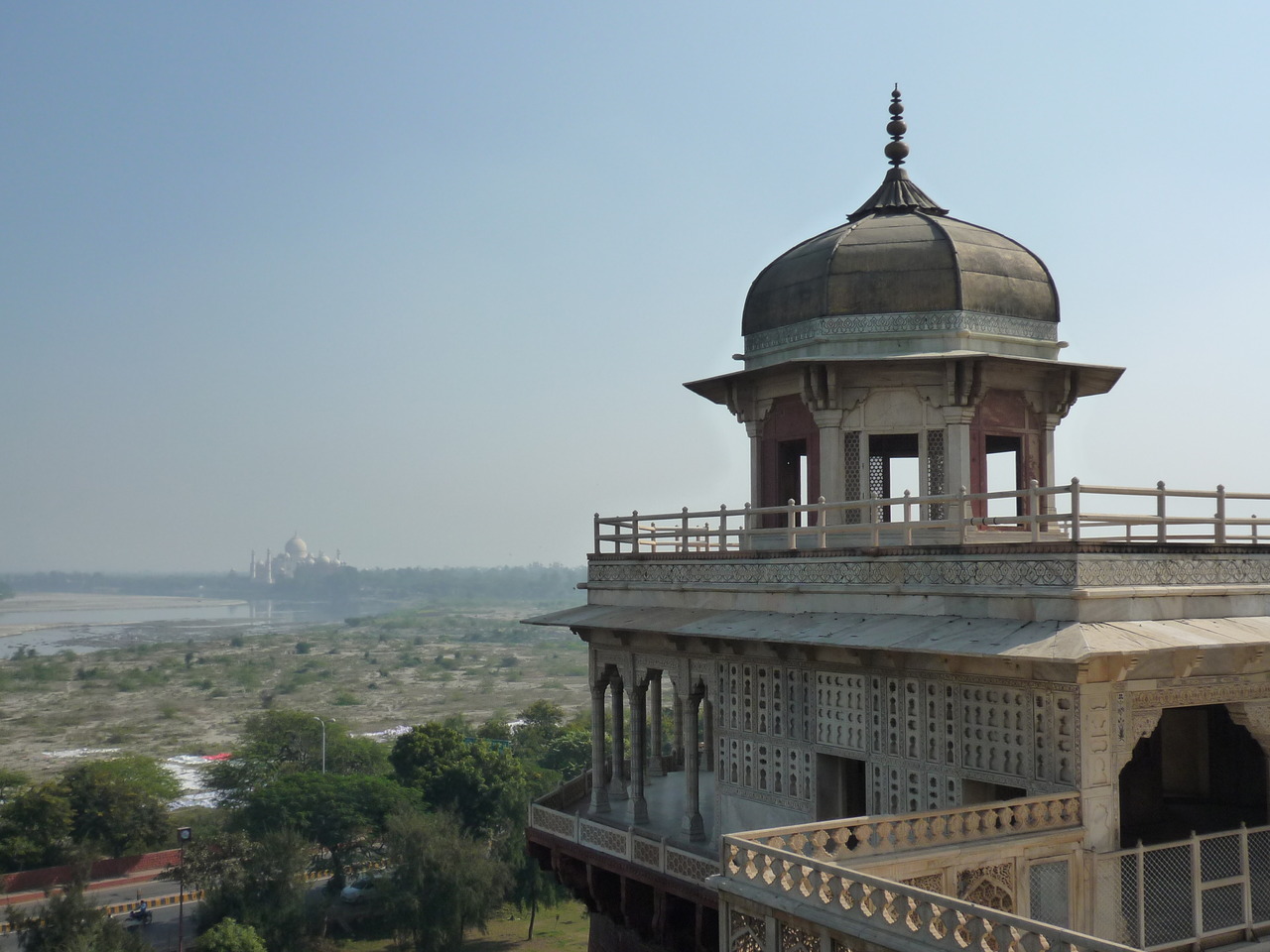
Built around 1650, the Taj Mahal was commissioned by the Mughal emperor Shah Jahan as a mausoleum for his beloved wife Mumtaz Mahal, who died while giving birth to their fourteenth child. It is said that his sorrow was so deep that his hair turned gray overnight. He hired thousands of artisans and specialists from as far as Europe to design, erect and decorate her tomb, using the purest semi-translucent white marble and dozens of different precious stones to inlay it; and, finally, only a few years after it was completed, his third son seized power and imprisoned him in the Agra Fort, two kilometers far from the monument, where he could only gaze at his creation through a window for eight years before dying. His son buried him besides his wife, in the basement of the Taj Mahal, and constructed another cenotaph besides Mumtaz Mahal’s one, which stands in the center of the main chamber, thus breaking the perfect symmetry of the complex.
Now that you know, my friends, welcome in the Taj grounds.
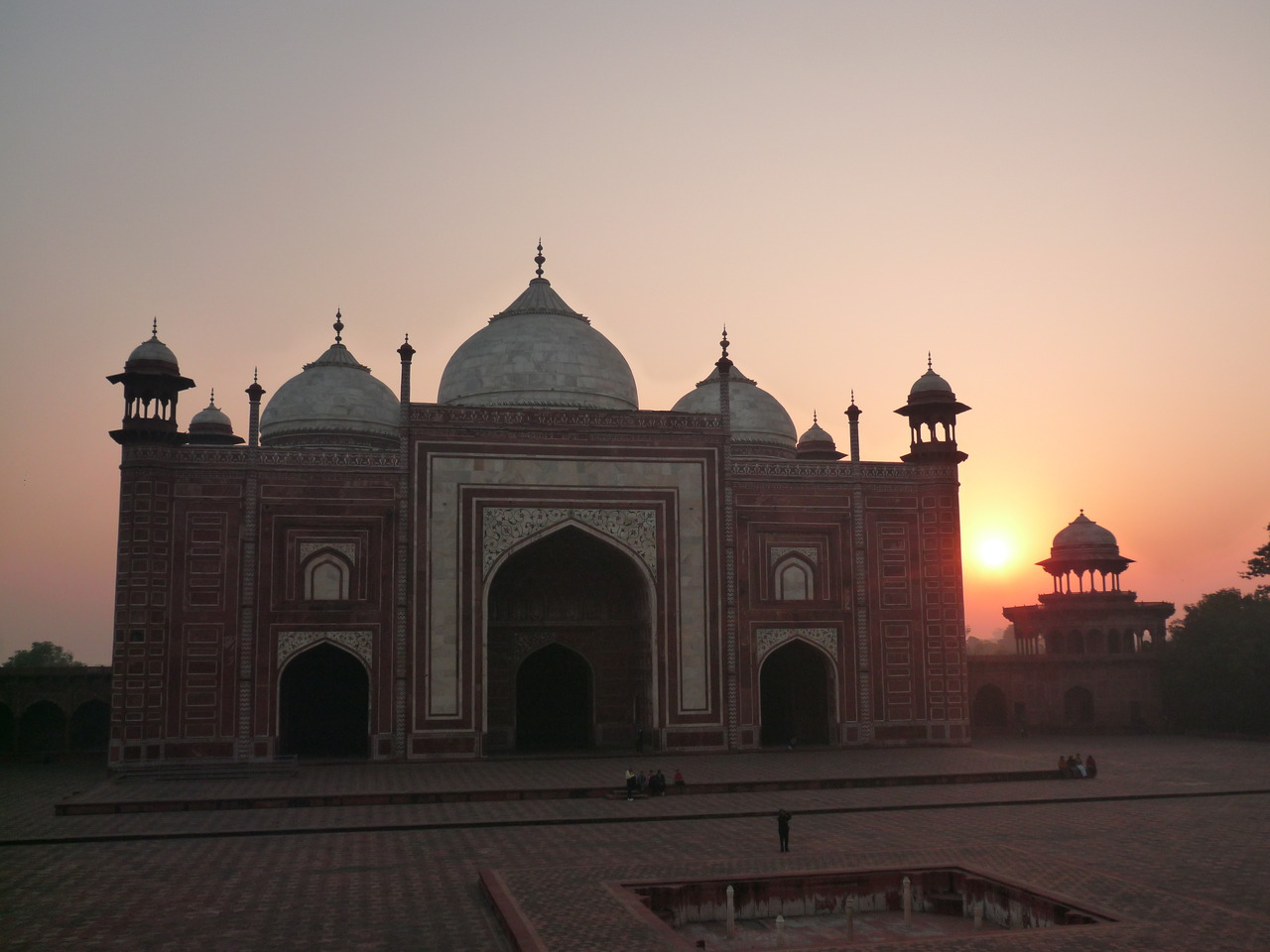
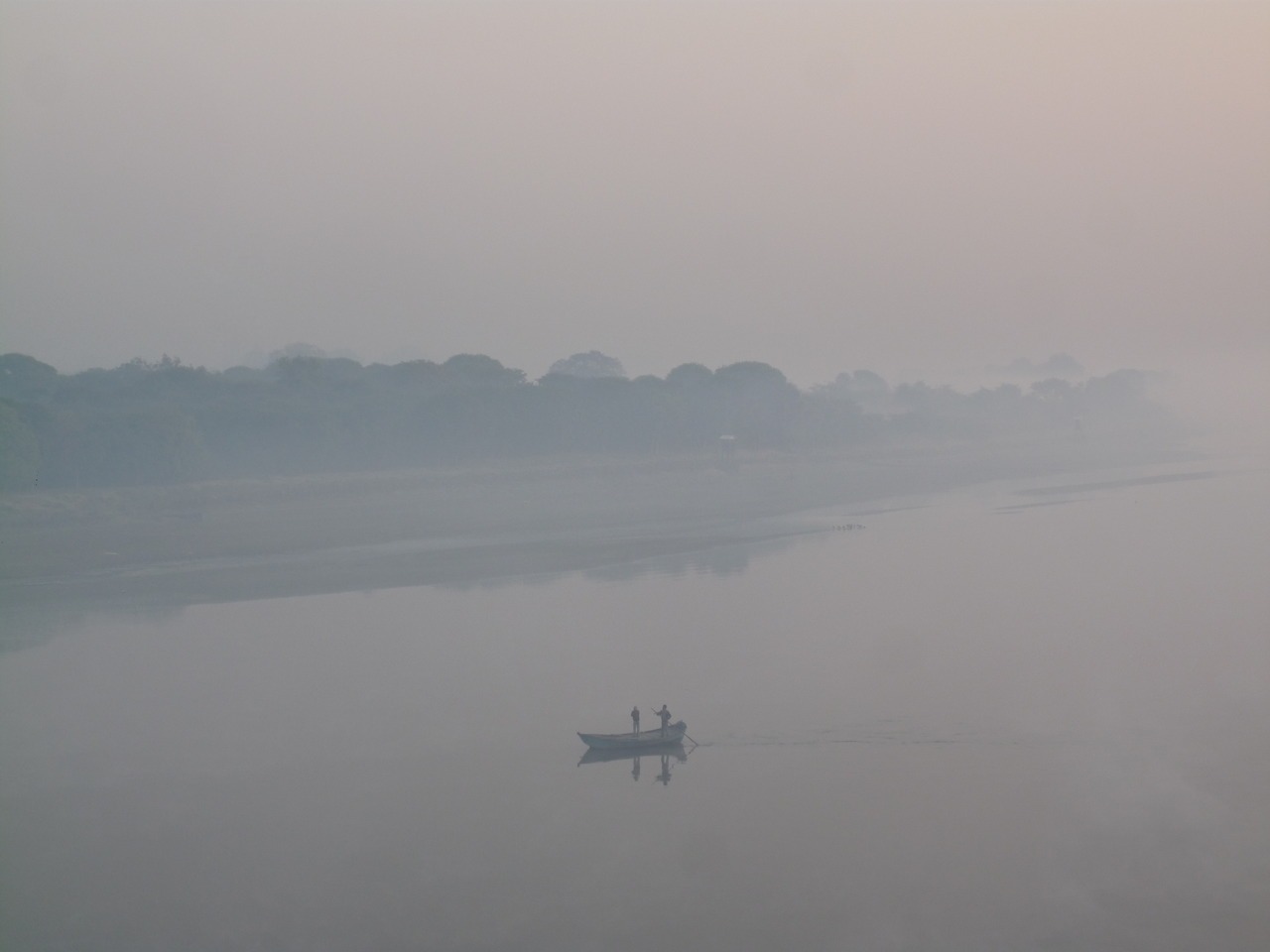
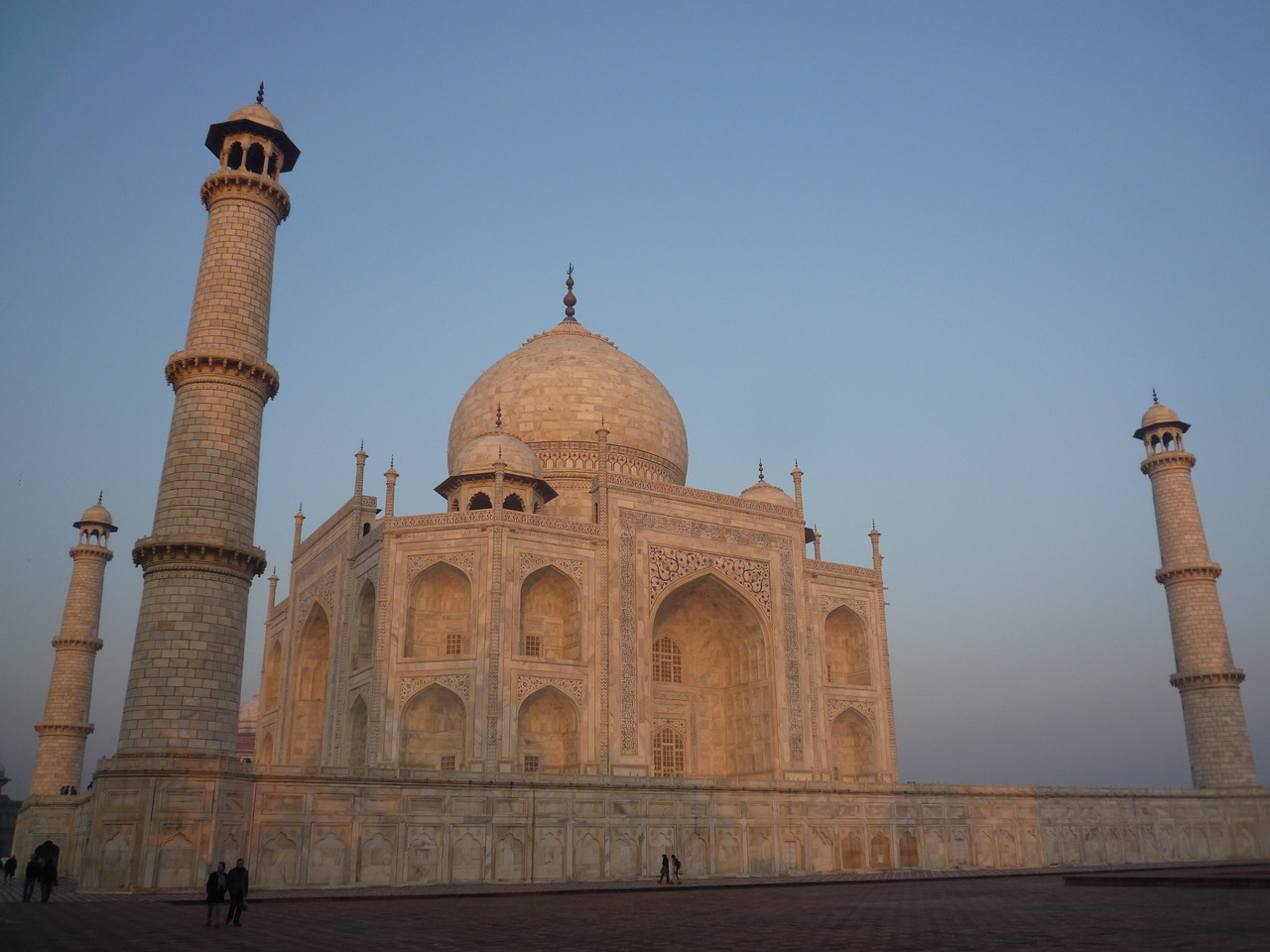
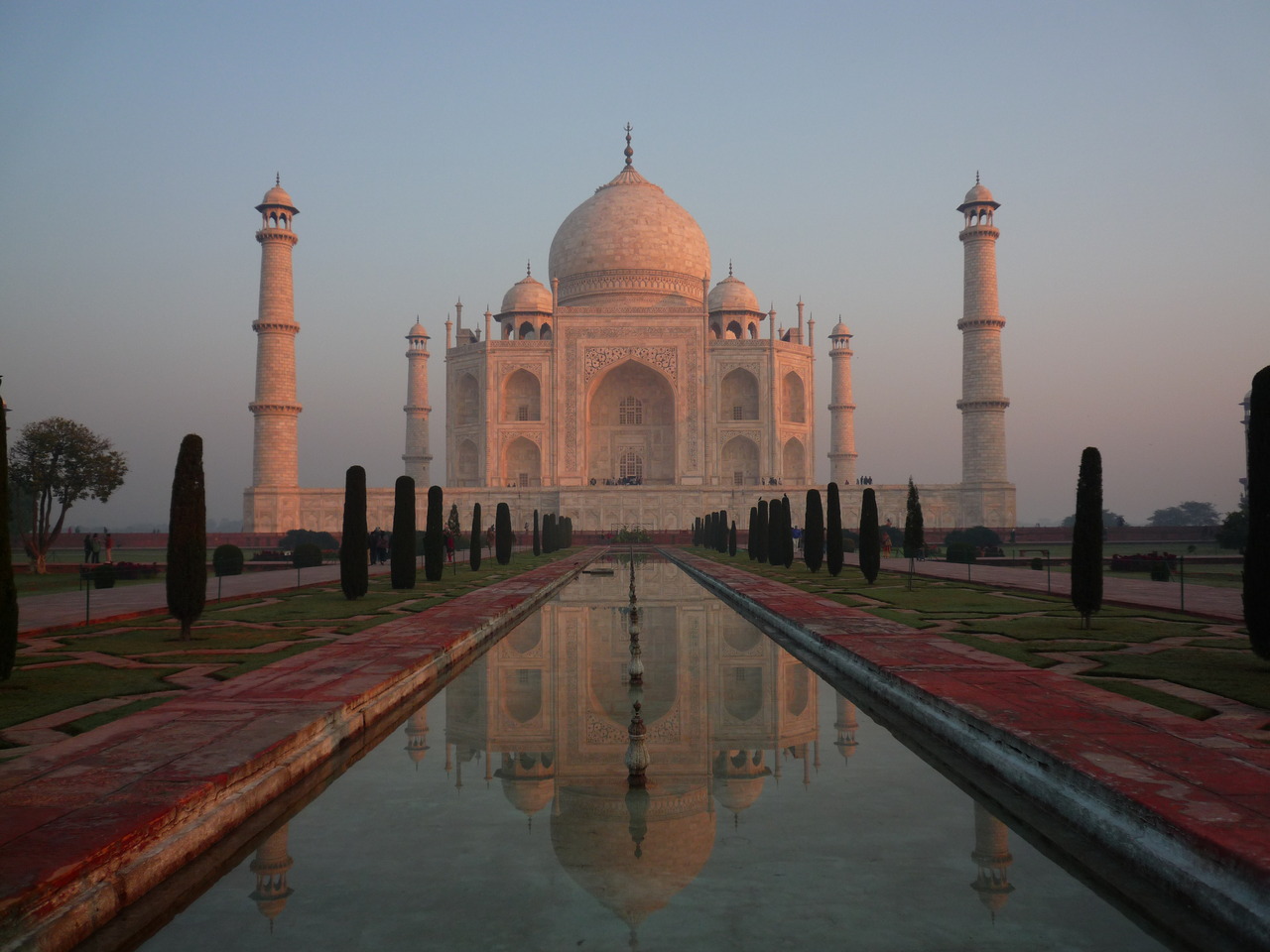
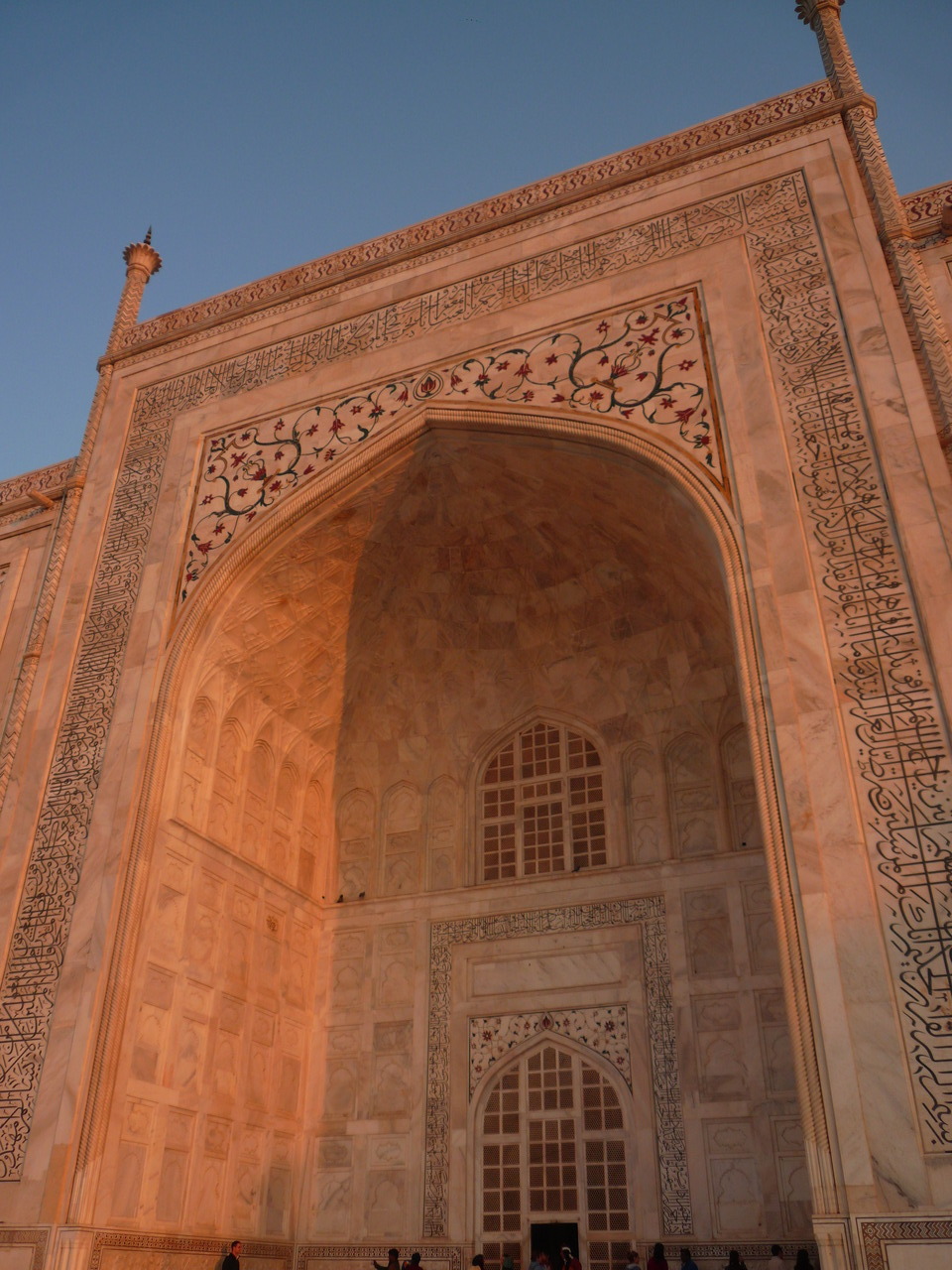
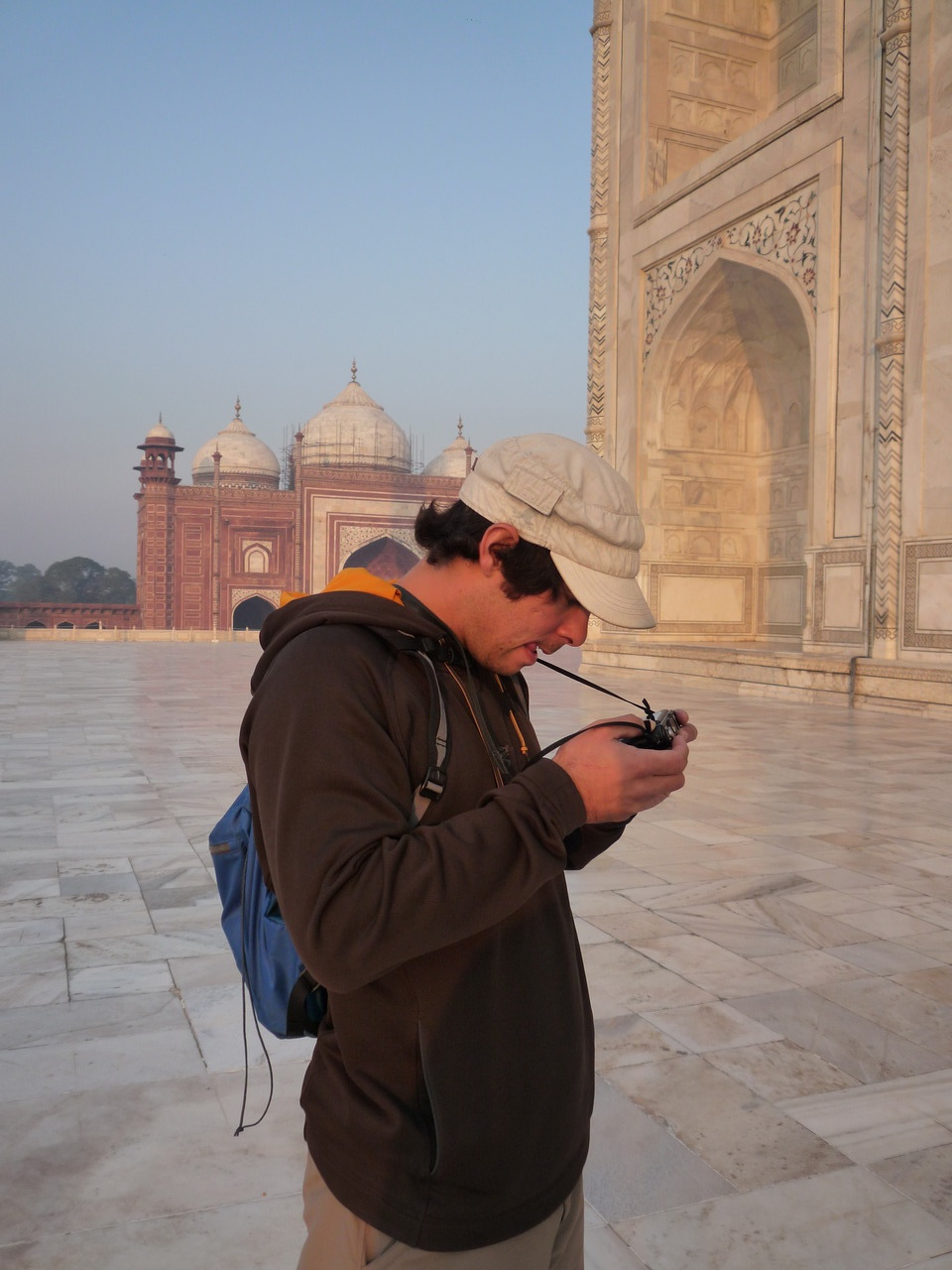
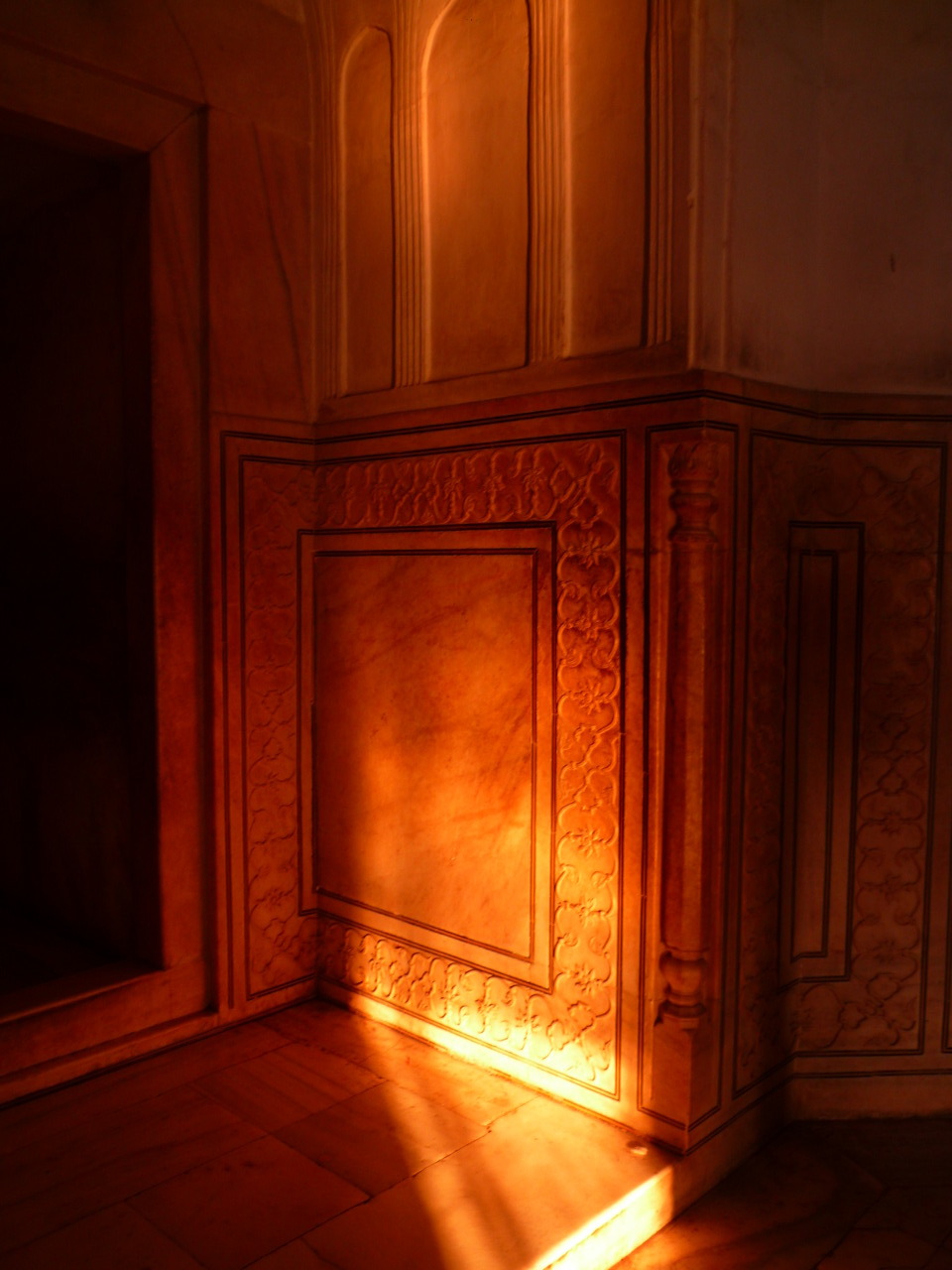
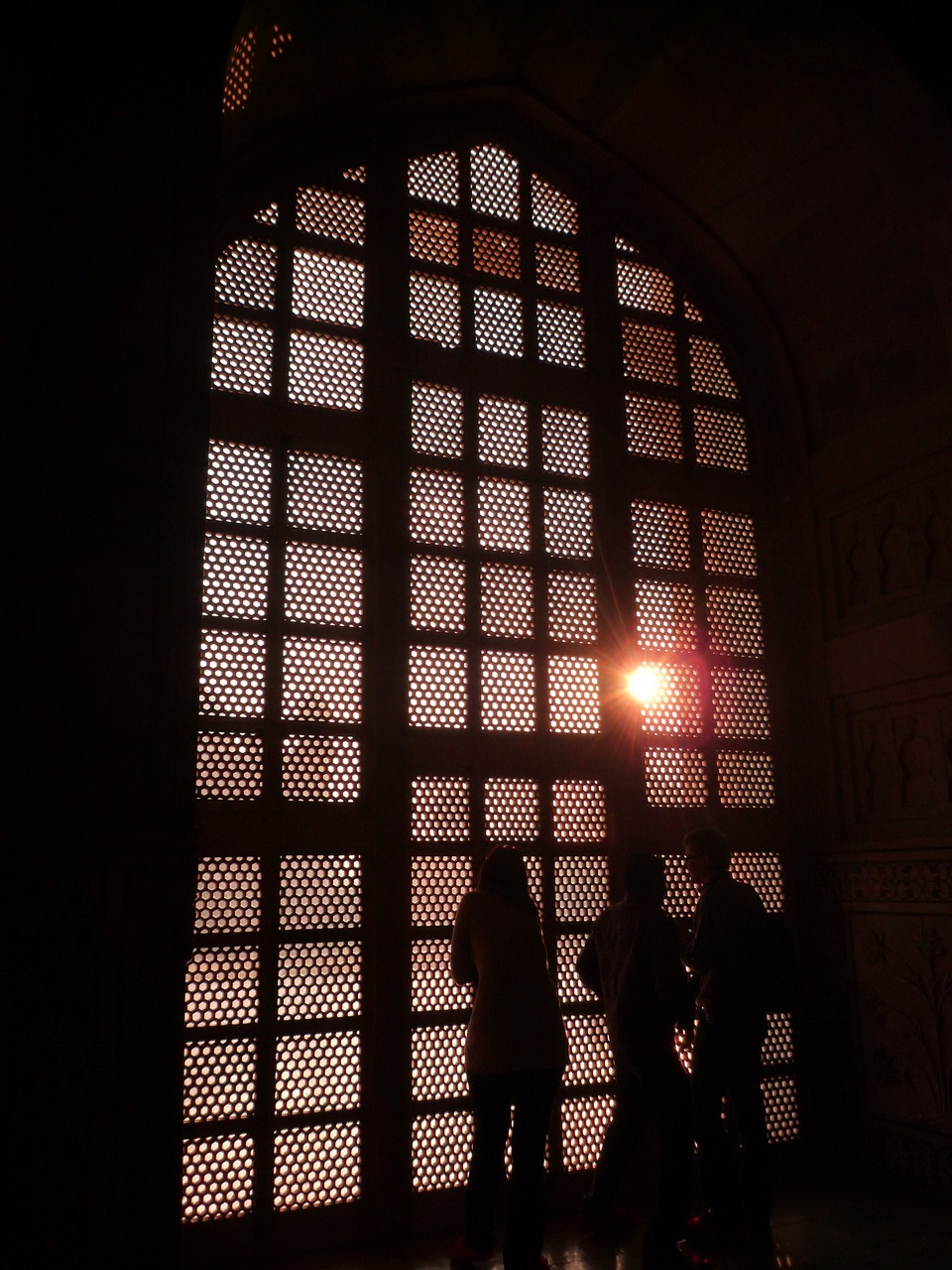
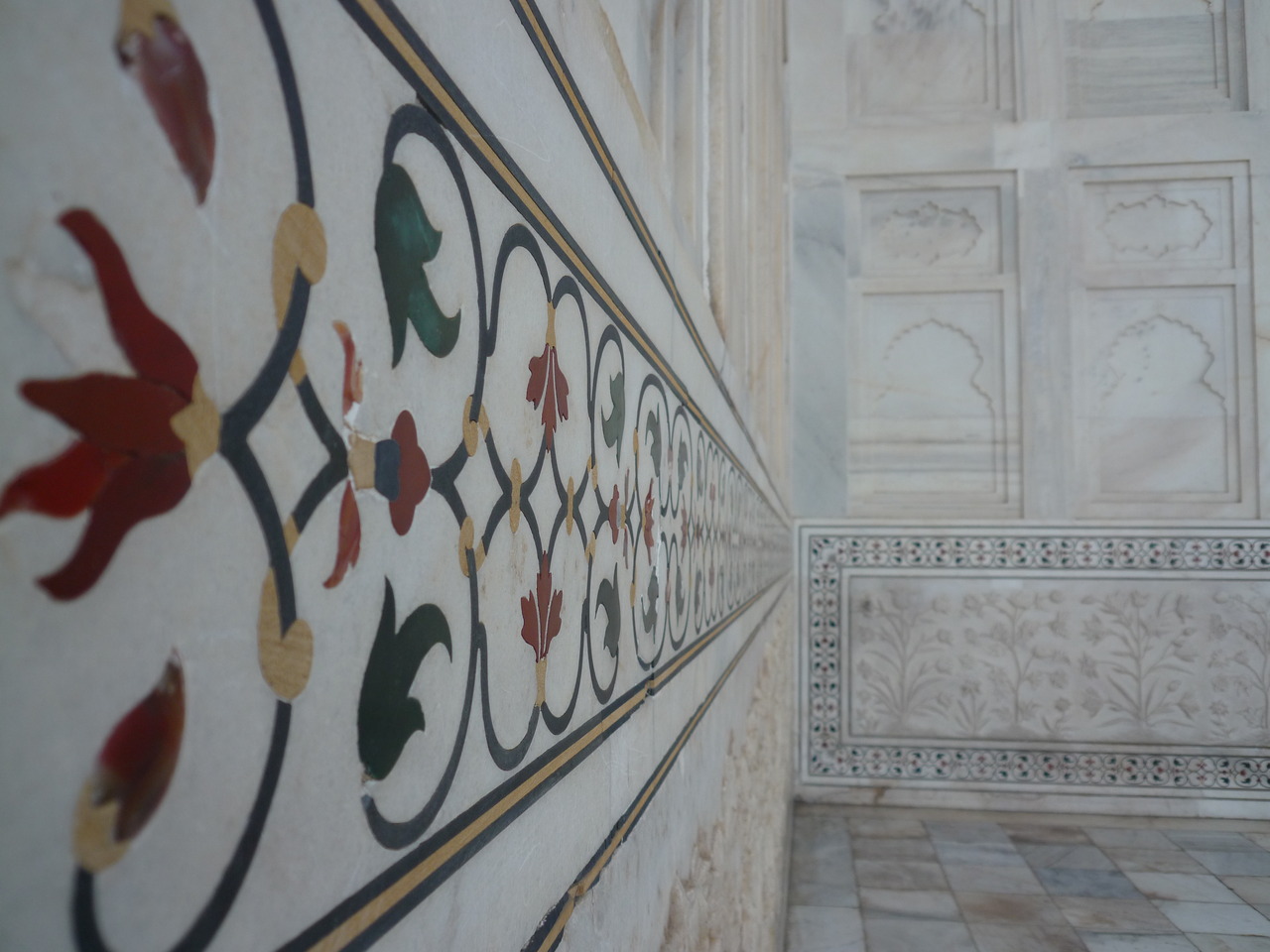
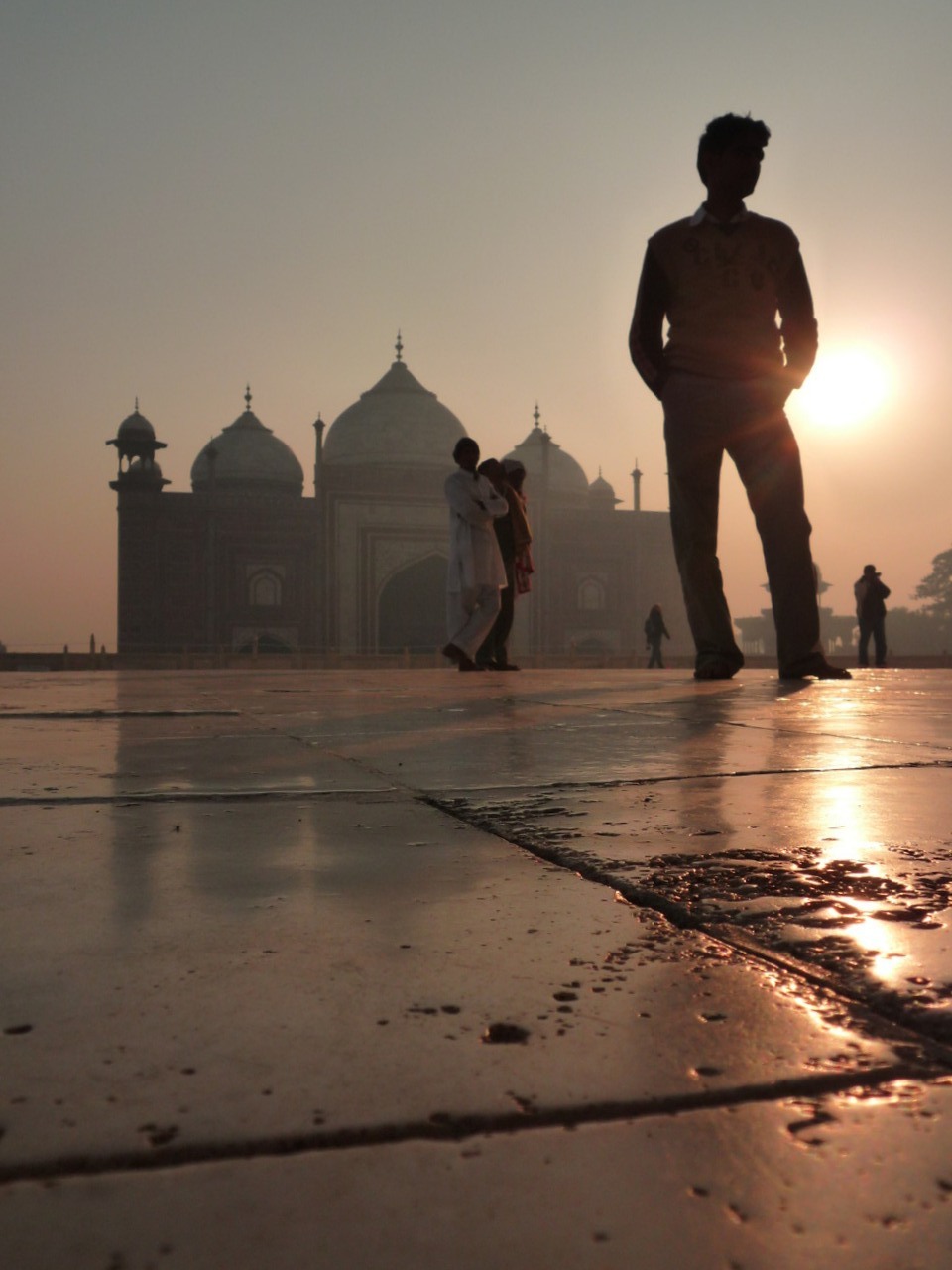
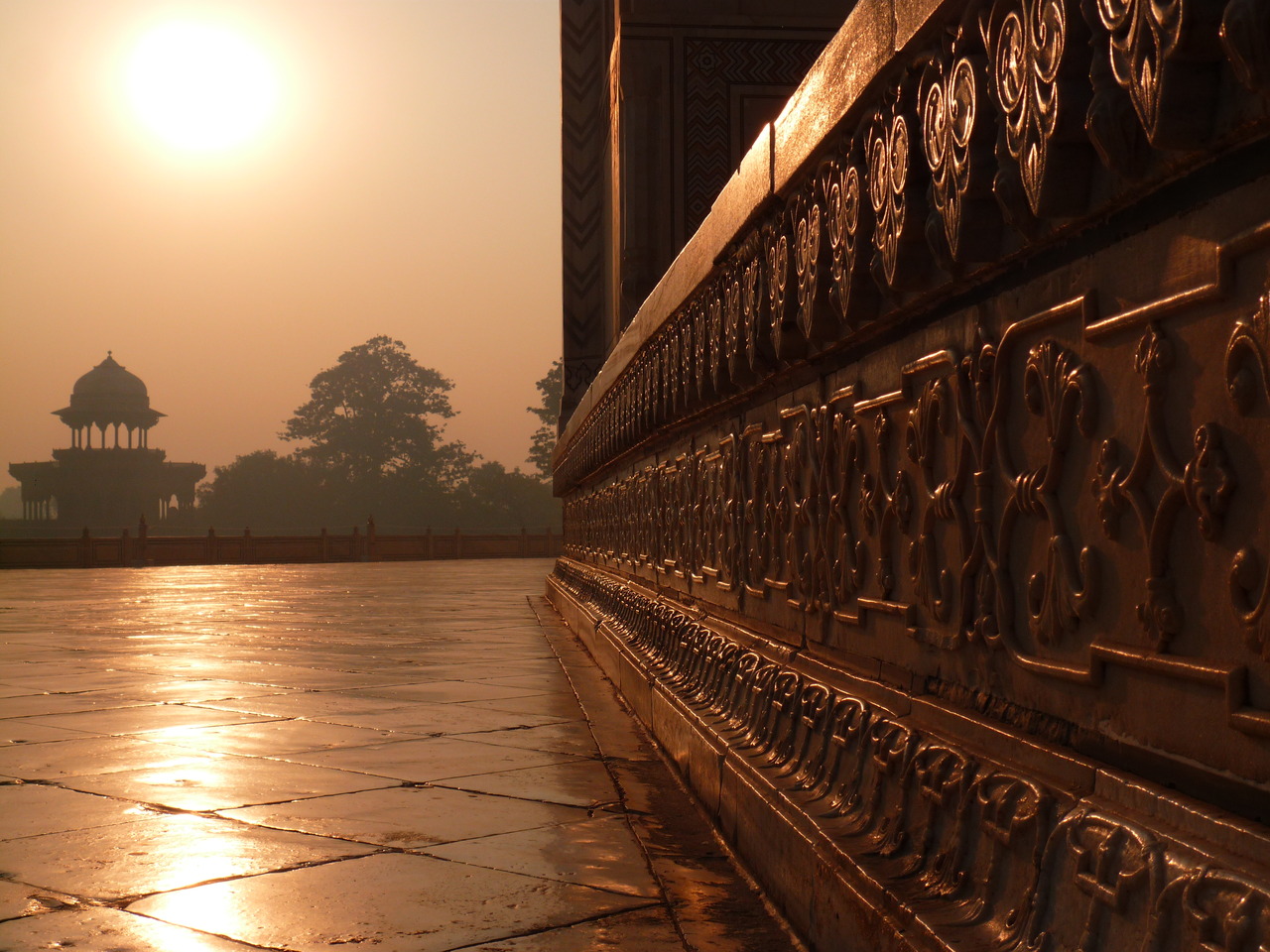
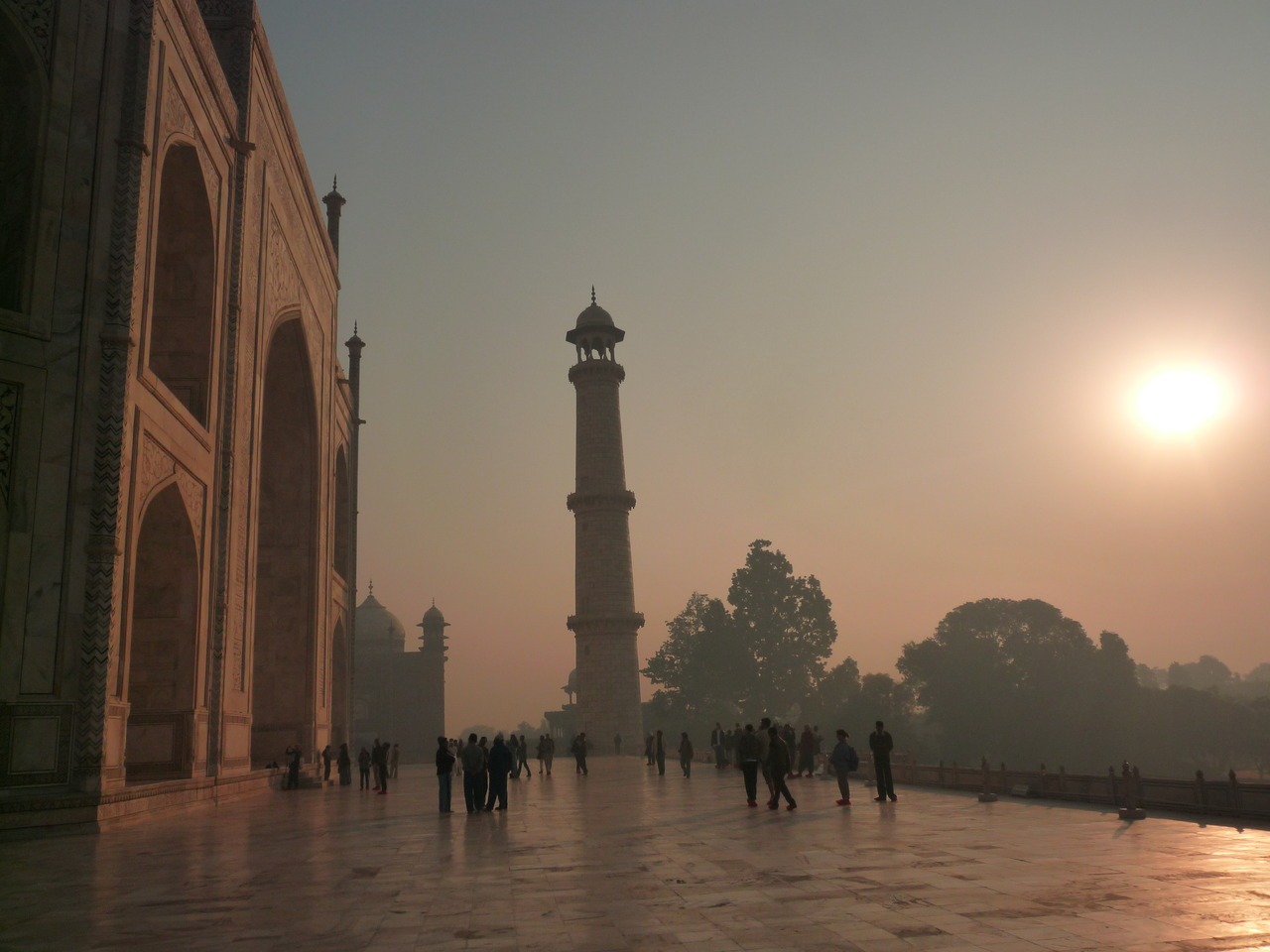
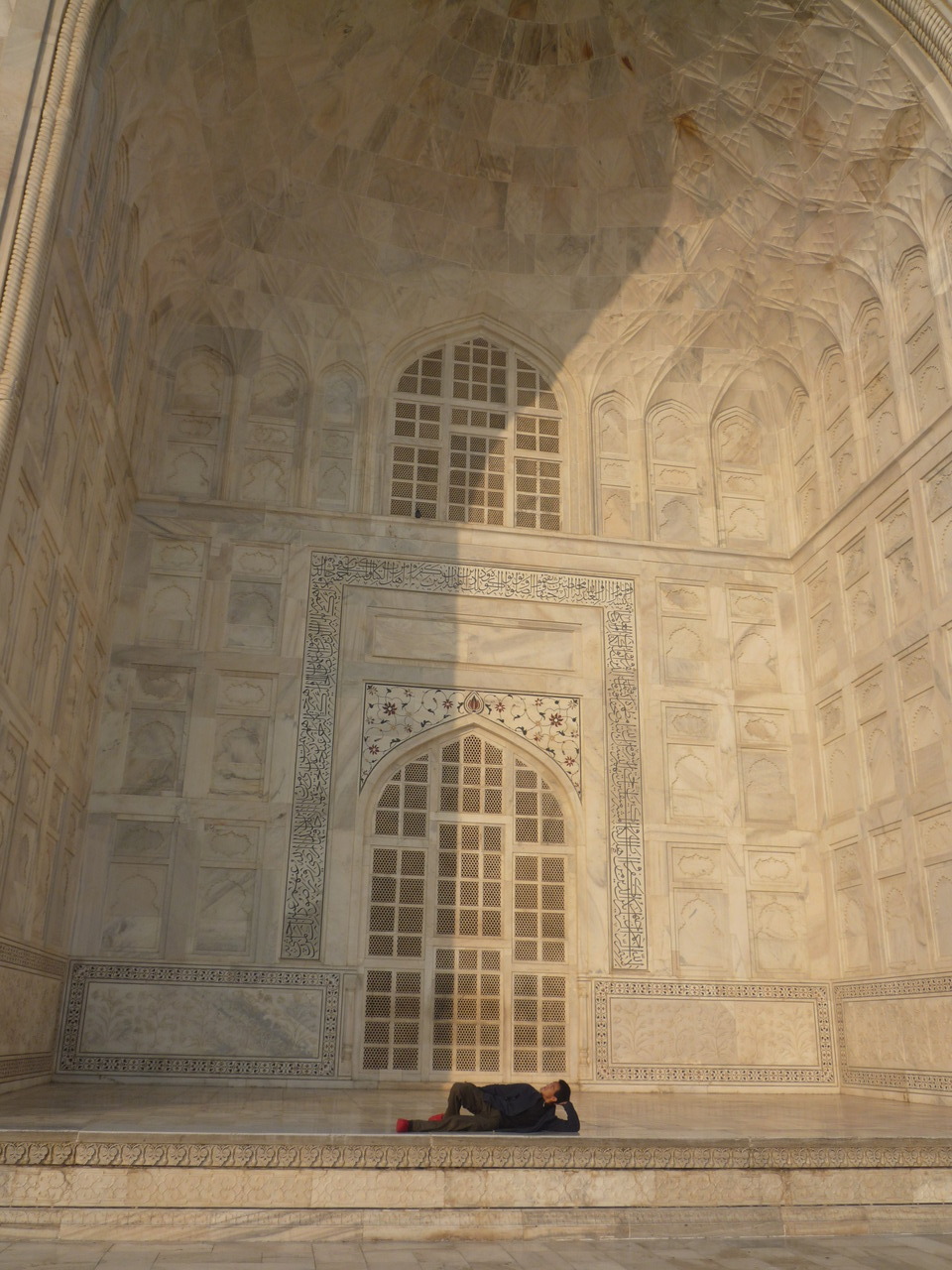
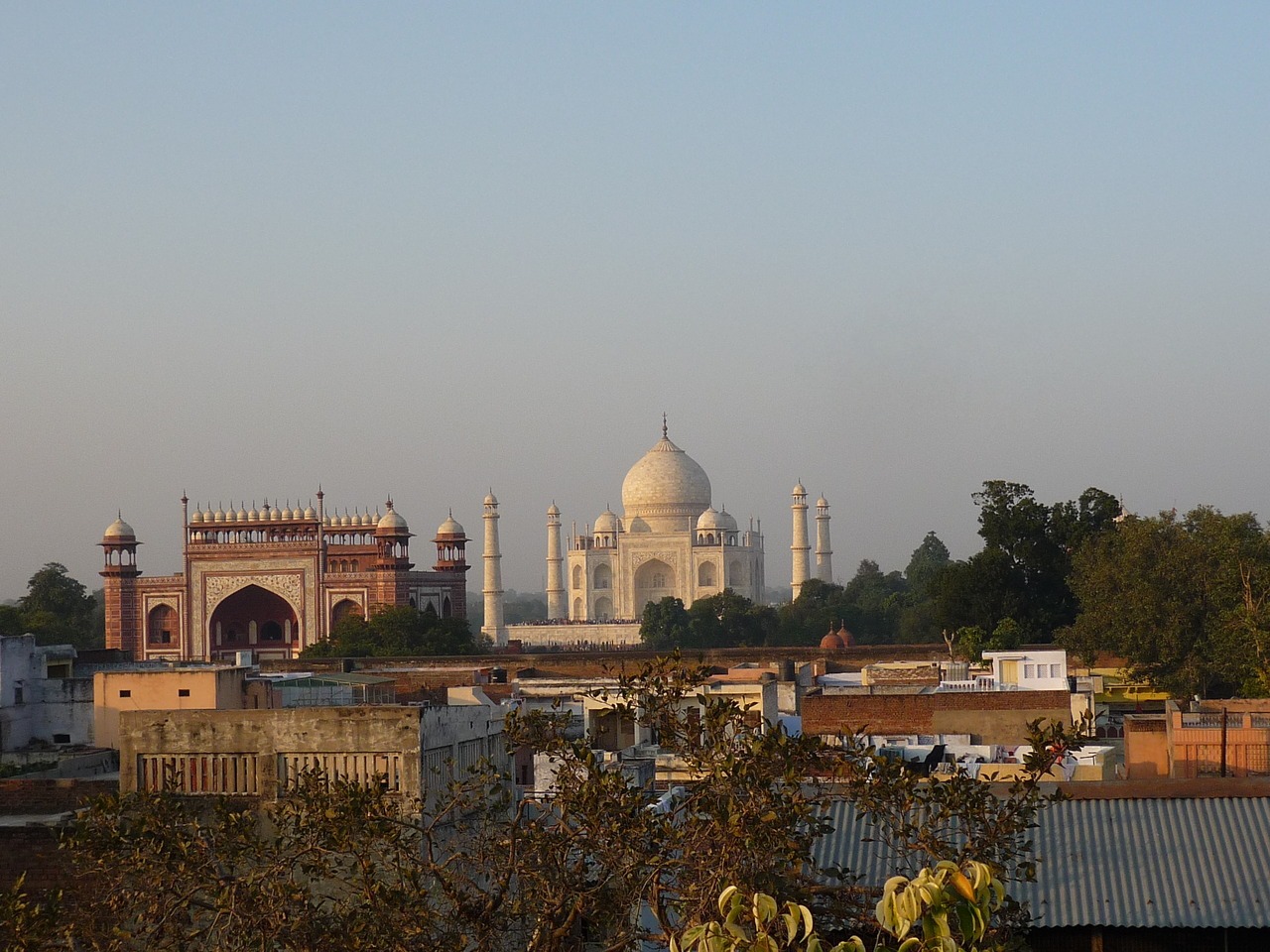
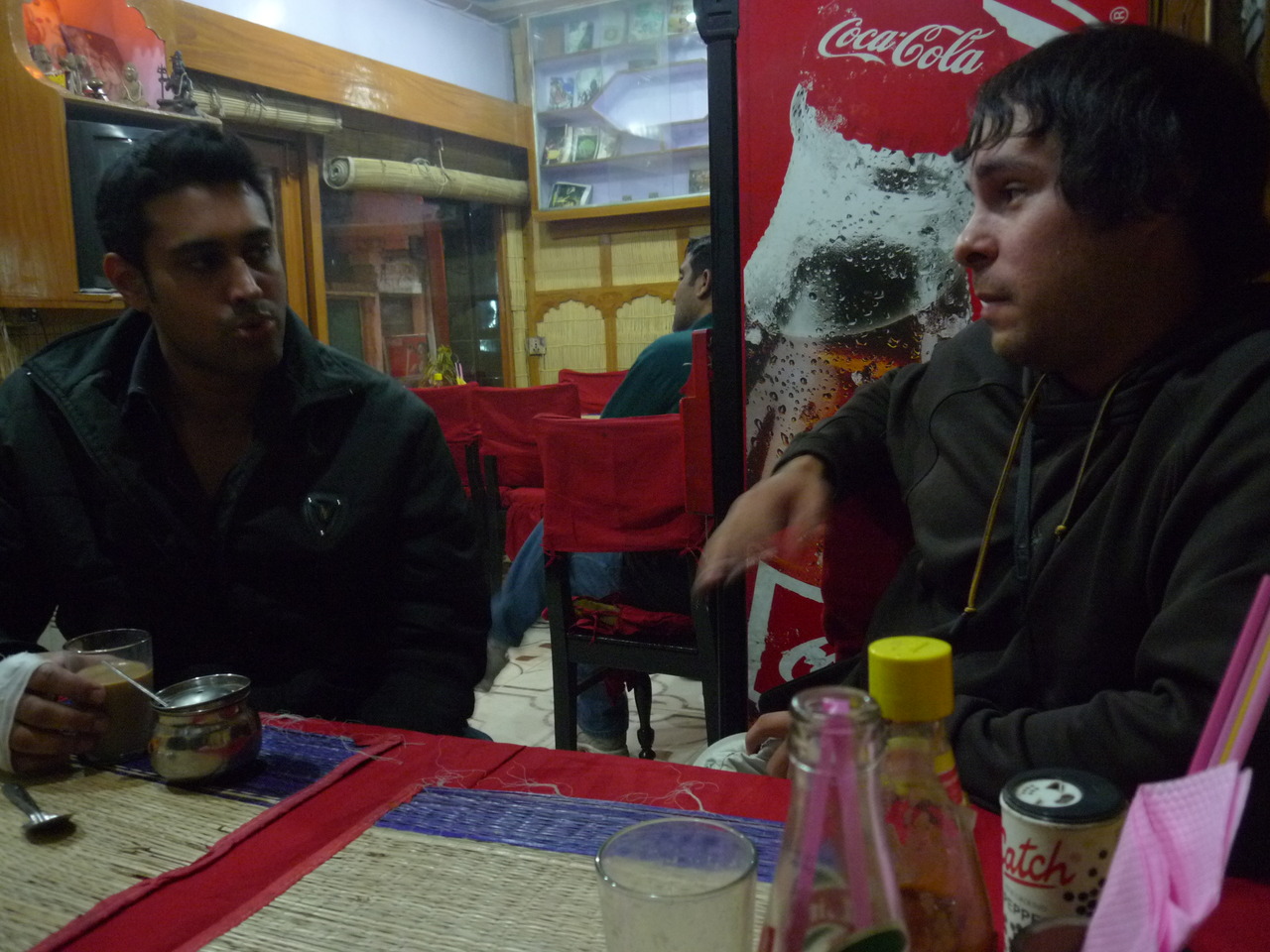
Adam would leave for Varanasi (Uttar Pradesh) a few hours later, in the midst of a Muslim celebration, urging me to go there as well before leaving India. The only way I could visit it and then get to Delhi in time for my flight was to stay there only one night, between two overnight trains on hundreds of kilometers, since I had previously planned to stay for a longer time in Agra. I accepted, but I still had to visit the Agra Fort before going on on my journey. I hence decided to take the train only the day after. Before he left though, we spent the evening talking with other travelers we met in a rooftop restaurant, exchanging our experiences.
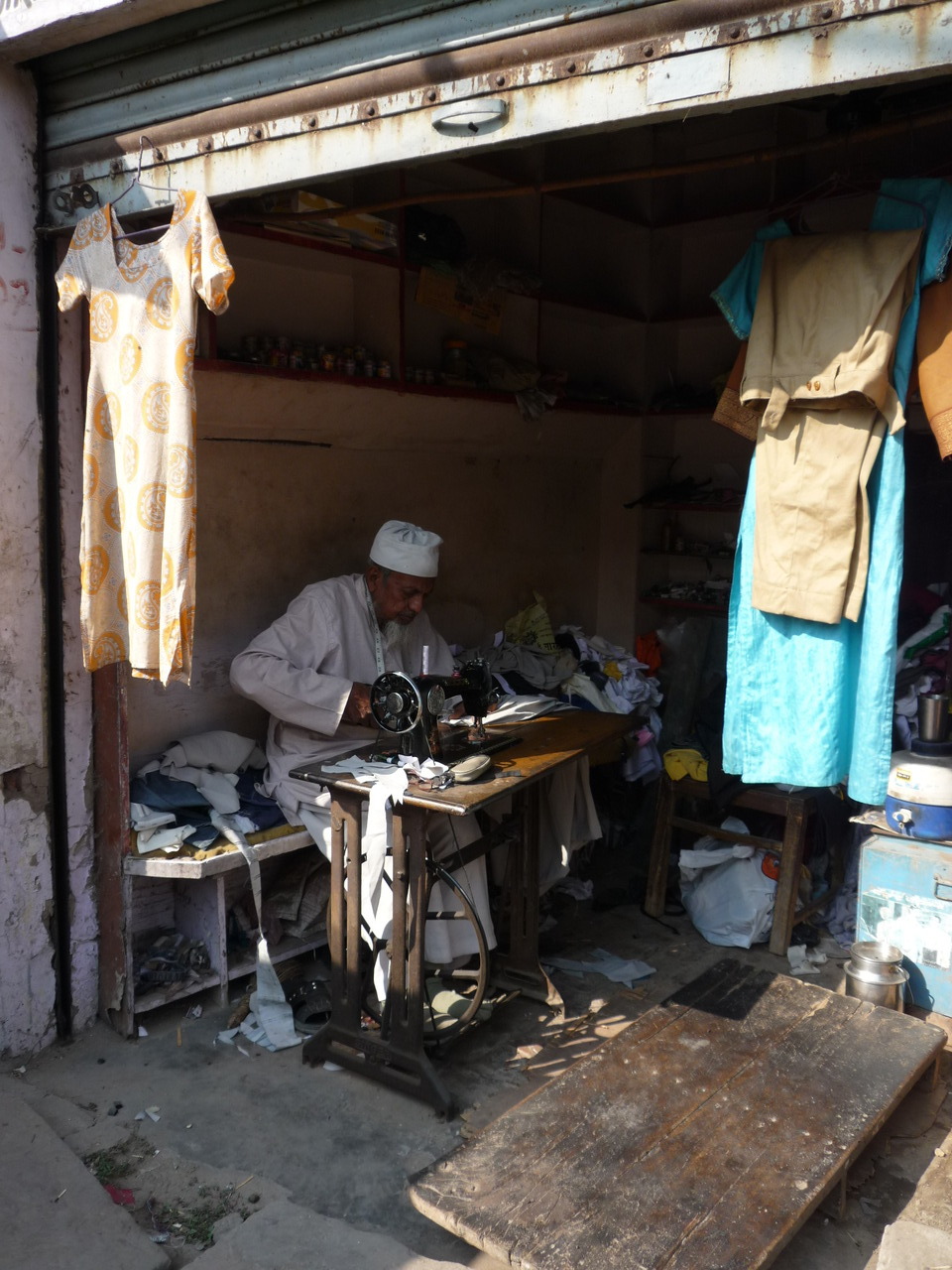
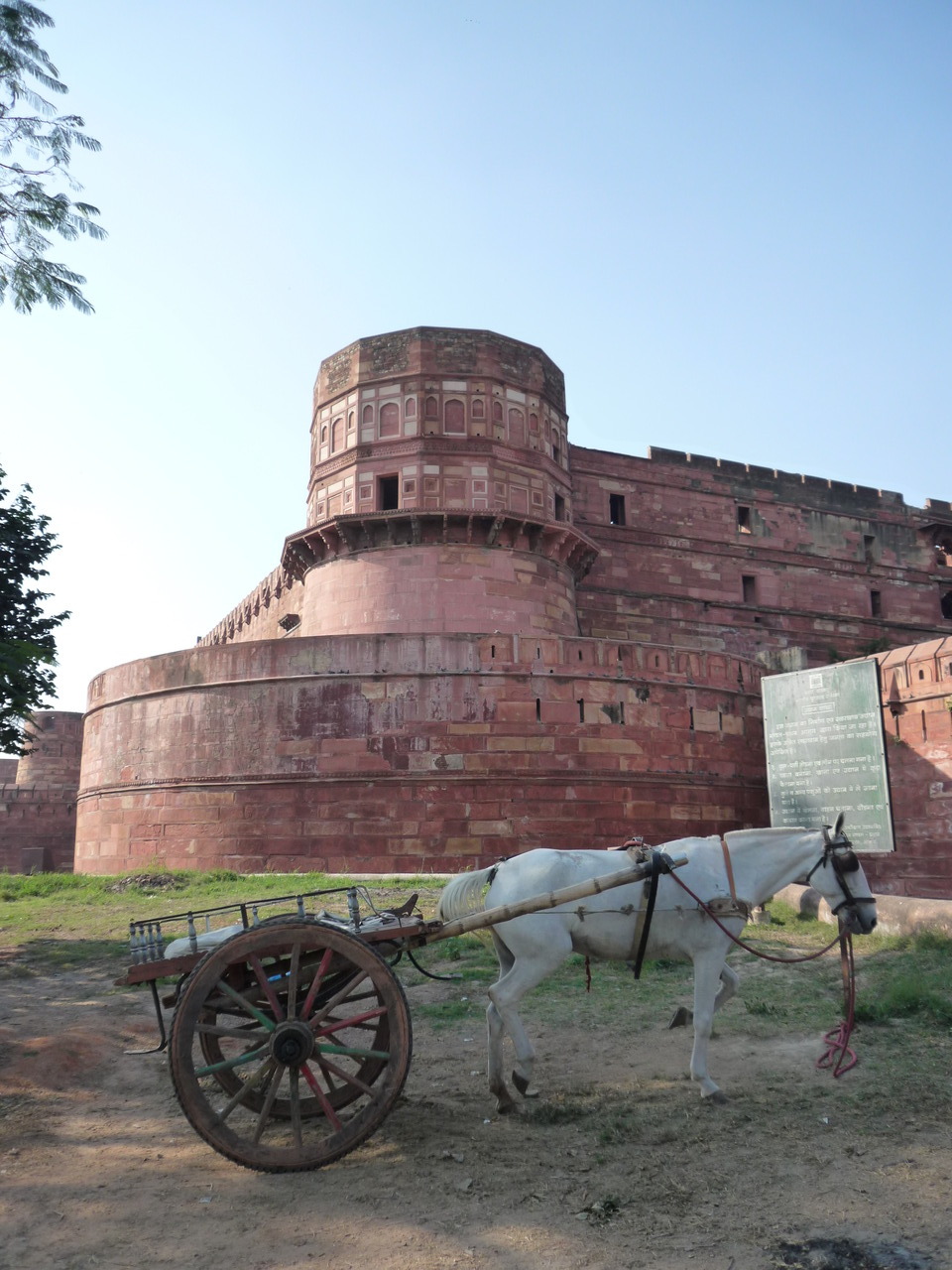
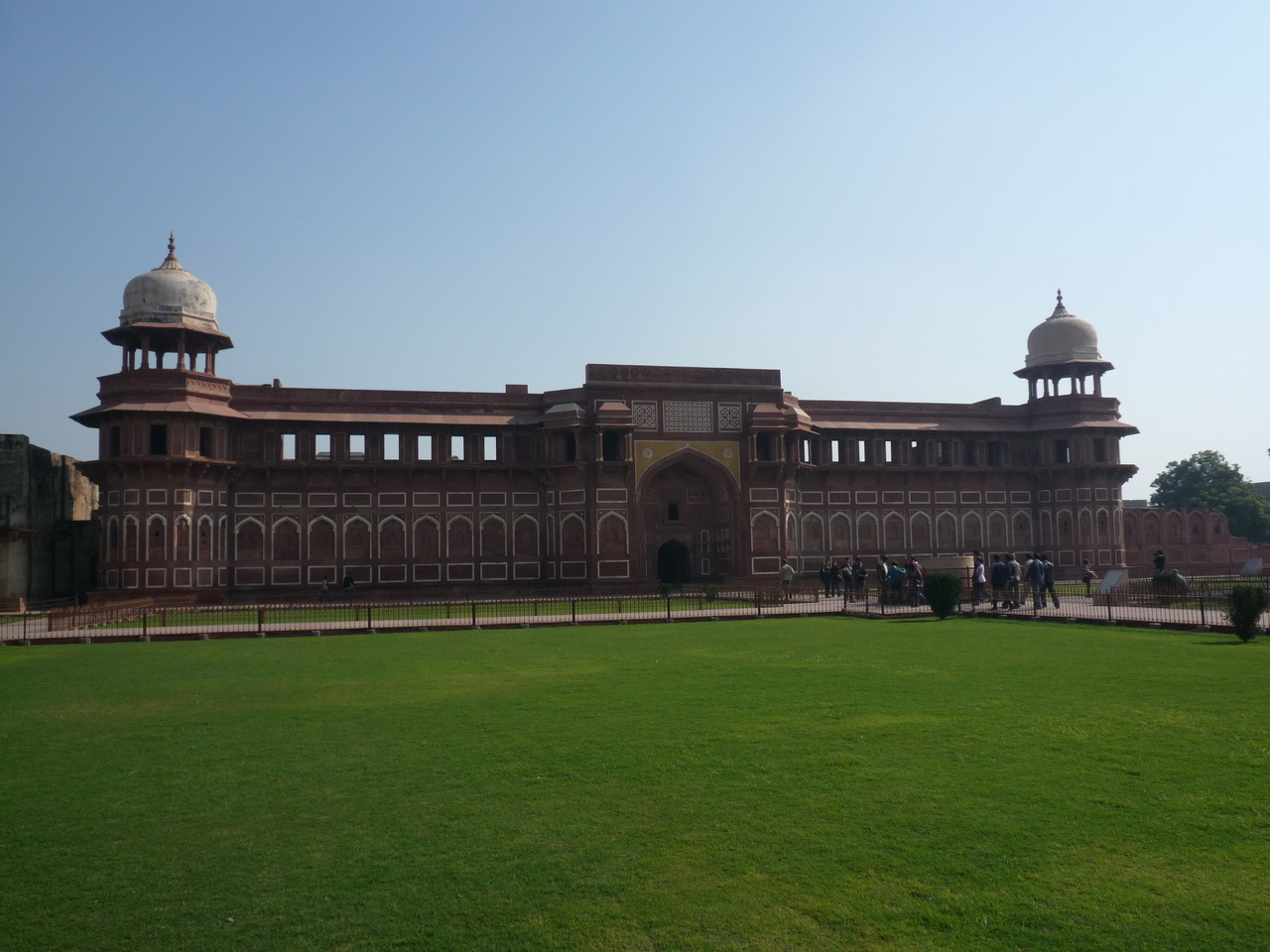
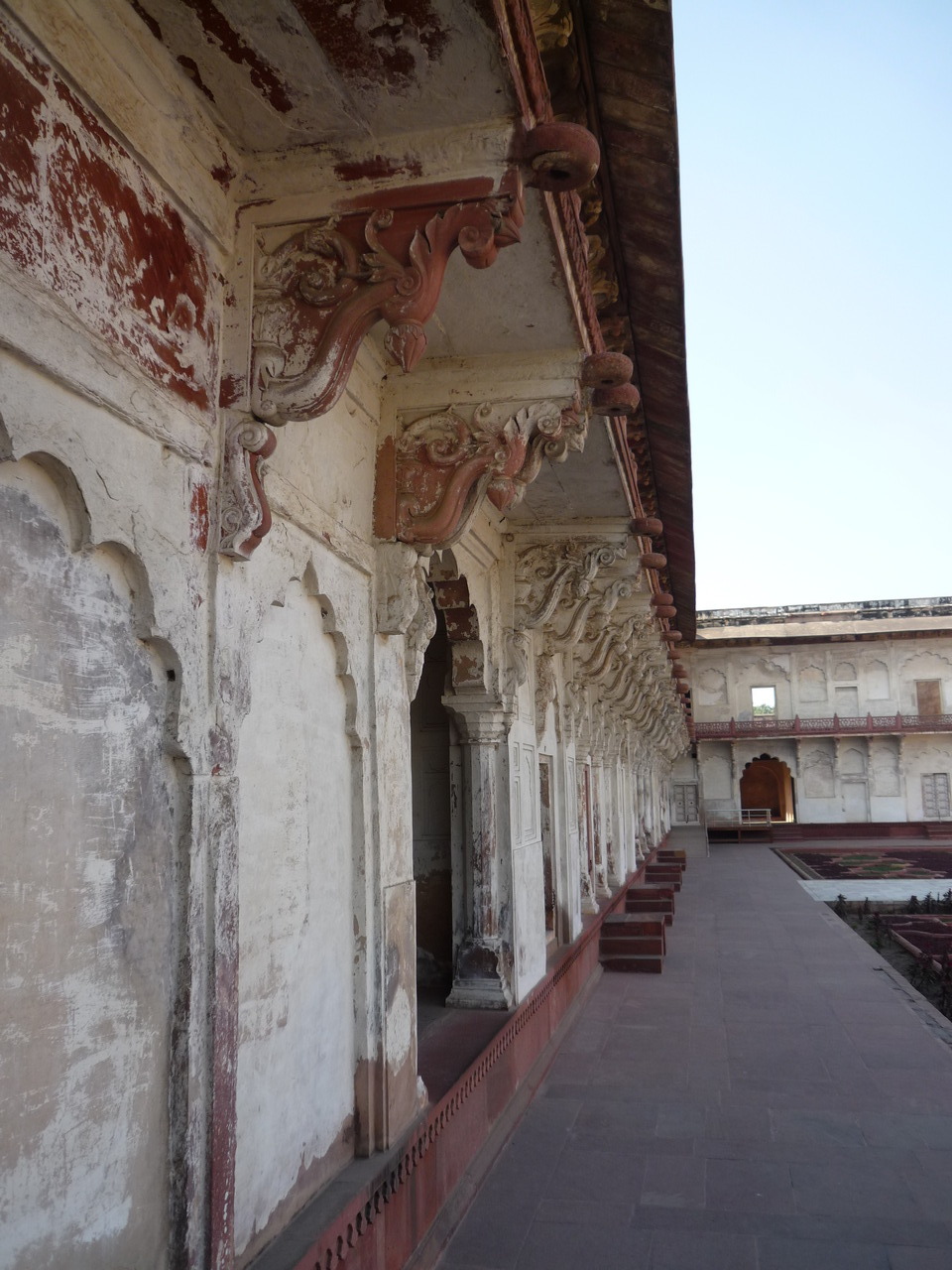
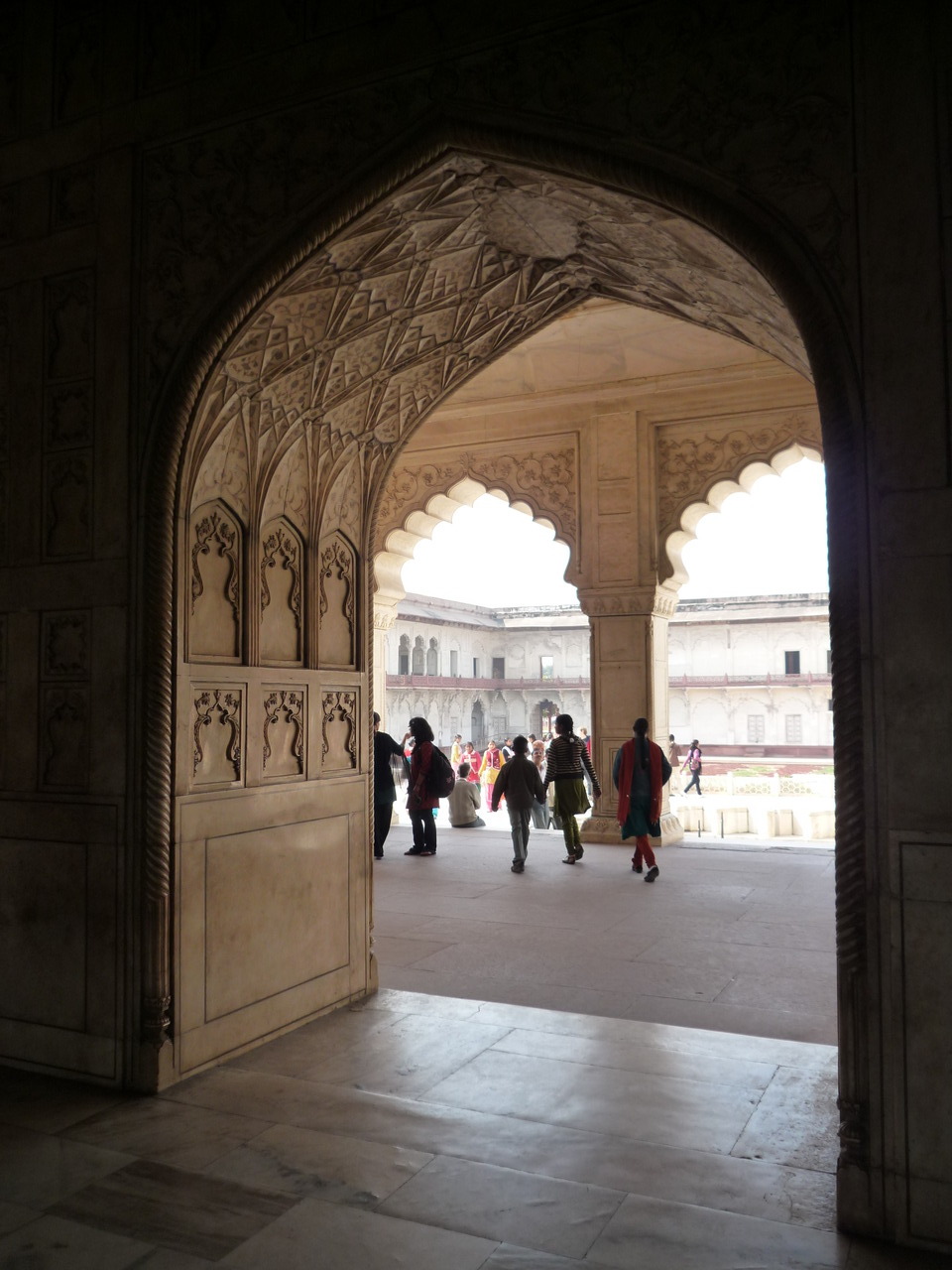
And before I knew it, I found myself lying on the upper berth of a train to Varanasi, six hundred kilometers far from Agra, with no clue about how to find and join Adam there.
It would be my last destination in India. The home stretch.